Effortlessly manage data through preview, delete, export, etc.

 100% Security Verified | No Subscription Required | No Malware

 :
: 
 ChatGPT
 Perplexity
 Gemini
 Claude
 Grok
Grok

I keep going back and forth—foldables seem more versatile, but I’m worried I’ll end up annoyed by the bulk and babying it. I just want the choice that fits my day-to-day, not the hype.
Reddit user, r/Android
Generic “best phone” answers fail because foldables and standard phones are optimized for different daily behaviors, not just different specs.
AI can help you translate fuzzy preferences (like “I want something versatile”) into clearer trade-offs (like “one-handed reliability vs. mini-tablet multitasking”).
AI can’t confirm hands-on realities—crease visibility, unfolding friction, pocket comfort, or how often you’ll actually use the big screen—so real-life fit and post-purchase setup still matter after you decide.
In this article
- How to compare by real priorities
- Habits over specs
- Foldable vs standard tension
- What uncertainty really means
- How to reduce “maybe” thinking
- What the AI needs to compare
- Using AI prompts more clearly
- When to stop researching and decide
- After choosing: switch or prepare smoothly
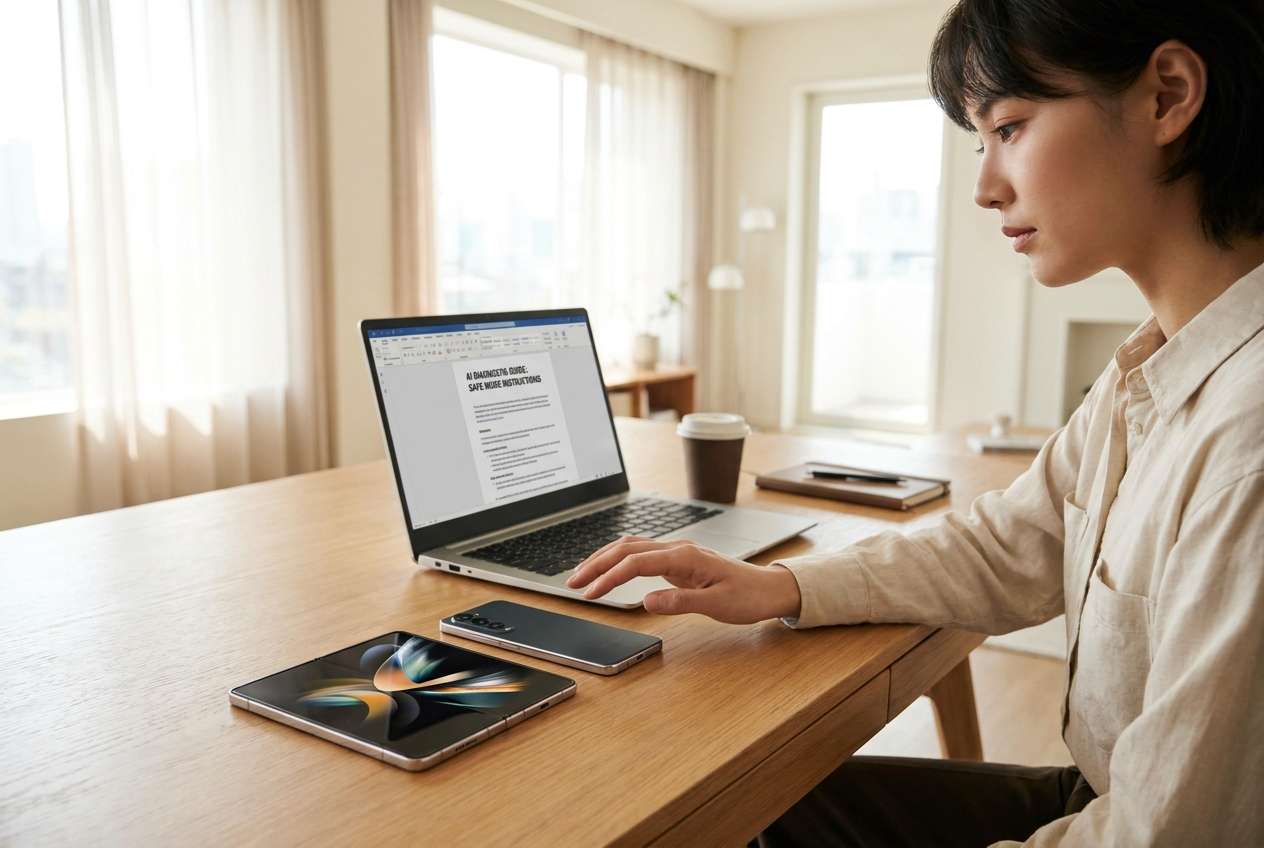
Part 1. How to Compare Foldable or Standard Phone Buying Decision Based on Real Priorities
You’re not just choosing a phone—you’re choosing a form factor that shapes how you read, type, shoot photos, navigate, and multitask every day. The wrong pick usually isn’t “bad hardware,” it’s a mismatch with your habits.
The tension is practical: a foldable can replace some tablet/laptop moments, but it may add durability anxiety or handling friction. A standard phone is simpler and more predictable, but it may never give you that “bigger canvas” when you need it.
Most uncertainty comes from not knowing which annoyances you’ll feel daily (bulk, care, unfolding) versus which benefits you’ll actually use (split-screen, reading, productivity).
Part 2. What the AI Needs to Compare
Give the AI enough context to judge fit, not just features:
- Your top 3 daily use cases (messaging, docs, video, maps, gaming, reading, camera, work apps)
- How often you multitask (two apps at once, copy/paste, calendar + chat, etc.)
- One-handed use needs (commuting, kids, carrying bags) vs two-handed comfort
- Pocket/bag reality (tight pockets, small bags, gym shorts, etc.)
- Risk tolerance (drops, dust/sand, heavy travel, outdoors)
- Upgrade cycle and resale priorities (keep 2–4 years vs frequent upgrades)
- Budget ceiling and what you’re willing to pay extra for (screen size, simplicity, peace of mind)
- Any “dealbreakers” (weight, thickness, crease sensitivity, camera consistency, battery predictability)
Part 3. Using AI Prompts to Evaluate Foldable or Standard Phone Buying Decision More Clearly
Use these prompts to force explicit trade-offs and reduce “maybe” thinking.
3-1. Level 1: Basic Prompt
I’m choosing between a foldable phone and a standard phone. Ask me 8–10 questions about my daily habits, then recommend one and explain why it fits better.
3-2. Level 2: Advanced Prompt
Help me decide between a foldable and a standard phone using a priority-based comparison.
1) List the top decision factors for my use,
2) score each option against those factors,
3) explain the trade-offs, and
4) tell me which option I’m more likely to regret and why.
3-3. Level 3: Evidence Prompt
Here’s my context: [paste your real habits: apps, work/personal, commute, typing, reading, camera use, drop history, pocket/bag, upgrade cycle].
Recommend foldable or standard, and explain what I gain and what I give up with each.
Also name one key assumption you’re making that—if wrong—would flip your recommendation, and tell me how to test that assumption in a week.
3-4. Prompt Refinement
If I choose the foldable, what are the top 3 “slow-burn” annoyances that might show up after 30 days (not day 1)? If I choose standard, what capability will I keep wishing I had?
Based on my habits, how many times per day would I realistically open the foldable screen? What number would justify the trade-offs?
Which matters more for me: “always-ready convenience” or “on-demand workspace”? Show your reasoning using my examples.
What’s the most likely regret scenario for each option, and what early warning signs would tell me I picked wrong within the return window?
If my priority is longevity (2–4 years), how does that change the recommendation vs if my priority is novelty and frequent upgrades?
3-5. AI Recommendation vs Real-World Fit
| Likely AI recommendation or conclusion | What real-life use may change or reveal |
|---|---|
| “Choose foldable because you multitask and read a lot.” | You may not unfold often enough to justify bulk/care; one-handed moments might dominate your day. |
| “Choose standard because you want reliability and simplicity.” | You may keep craving a larger screen for email/docs; a small tablet might creep back into your routine. |
| “Your best fit depends on comfort with thickness/weight.” | Pocket comfort and grip fatigue are hard to predict until you carry it daily in your usual clothes/bag. |
| “The decision hinges on risk tolerance and environment.” | Drops, dust, beach trips, gym bags, or hectic parenting can make ‘extra care’ feel exhausting over time. |
AI can clarify likely fit and surface trade-offs, but hands-on use, workflow friction, and daily habits decide whether the choice feels effortless or annoying.
Part 4. When to Stop Researching Foldable or Standard Phone Buying Decision and Make the Call
- You can name one primary reason you’re choosing foldable or standard that ties directly to daily behavior (not specs).
- You’ve identified two trade-offs you accept (e.g., “bulk for multitasking” or “smaller canvas for simplicity”) and you’re okay with them.
- You know your top regret risk and how you’ll detect it early (within the return period).
- You have a plan for your current phone’s data and accounts (transfer, cleanup, backups, and resale/hand-me-down).
Once you can explain your choice in one sentence—and you’re at peace with the downside—you’re ready to move from comparing to acting.
Part 5. After Choosing Foldable or Standard Phone Buying Decision: Switch or Prepare Smoothly
After you decide, the next pain point is rarely the hardware—it’s the transition: moving data cleanly, avoiding duplicate clutter, and preparing the old device for resale or handoff without leaving anything behind.
 Move data between iOS to Android and vice versa.
- Transfer contacts, SMS, photos, videos, music, and more types.
- Available with all phones with Android and iOS versions.
- Simple, click-through process.
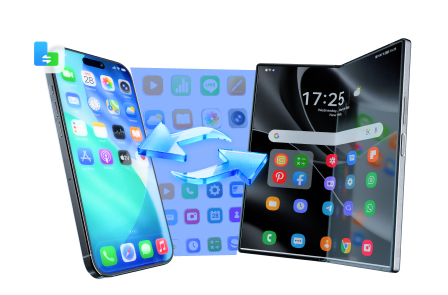
If you want a smoother move to your new device, Dr.Fone - Phone Transfer can help you transfer essentials first, then deal with clutter and handoff prep.
-
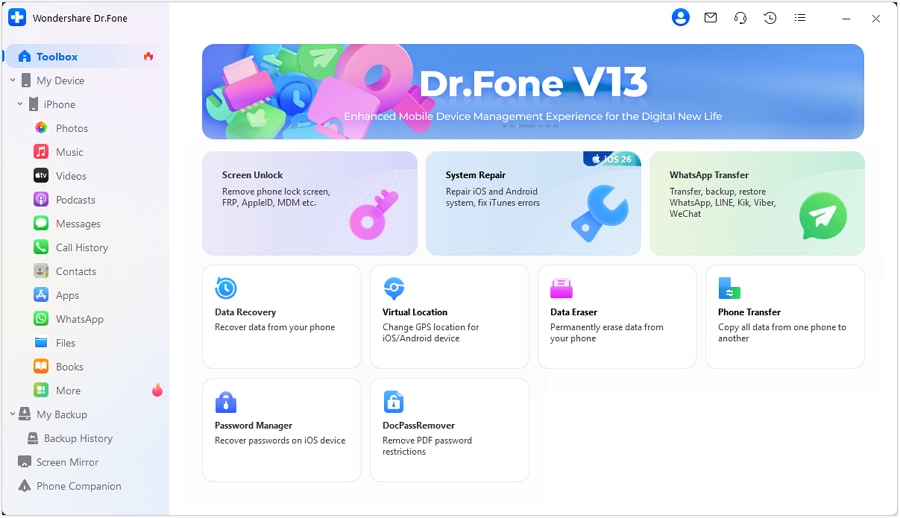
Step 1 Open Phone Transfer
Launch the tool and choose the Phone Transfer option to start a guided migration workflow.
-
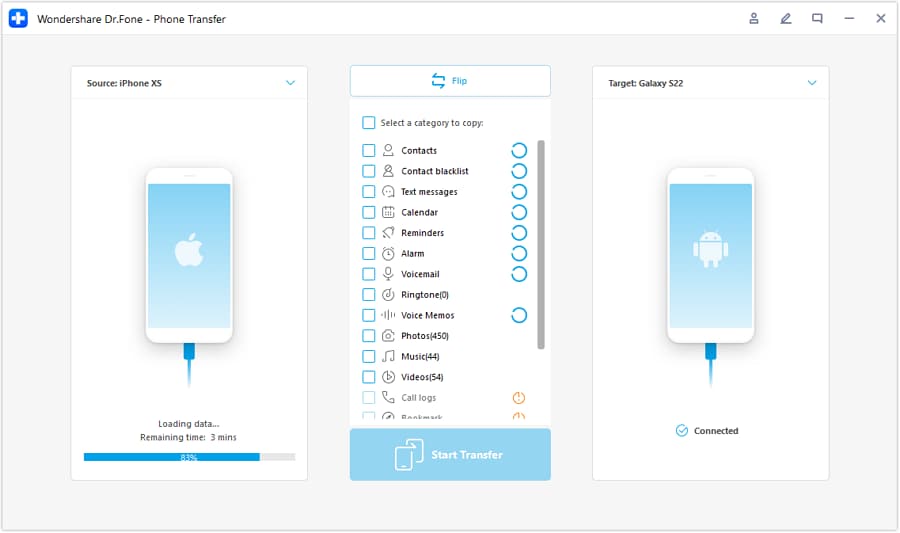
Step 2 Set the correct source and destination
Pick which phone is sending data and which phone is receiving it (for example, iOS to Android or Android to iOS).
-
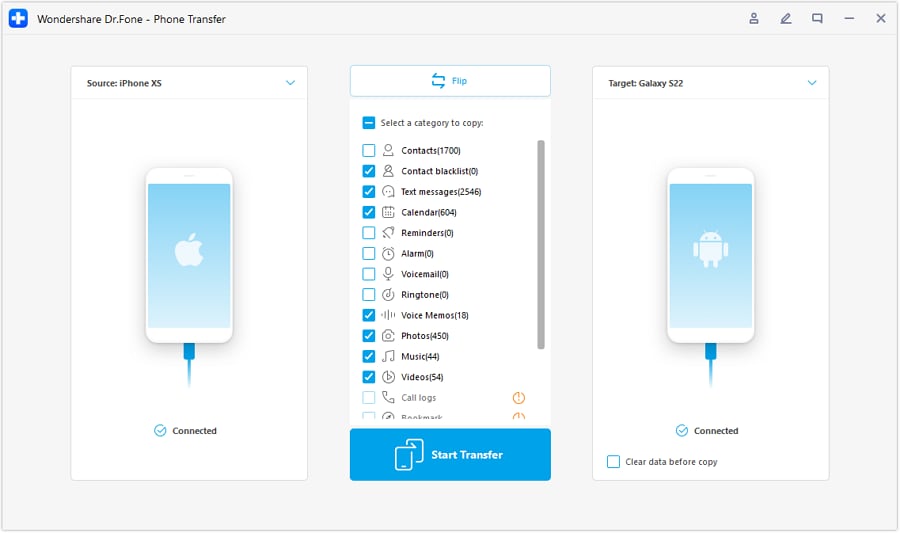
Step 3 Choose what to transfer (prioritize what matters)
Select key categories like photos, contacts, messages, and supported chat data—so day-one usability is covered without dragging over unnecessary clutter.
-
Step 4 Follow OS prompts and finish the transfer
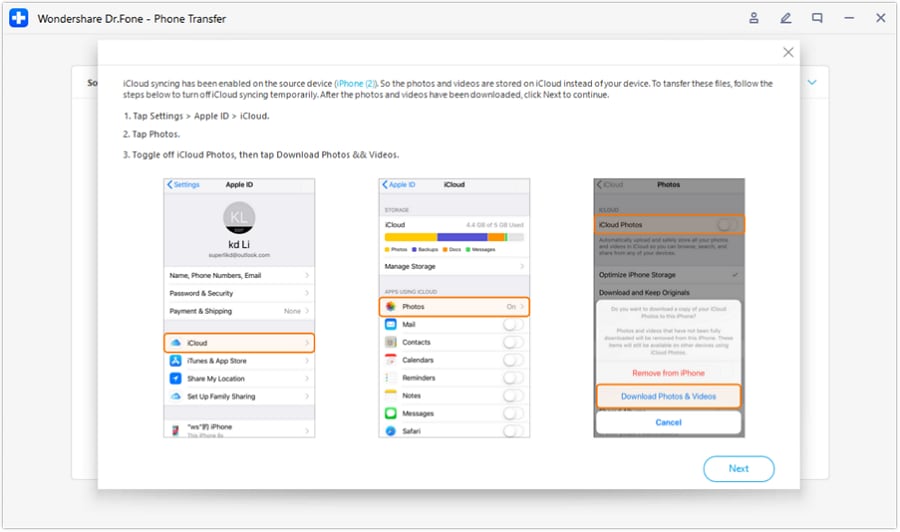
Complete any required system settings (for example, iCloud syncing prompts on iOS) and then run the transfer. Afterward, re-login and double-check critical apps manually.
5-1. Reduce clutter before it follows you
Action: Identify and remove obvious junk (duplicate photos, large videos, unused items) before or after migration to keep storage and galleries manageable.
Limitation: Cleanup tools can’t judge sentimental value—review before deleting anything irreversible.
5-2. Prepare the old phone for resale or handoff
Action: Back up what you’re keeping and erase what you’re not, then sign out of accounts and disable device locks so the next owner can activate it smoothly.
Limitation: You still need to confirm account sign-outs (Apple ID/Google) and activation-lock status—those steps can’t be assumed complete without checking.




Conclusion
AI is best as decision support: it helps you name priorities, weigh trade-offs, and spot regret risks, while real use is the final proof. Once the choice is clear, tools like Dr.Fone help execute the switch, cleanup, and resale preparation without turning the transition into a second project.
FAQ
-
Can I trust AI to choose foldable vs standard for me?
Use AI to structure the decision and expose trade-offs, not to “declare a winner.” It’s most reliable when you provide real habits and constraints.
-
What’s the most important trade-off in this decision?
It’s usually on-demand big-screen utility vs always-ready simplicity. If you won’t unfold frequently, the foldable advantage shrinks fast.
-
How do I avoid a generic spec-based decision?
Force the comparison through daily scenarios: commuting one-handed, reading long articles, replying to work messages, navigating, quick photos, and how often you multitask.
-
What assumption most often flips the recommendation?
“How often you’ll actually use the inner screen.” If the real number is low, standard phones tend to feel better long-term.
-
What should I prepare after choosing?
Decide what data must move (and what shouldn’t), back up essentials, and plan your old phone path (trade-in, resale, backup device, or hand-me-down).
-
Does switching affect resale value or handoff success?
Yes—clean transfers and proper wipe/sign-out reduce return/refund issues and make activation smoother for the next owner.
 Add Wondershare Dr.Fone as a preferred source on Google