Effortlessly manage data through preview, delete, export, etc.

 100% Security Verified | No Subscription Required | No Malware

 :
: 
 ChatGPT
 Perplexity
 Gemini
 Claude
 Grok
Grok
What is Cellular iPad? It’s an iPad model that includes cellular radio hardware (like LTE or 5G) so it can connect to a mobile data network using a carrier plan (typically via a SIM or eSIM), in addition to Wi‑Fi. This lets the iPad access the internet in more places without relying on nearby Wi‑Fi.
In plain English: a Cellular iPad is an iPad that can use mobile data like a phone when you’re away from Wi‑Fi. One key takeaway: buying "Cellular" doesn’t automatically include service—you still need to add a data plan with a supported carrier to actually use cellular data.
In this article
- Part 1. What Cellular iPad is used for: core uses & scenarios (Why it matters)
- Part 2. How Cellular iPad works: official working logic (How it works, non-technical + technical-lite)
- Part 3. Where to find Cellular iPad: settings paths and entry points (Where to find it)
- Part 4. How to use, enable, disable, or check Cellular iPad
- Part 5. Requirements and compatibility
- Part 6. Cellular iPad vs related concepts
- Part 7. Common issues and misconceptions
- Part 8. Security, privacy, and compliance notes
Part 1. What Cellular iPad is used for: core uses & scenarios (Why it matters)
Core uses and real-world scenarios
A Cellular iPad matters because it gives you internet connectivity on the go, which can be more reliable than public Wi‑Fi and more convenient than hotspotting from a phone.
- Working from a train, car (as a passenger), or job site without Wi‑Fi
- Using maps, navigation, and location-based apps when traveling
- Video calls or messaging when you don’t trust public Wi‑Fi networks
- School or fieldwork where Wi‑Fi coverage is limited or controlled
- Managing smart devices or monitoring dashboards in remote locations
- Keeping kids’ iPad connectivity consistent outside the home (with parental controls)
Who needs it most
Cellular iPad models are most useful for commuters, travelers, and remote workers who regularly leave Wi‑Fi coverage. They also matter to second-hand buyers and sellers because the cellular capability affects resale value and may involve carrier plan details. For families, it can simplify connectivity for kids without handing them a phone, while enterprise or education IT teams may prefer cellular for managed, predictable connectivity in the field.
Part 2. How Cellular iPad works: official working logic (How it works, non-technical + technical-lite)
Plain explanation
A Cellular iPad has extra hardware that lets it connect to a mobile carrier’s network—similar to how a smartphone connects for data. If you insert a compatible SIM or activate an eSIM and purchase a data plan, the iPad can use cellular data when Wi‑Fi isn’t available. The iPad will typically prefer Wi‑Fi when connected and switch to cellular when Wi‑Fi drops, depending on your settings.
Key components
- Cellular modem (LTE/5G): the radio hardware that talks to carrier networks for data.
- SIM or eSIM: identifies your device to the carrier (physical SIM tray on some models; eSIM on many newer models).
- Carrier plan and provisioning: an active data plan is required; availability and setup steps vary by region and carrier.
- APN/carrier settings: configuration that ensures the iPad can route data correctly on that network (often set automatically).
- iPadOS networking controls: toggles such as Cellular Data, Data Roaming, and per-app cellular permissions.
- Coverage and bands: real-world performance depends on local signal strength and supported network bands (varies by model).
Part 3. Where to find Cellular iPad: settings paths and entry points (Where to find it)
Settings or menu paths
- Settings > Cellular (or Settings > Mobile Data)
- Settings > Cellular > Cellular Data Options
- Settings > Cellular > SIM PIN (if supported by your SIM and region)
Labeling can vary by region and carrier (for example, "Cellular" vs "Mobile Data"), and some options only appear when a SIM/eSIM is present or a plan is active.
Search keywords and entry tips
Use Settings search keywords like:
- "Cellular"
- "Mobile Data"
- "eSIM"
- "Data Roaming"
If you don’t see Cellular/Mobile Data at all, double-check that your iPad model is a Wi‑Fi + Cellular model (not Wi‑Fi only) and that iPadOS is up to date.
Part 4. How to use, enable, disable, or check Cellular iPad
Safe how-to steps
-
Step 1 Turn Cellular Data on or off
Open Settings > Cellular (or Mobile Data) and turn Cellular Data on or off to enable/disable mobile data.
-
Step 2 Review Cellular Data Options
Tap Cellular Data Options to review settings like Data Roaming and preferred network options (availability varies by model/carrier).
-
Step 3 Manage per-app cellular permissions
In Settings > Cellular, check which apps are allowed to use cellular data and toggle them as needed.
-
Step 4 Confirm service status
Confirm service status by looking for a cellular signal indicator and checking whether web pages load with Wi‑Fi turned off.
-
Step 5 Add or set up a plan
If you’re setting up service, follow the on-screen prompts under Settings > Cellular to add a plan (steps vary by carrier and region).
Official help resources
Use Apple’s built-in guidance inside Settings (carrier plan prompts and descriptions) and your carrier’s official support channels for plan activation, SIM replacement, or eSIM transfer. Avoid third-party "activation" services that claim to enable cellular service without a carrier.
Part 5. Requirements and compatibility
Quick compatibility table
| Item | What you need / what to expect |
|---|---|
| Supported devices | An iPad model sold as Wi‑Fi + Cellular (not Wi‑Fi only); support for LTE or 5G varies by model |
| Account sign-in | An Apple Account may be required for some setup steps, eSIM flows, or carrier plan management (varies) |
| Required toggles | Cellular Data must be on; per-app cellular access should be enabled for apps that need it |
| Connectivity | Active carrier plan + coverage in your area; SIM or eSIM must be properly provisioned |
| Offline behavior | Without Wi‑Fi or cellular coverage, the iPad can’t access the internet; offline downloads still work (e.g., saved files/media) |
| Notable limitations | Voice calls/SMS are not the same as iPhone service (varies by carrier features); roaming and hotspot rules depend on your plan |
Notes and caveats
Feature availability varies by iPad model, region, carrier, and iPadOS version. Some carriers restrict plan types, eSIM transfers, or roaming settings, and certain menus only appear after a SIM/eSIM is detected. "5G iPad" and "LTE iPad" describe the network generation supported by the hardware, not guaranteed real-world speeds.
Part 6. Cellular iPad vs related concepts
Key differences
| Concept | Purpose | Where it appears | Dependencies | Common confusion |
|---|---|---|---|---|
| Cellular iPad (Wi‑Fi + Cellular) | Internet via mobile carrier network when away from Wi‑Fi | Settings > Cellular/Mobile Data; status bar signal indicator | iPad with cellular hardware + SIM/eSIM + active data plan + coverage | People assume "Cellular" includes free service |
| Wi‑Fi-only iPad | Internet only through Wi‑Fi networks | Settings shows Wi‑Fi but no Cellular/Mobile Data section | Wi‑Fi access point | Mistaken for "Cellular-capable" because apps look the same |
| Personal Hotspot (from a phone) | Shares a phone’s cellular data to other devices | On iPhone: Settings > Personal Hotspot; on iPad: Wi‑Fi network list | iPhone with hotspot plan + proximity + battery use | Users think it’s identical to built-in cellular on the iPad |
| eSIM vs physical SIM | Method of activating carrier service | Settings > Cellular; SIM tray on some models | Carrier support + activation flow | Confused as "network type" rather than an activation method |
When readers confuse them
- "Cellular model" vs "cellular service": the hardware doesn’t include a plan.
- "LTE/5G" vs "Wi‑Fi speed": LTE/5G is mobile network capability, not Wi‑Fi performance.
- "Hotspotting" vs "built-in cellular": hotspots depend on a phone and can drain battery or be throttled by the plan.
- "eSIM" vs "unlocking": eSIM is a SIM format; it doesn’t change lock status or carrier policies.
Part 7. Common issues and misconceptions
Symptom → likely reason → what to check
- No "Cellular/Mobile Data" menu → iPad is Wi‑Fi-only or restricted by configuration → check the iPad’s model information and whether a device management profile is installed.
- Cellular shows "No Service" → coverage issue, SIM/eSIM not active, or carrier provisioning problem → check signal in your area, confirm the plan is active with the carrier, and review SIM/eSIM status in Settings.
- Data works on Wi‑Fi but not on cellular → Cellular Data toggle off or app blocked from using cellular → check Settings > Cellular and per-app cellular permissions.
- Cellular works but is slow or drops → weak signal, network congestion, or roaming limitations → check signal strength, try another location, and review Data Roaming and carrier plan limits.
- Can’t add or transfer an eSIM → carrier or region restrictions, or an iPadOS/software issue → confirm carrier supports eSIM for iPad and check for iPadOS updates.
When Dr.Fone can help
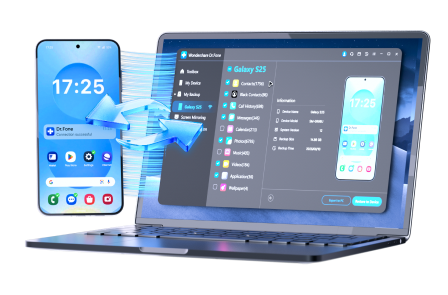
If your Cellular iPad settings are correct but the device is unstable—stuck on the Apple logo, repeatedly restarting, or failing after an update—connectivity troubleshooting can become difficult because you can’t reliably access Settings. In those cases, Wondershare Dr.Fone can help with legitimate workflows like iPadOS system repair, backing up important data, or recovering files after software issues. It can also help if you’re locked out of the device due to a forgotten screen passcode, so you can regain access and then re-check cellular settings through normal menus.
 Effortlessly manage data through preview, delete, export, etc.
- Transfer all data between devices.
- Robust backup solutions for reliable data protection.
- Mirror screens to PC for meetings, teaching, and control.
-
Step 1 Set up Dr.Fone and choose a module
Install Dr.Fone on a computer, connect the iPad with a cable, and select the relevant module (such as System Repair, Backup, or Screen Unlock) based on the problem.
-
Step 2 Follow the on-screen workflow
Follow the on-screen prompts to repair iPadOS or complete a backup/recovery workflow, keeping the device connected and powered.
-
Step 3 Re-check cellular settings after recovery
After the device is stable and accessible again, return to Settings > Cellular/Mobile Data to verify plan status, toggles, and app permissions.
- If you can still access the phone or iPad settings, start with iPadOS toggles and your carrier’s plan checks before using any repair tools.
- If you forgot the passcode, use official ownership-verified recovery methods first; only proceed with legitimate unlock/restore steps that you are authorized to perform.
- If the device is stuck or unstable, a system repair/backup workflow can help you restore normal access so you can troubleshoot cellular properly.




Part 8. Security, privacy, and compliance notes
Cellular connectivity is designed to protect users through carrier authentication (SIM/eSIM), encrypted network protocols, and account-based plan management. You should not try to bypass carrier activation, device locks, Apple Account protections, or organization management (MDM) controls—those safeguards exist to prevent unauthorized access and theft. If a used iPad is still tied to an account, carrier agreement, or enterprise management, the correct next step is to contact the original owner/seller for proper removal, present proof of purchase where required, or work with Apple/carrier/organization support through official channels.
Conclusion
Cellular iPad is an iPad variant that can use a carrier data plan (SIM or eSIM) to stay online away from Wi‑Fi, which is helpful for travel, work, and safer connectivity. Most setup and checks happen in Settings > Cellular/Mobile Data, and issues usually come down to plan activation, coverage, or iPadOS settings. If the iPad becomes unstable or inaccessible, Dr.Fone may be a practical next step for legitimate repair, backup, or recovery so you can return to normal troubleshooting.
FAQ
-
Q1. Can a Cellular iPad make phone calls and send SMS like an iPhone?
Typically, a Cellular iPad uses cellular data rather than traditional voice/SMS service. You can still use internet-based calling and messaging apps, and some Apple features may route calls/messages via an iPhone on the same Apple Account, depending on your setup and carrier support.
-
Q2. Does buying a Cellular iPad include free cellular data?
No. "Cellular" means the iPad has the hardware to connect to carrier networks, but you still need to add and pay for a compatible data plan through a supported carrier.
-
Q3. How do I tell if my iPad is Wi‑Fi-only or Wi‑Fi + Cellular?
Check Settings: Wi‑Fi + Cellular models show a Cellular/Mobile Data section. You can also look for a SIM tray on some models or check the model information in Settings > General > About (details vary by device and region).
-
Q4. Is an eSIM iPad different from an iPad with a physical SIM?
They’re functionally similar for data access; the difference is how service is activated. eSIM is digital (no physical card), while a physical SIM uses a removable card—availability depends on iPad model, region, and carrier.
 Add Wondershare Dr.Fone as a preferred source on Google