 Effortlessly manage data through preview, delete, export, etc.

 100% Security Verified | No Subscription Required | No Malware

 :
: 
 ChatGPT
 Perplexity
 Gemini
 Claude
 Grok
Grok
What is Desktop-Class Apps on iPad? It’s a term Apple and the iPad community use to describe iPad apps (and, in some contexts, Safari experiences) that behave more like traditional desktop software—offering richer toolsets, more advanced multitasking, better keyboard/trackpad support, and more capable file handling than "phone-style" mobile apps.
In plain English: desktop-class apps are iPad apps that feel closer to Mac apps because they let you do serious work with fewer "mobile" limits. One key takeaway: the experience depends on the app, your iPad model, and your iPadOS version—so not every iPad app qualifies, and not every feature appears on every device.
In this article
- Part 1. What Desktop-Class Apps is used for: core uses & scenarios (Why it matters)
- Part 2. How Desktop-Class Apps works: official working logic (How it works, non-technical + technical-lite)
- Part 3. Where to find Desktop-Class Apps: settings paths and entry points (Where to find it)
- Part 4. How to use, enable, disable, or check Desktop-Class Apps
- Part 5. Requirements and compatibility
- Part 6. Desktop-Class Apps vs related concepts
- Part 7. Common issues and misconceptions
- Part 8. Security, privacy, and compliance notes
Part 1. What Desktop-Class Apps is used for: core uses & scenarios (Why it matters)
Core uses and real-world scenarios
Desktop-class app behavior matters because it determines whether an iPad can replace (or meaningfully complement) a laptop for tasks that need complex workflows, precision input, and robust file support.
- Editing large documents, spreadsheets, or presentations with advanced formatting, shortcuts, and multi-window workflows
- Doing creative work (photo/video/audio) with timeline-like interfaces, pro tool palettes, and external storage support
- Using iPad with a keyboard/trackpad for long writing, research, and tab-heavy browsing that feels "desktop-like"
- Managing files across cloud drives, external SSDs, and project folders without constant "share sheet" workarounds
- Running work or school apps that need multiple panes, drag-and-drop, and consistent background behavior (where supported)
Who needs it most
Desktop-class experiences are most valuable for students and everyday users who want laptop-style productivity, creators who rely on complex tools and file workflows, and professionals who use external keyboards, trackpads, and displays. They also matter to enterprise and education IT teams because iPad capabilities (multitasking, external display, app permissions) affect deployment decisions and user training.
Part 2. How Desktop-Class Apps works: official working logic (How it works, non-technical + technical-lite)
Plain explanation
On iPad, "desktop-class" behavior isn’t a single switch. It’s the combined result of (1) iPadOS features like multitasking, pointer support, and richer file access, and (2) how each app is designed to use those features. If the app supports advanced UI patterns—like resizable layouts, multiwindow, and full keyboard shortcuts—it feels more like desktop software.
Key components
- iPadOS multitasking & windowing: Features like Split View/Slide Over (and on some devices, Stage Manager) enable multi-app workflows and more flexible window sizes.
- Keyboard and pointer support: System-level support for hardware keyboards, trackpads, and mice enables shortcut-driven navigation and precision interactions.
- Files integration: Deeper integration with the Files app allows browsing folders, working with documents, and using external storage (behavior varies by app).
- Menu and command patterns: Many pro apps implement app menus/command discovery and consistent shortcut mappings (support varies by app and iPadOS version).
- Safari desktop-class browsing (related idea): Safari can request desktop websites and may offer more "desktop-like" web app behavior, which people sometimes group under the same phrase.
Part 3. Where to find Desktop-Class Apps: settings paths and entry points (Where to find it)
Settings or menu paths
Because "desktop-class apps" is a capability rather than one setting, you typically check related iPadOS features here:
- Settings > General > About (check iPadOS version)
- Settings > Home Screen & Multitasking > Multitasking (Split View/Slide Over options vary by iPadOS version)
- Settings > Home Screen & Multitasking > Stage Manager (only on supported iPads; if present)
- Settings > Accessibility > Touch > AssistiveTouch > Devices (pointer-related options can appear depending on connected hardware)
- Settings > Safari (desktop website behavior and related browsing options)
Search keywords and entry tips
Useful Settings search keywords include: "Multitasking", "Stage Manager", "Mouse", "Trackpad", "Keyboard", and "Safari desktop". If labels differ across iPadOS versions, look for sections mentioning windowing, external keyboard, pointer, or request desktop website.
Part 4. How to use, enable, disable, or check Desktop-Class Apps
Safe how-to steps
-
Step 1 Update iPadOS (if possible)
Go to Settings > General > Software Update to ensure you have the latest features your iPad supports.
-
Step 2 Enable multitasking features
Go to Settings > Home Screen & Multitasking and turn on multitasking options available on your device (and Stage Manager if supported and desired).
-
Step 3 Connect productivity accessories
Pair a keyboard/trackpad/mouse via Bluetooth (Settings > Bluetooth) or use a compatible connector; then test app shortcuts and pointer behavior.
-
Step 4 Use multi-app workflows
Open an app, then use the app switcher/dock gestures to try Split View/Slide Over (or Stage Manager) with another app.
-
Step 5 Check app-specific capabilities
In the app, look for multiwindow support, advanced toolbars, file import/export options, and keyboard shortcuts (often discoverable by holding the Command key on a hardware keyboard, when supported).
Official help resources
No official Apple URL was provided in the inputs, so this article does not link to specific Apple support pages or videos. Use the Apple Support app or Apple’s official Support site search for your iPadOS version if you need guided steps.
Part 5. Requirements and compatibility
Quick compatibility table
| Item | What to expect on iPad |
|---|---|
| Supported devices/platforms | iPad running iPadOS; exact "desktop-class" features vary by iPad model and iPadOS version |
| Account sign-in | Typically not required for the concept itself; some apps and cloud features require an Apple Account or third-party account |
| Required toggles | Multitasking/Stage Manager (if available), Bluetooth (for accessories), Safari settings (for desktop website behavior) |
| Connectivity | Many pro workflows work offline; cloud sync, downloads, and collaboration need internet |
| Offline behavior | Apps may work offline but can limit syncing, collaboration, and cloud file access until reconnected |
| Notable limitations | Some apps remain mobile-first; external display/multiwindow behavior and RAM-heavy workloads depend on device capability and app design |
Notes and caveats
Apple’s iPad productivity capabilities evolve across iPadOS releases, and some features (such as more advanced windowing options) are limited to certain iPad generations. Also, an app can be powerful without supporting every "desktop-like" feature—so it’s best to evaluate the specific workflow you care about (files, shortcuts, multiwindow, external display, etc.).
Part 6. Desktop-Class Apps vs related concepts
Key differences
| Concept | Purpose | Where it appears | Dependencies | Common confusion |
|---|---|---|---|---|
| Desktop-class apps (iPad) | Make iPad apps feel closer to desktop software (richer UI, multitasking, file workflows, shortcuts) | Inside compatible apps; enhanced by iPadOS multitasking and accessories | iPadOS features + app support + (often) keyboard/trackpad | People expect a "desktop mode" toggle for all apps |
| Desktop-class browsing (Safari) | Make web browsing behave more like a desktop browser (desktop sites, fuller web app behavior) | Settings > Safari and within Safari tabs | Website support + Safari settings + iPadOS version | Mistaken for "full desktop apps" or macOS on iPad |
| Stage Manager | Windowing/multitasking feature that can enable more desktop-like workflows | Settings > Home Screen & Multitasking (if supported) | Supported iPad models + iPadOS version | Assumed required for all "pro" apps (it isn’t) |
When readers confuse them
- "Desktop Safari" settings affect websites, not whether App Store apps become Mac apps.
- Stage Manager is one way to multitask, but desktop-class behavior can also exist without it.
- "Full apps" often refers to feature depth, not whether the app is literally the macOS version.
Part 7. Common issues and misconceptions
Symptom → likely reason → what to check
- "My iPad doesn’t show Stage Manager." → Device/iPadOS may not support it → Check Settings > General > About (model) and iPadOS version; confirm Stage Manager appears under Home Screen & Multitasking.
- "This app still feels like a phone app." → The app may be designed mobile-first → Check the app’s update notes, settings, and whether it supports keyboard shortcuts, Files integration, or multiwindow.
- "Keyboard shortcuts don’t work." → App may not implement them or keyboard isn’t fully connected → Check Bluetooth connection, try another app, and look for shortcut discovery (often by holding Command, when supported).
- "Can’t access files the way I expect." → App permissions/workflow differs from desktop OS → Check Files app access prompts, app import/export options, and whether the file lives locally, in iCloud Drive, or another provider.
When Dr.Fone can help
Desktop-class app capability itself usually doesn’t require third-party tools, but iPads used for work can run into practical issues like failed updates, system instability, or the need for a reliable backup before troubleshooting. In those cases, Wondershare Dr.Fone can be relevant for legitimate tasks such as device backup/restore workflows, data recovery where supported, or iPadOS system repair when the device is stuck or repeatedly crashing. Use it only on devices you own or are authorized to service.
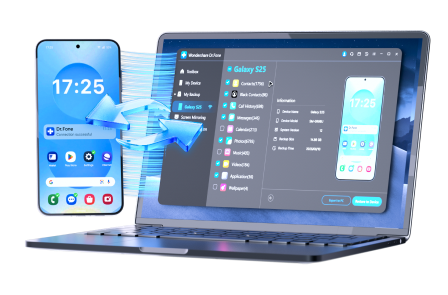
 Effortlessly manage data through preview, delete, export, etc.
- Transfer all data between devices.
- Robust backup solutions for reliable data protection.
- Mirror screens to PC for meetings, teaching, and control.
-
Step 1 Install and open Dr.Fone on a computer, then connect the iPad with a trusted cable
Install and open Dr.Fone on a computer, then connect the iPad with a trusted cable.
-
Step 2 Choose a relevant module and follow the on-screen guidance
Choose a relevant module (for example, System Repair for boot/update issues or Backup/Restore to protect data) and follow the on-screen guidance.
-
Step 3 Restart the iPad and re-check iPadOS features and affected apps
After completion, restart the iPad and re-check iPadOS features and the affected apps’ behavior.
- If you can still access the phone/tablet normally, prioritize updating iPadOS and adjusting multitasking/accessory settings first.
- If you forgot the passcode or the device is linked to an account you can’t access, use Apple’s official account recovery and support channels.
- If the device is stuck or unstable after an update or repeated crashes, consider a safe repair/backup workflow before deeper troubleshooting.




Part 8. Security, privacy, and compliance notes
Desktop-class app features exist to help legitimate productivity while still protecting user data through iPadOS sandboxing, permissions, and account-based services like iCloud. Avoid trying to bypass security controls (passcodes, Activation Lock, managed device restrictions, or app licensing). If an iPad is organization-managed (MDM) or you’re dealing with a second-hand device, the correct next step is to contact the admin/original owner for proper release and documentation, or use official Apple support paths with proof of purchase where required.
Conclusion
Desktop-class apps on iPad refer to app (and sometimes Safari) experiences that feel more like desktop software thanks to iPadOS multitasking, accessory support, and deeper file workflows—though the exact experience varies by device, iPadOS version, and app design. If you run into legitimate problems like update failures or instability that block these features, Dr.Fone can be a practical next step for safe backup or system-repair workflows.
FAQ
-
Q1. What is desktop class apps iPad supposed to mean?
It usually means iPad apps that offer richer, more desktop-like capabilities—advanced layouts, keyboard shortcuts, multiwindow workflows, and better file handling—rather than a single "desktop mode" you can toggle. -
Q2. Are desktop-class apps the same as "desktop Safari" on iPad?
No. Desktop Safari settings mostly affect how websites load (for example, requesting desktop versions of sites). Desktop-class apps refer to App Store apps that implement more powerful, desktop-like workflows. -
Q3. Do I need Stage Manager to use desktop-class apps?
Not necessarily. Stage Manager can enhance windowing on supported iPads, but many desktop-like behaviors (keyboard shortcuts, Files integration, pro toolsets) depend on the app itself and work without Stage Manager. -
Q4. Why don’t I see the same features on my iPad as someone else?
Differences usually come from iPad model capability, iPadOS version, and whether a specific app has implemented advanced iPad features. Updating iPadOS and the app is the safest first step to confirm what your device supports.
 Add Wondershare Dr.Fone as a preferred source on Google


