 Effortlessly manage data through preview, delete, export, etc.

 100% Security Verified | No Subscription Required | No Malware

 :
: 
 ChatGPT
 Perplexity
 Gemini
 Claude
 Grok
Grok
What is Slide Over? Slide Over is an iPad multitasking feature that lets you open a second app in a narrow, floating window on top of your current app, so you can quickly switch tasks without leaving what you’re doing. It’s designed for fast, temporary access rather than full side-by-side work.
In plain English: Slide Over is the iPad’s "floating app" mode that sits over another app, like a compact panel you can swipe in and out. One key takeaway: it’s meant for quick interactions (replying, checking, copying) while your main app stays in place.
In this article
- Part 1. What Slide Over is used for: core uses & scenarios (Why it matters)
- Part 2. How Slide Over works: official working logic (How it works, non-technical + technical-lite)
- Part 3. Where to find Slide Over: settings paths and entry points (Where to find it)
- Part 4. How to use, enable, disable, or check Slide Over
- Part 5. Requirements and compatibility
- Part 6. Slide Over vs related concepts
- Part 7. Common issues and misconceptions
- Part 8. Security, privacy, and compliance notes
Part 1. What Slide Over is used for: core uses & scenarios (Why it matters)
Core uses and real-world scenarios
Slide Over matters because it reduces app switching friction: you can reference or act in a second app briefly, then return to your primary task instantly—useful when you don’t need a full split-screen layout.
- Reply to Messages or Mail while reading a document or webpage in Safari.
- Copy a snippet from Notes and paste it into a chat without fully leaving the chat or the document.
- Quickly check Calendar or Reminders while staying in a meeting note app.
- Use a calculator-style app or quick lookup tool while working in a spreadsheet.
- Review files in Files briefly while keeping your main editing app on screen.
Who needs it most
Slide Over is most useful for everyday iPad users who multitask lightly and want faster "peek and act" access to secondary apps. Students and professionals benefit when referencing notes, schedules, or messages while working in a primary app. It can also matter for parents managing an iPad for a child (to understand multitasking behavior) and for enterprise/education IT teams that may restrict multitasking via device policies.
Part 2. How Slide Over works: official working logic (How it works, non-technical + technical-lite)
Plain explanation
Slide Over works by keeping your main app full-screen and placing another supported app in a smaller overlay window. You can bring that window in from the side, move it left or right, hide it off-screen, and switch between recent Slide Over apps without changing what’s underneath.
Key components
- Multitasking support (iPadOS): Slide Over depends on iPadOS multitasking being available and not restricted by policy or parental controls.
- App compatibility: Most modern iPad apps support Slide Over, but some apps may limit multitasking modes based on design or media playback behavior.
- Gesture controls: Slide Over is primarily gesture-driven (edge swipes and the multitasking "handle" at the top of the floating app).
- App state preservation: The main app remains active in the background context while the Slide Over app temporarily takes focus.
- Recent app switching: iPadOS maintains a "stack" of Slide Over apps so you can cycle through them without returning to the Home Screen.
Part 3. Where to find Slide Over: settings paths and entry points (Where to find it)
Settings or menu paths
On iPad, Slide Over is part of iPadOS multitasking controls. Common places to check include:
- Settings > Home Screen & Multitasking > Multitasking
- On some iPadOS versions, labels may vary (for example, multitasking options may appear under a broader iPadOS settings area).
Search keywords and entry tips
In the Settings search bar, try keywords like:
- "Multitasking"
- "Slide Over" (may or may not appear depending on iPadOS version)
If you don’t see "Slide Over" specifically, look for multitasking toggles or options that mention allowing multiple apps, gestures, or multitasking features.
Part 4. How to use, enable, disable, or check Slide Over
Safe how-to steps
-
Step 1 Open your main app
Open your main app (for example, Safari or Notes).
-
Step 2 Reveal the Dock
Swipe up slightly to reveal the Dock (or return to the Home Screen and open the Dock-enabled view, depending on your iPad model and iPadOS version).
-
Step 3 Drag a Dock app into a narrow floating window
Touch and hold an app icon in the Dock, then drag it onto the current app and release when it appears as a narrow floating window (not full split).
-
Step 4 Move, hide, or dismiss the floating window
To move or hide it, drag the floating window’s top handle to the left/right edge; to dismiss, swipe it off-screen.
Official help resources
If gestures or menus look different on your iPad, use the built-in Tips app on iPad or the Apple Support app to find the current iPadOS multitasking guidance for your model and version.
Part 5. Requirements and compatibility
Quick compatibility table
| Item | What to expect |
|---|---|
| Supported platforms | iPad with iPadOS (availability and behavior varies by iPad model and iPadOS version) |
| Supported devices | Many iPad models support Slide Over; some multitasking features can be limited on older hardware |
| Apple ID sign-in | Not required for Slide Over itself |
| Required toggles | Multitasking settings may need to be enabled (wording varies by iPadOS version) |
| Connectivity | Not required for the feature; individual apps may need internet to function |
| Offline behavior | Slide Over still works offline; app content may be limited if the app relies on online services |
| Notable limitations | Some apps may not support Slide Over; Screen Time/MDM policies can restrict multitasking |
Notes and caveats
Slide Over behavior can change between iPadOS releases (and may coexist with features like Stage Manager on certain iPads). If your iPad is managed by a school or employer, device policies can disable or limit multitasking features even when they’re normally available.
Part 6. Slide Over vs related concepts
Key differences
| Feature | Purpose | Where it appears | Dependencies | Common confusion |
|---|---|---|---|---|
| Slide Over | Quick access to a secondary app in a floating window | Over your main full-screen app | iPadOS multitasking + app support | Mistaken for Split View because both involve two apps |
| Split View | Work with two apps side-by-side | Two panes sharing the screen | iPadOS multitasking + app support | Users expect Slide Over to "lock" side-by-side like Split View |
| Stage Manager (supported models) | More flexible windowing and groups of apps | Multiple resizable windows (supported iPads) | Specific iPad models + iPadOS settings | Users confuse Slide Over with windowed multitasking |
| Picture in Picture (PiP) | Floating video while using other apps | Small video overlay | Video app support | Users think PiP video window is Slide Over |
When readers confuse them
- Slide Over is a narrow app window; PiP is usually video-only.
- Split View divides the screen; Slide Over floats on top and can be hidden off-screen.
- Stage Manager uses resizable windows and app groups on supported devices; Slide Over is simpler and more constrained.
- If multitasking is restricted (Screen Time/MDM), users may assume Slide Over is "missing" rather than disabled.
Part 7. Common issues and misconceptions
Symptom → likely reason → what to check
- Slide Over won’t appear → multitasking disabled or restricted → check Settings > Home Screen & Multitasking (and Screen Time/MDM restrictions).
- Dragging an app opens Split View instead → drop position triggers Split View → drag toward the edge and release when the narrow floating preview appears.
- Some apps won’t open in Slide Over → app doesn’t support that mode → test with Apple apps (like Notes) or update the app and iPadOS.
- Gestures feel inconsistent → iPadOS version/model differences → confirm your iPadOS version and look for the Dock/handle gestures that match it.
- Floating app becomes unresponsive → app freeze or system glitch → force close the affected app and restart the iPad if needed.
When Dr.Fone can help
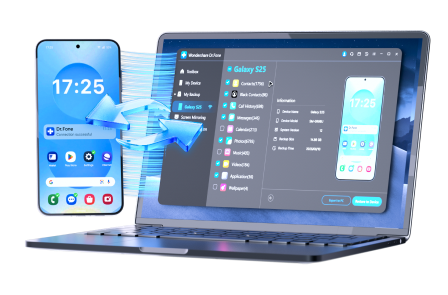
Slide Over itself is a built-in iPadOS feature, so most problems are resolved by checking multitasking settings, updating iPadOS, or restarting apps. If your iPad is broadly unstable—apps frequently freeze, the interface becomes unresponsive, or updates fail— Wondershare Dr.Fone can be relevant as a general troubleshooting tool for iPad system issues and data safety (for example, backup before deeper repairs). Use it only for your own device and follow on-screen guidance carefully.
 Effortlessly manage data through preview, delete, export, etc.
- Transfer all data between devices.
- Robust backup solutions for reliable data protection.
- Mirror screens to PC for meetings, teaching, and control.
-
Step 1 Connect the iPad and choose a module
Connect the iPad to a computer running Dr.Fone and choose an iPad/iOS-focused repair or maintenance module (such as system repair or backup).
-
Step 2 Follow prompts to enter the required mode
Follow the prompts to place the iPad in the required mode (if needed) and let the tool complete the guided process.
-
Step 3 Restart and re-check Slide Over
After completion, restart the iPad and re-check Slide Over behavior in a known compatible app.
- If you can still access the phone ... back up important data first and then troubleshoot multitasking settings calmly.
- If you forgot the passcode ... use official Apple account recovery and device erase/restore methods rather than attempting workarounds.
- If the device is stuck or unstable ... consider a system-repair workflow and then update iPadOS to the latest supported version.




Part 8. Security, privacy, and compliance notes
Slide Over protects productivity and user experience rather than acting as a security lock, but it can affect privacy in shared settings because it makes quick app switching easier. On managed iPads (school/work), multitasking may be limited to reduce distractions or prevent data exposure between apps. Do not try to bypass Screen Time limits, MDM restrictions, or account/ownership controls; if a device is managed or not fully yours, the correct next step is to contact the administrator or the original owner and use official Apple support and proof-of-ownership channels.
Conclusion
Slide Over is an iPad multitasking feature that opens a second app in a floating window for quick, lightweight task switching. It matters because it saves time when you need brief access to messages, notes, or tools without leaving your main app. If broader iPad instability is making multitasking unreliable, Dr.Fone may fit as a cautious, legitimate next step for backup or system-level troubleshooting.
FAQ
-
Q1. Is Slide Over the same as Split View on iPad?
No. Split View shows two apps side-by-side sharing the screen, while Slide Over places a narrow, floating app window on top of your main app and can be hidden off the edge. -
Q2. Why can’t I find a "Slide Over" toggle in Settings?
Many iPadOS versions group Slide Over under broader multitasking options, and wording varies by version. Search Settings for "Multitasking" and check the Home Screen & Multitasking section for relevant toggles. -
Q3. Why do some apps not work with Slide Over?
Not every app supports every multitasking mode. If an app won’t open in Slide Over, update the app and iPadOS, then test with a different app to confirm the feature works on your device. -
Q4. Can Slide Over be disabled by a school or work policy?
Yes. Screen Time restrictions or MDM (mobile device management) policies can limit or disable multitasking features. If the iPad is managed, contact the organization’s IT/admin team for the approved configuration.
 Add Wondershare Dr.Fone as a preferred source on Google


