Effortlessly manage data through preview, delete, export, etc.

 100% Security Verified | No Subscription Required | No Malware

 :
: 
 ChatGPT
 Perplexity
 Gemini
 Claude
 Grok
Grok
What is Dual SIM on iPhone? Dual SIM is a feature that lets one iPhone use two separate cellular lines (two phone numbers or plans) at the same time—typically one physical SIM plus one eSIM, or (on some models) two eSIMs. It helps you separate personal and work service, add a local plan when traveling, or improve coverage flexibility.
In plain English: Dual SIM means your iPhone can act like it has two phones’ worth of cellular service built in. One key takeaway: you can keep two numbers active on one device and choose which line to use for calls, texts, and cellular data.
In this article
- Part 1. What Dual SIM is used for: core uses & scenarios (Why it matters)
- Part 2. How Dual SIM works: official working logic (How it works, non-technical + technical-lite)
- Part 3. Where to find Dual SIM: settings paths and entry points (Where to find it)
- Part 4. How to use, enable, disable, or check Dual SIM
- Part 5. Requirements and compatibility
- Part 6. Dual SIM vs related concepts
- Part 7. Common issues and misconceptions
- Part 8. Security, privacy, and compliance notes
Part 1. What Dual SIM is used for: core uses & scenarios (Why it matters)
Core uses and real-world scenarios
Dual SIM matters because it reduces the need to carry two phones while giving you control over costs, coverage, and how people reach you.
- Keep a personal number and a work number on the same iPhone, with separate labels for each line.
- Add a local/data plan when traveling while keeping your home number active for iMessage/FaceTime and verification texts (depending on carrier support).
- Use one line for calls and texts and the other primarily for cellular data to manage costs.
- Switch data lines when you’re in an area where one carrier has better coverage.
- Maintain a temporary number (for short-term projects or relocation) without giving up your primary line.
Who needs it most
Dual SIM is especially useful for everyday users who want one device for personal and business, frequent travelers who want local service, and anyone living in a spotty-coverage area who benefits from having two carrier options. It can also help second-hand buyers confirm what’s active on a device before relying on it day-to-day (for example, checking that an eSIM line can be added and used normally).
Part 2. How Dual SIM works: official working logic (How it works, non-technical + technical-lite)
Plain explanation
An iPhone with Dual SIM can store and manage two cellular "lines." Both lines can be on standby, so either number can receive calls and texts. For cellular data, the iPhone uses one line at a time (your selected "Cellular Data" line), but you can switch which line is used in Settings. Depending on carrier and feature support, the iPhone can also use Wi‑Fi Calling to help one line stay reachable when the other line is actively using cellular service.
Key components
- Two line profiles: a physical SIM and an eSIM, or two eSIMs (availability varies by iPhone model and region).
- Carrier activation: each line must be activated with a supported carrier plan; eSIM requires carrier provisioning.
- Default line choices: you can set defaults for voice, iMessage/FaceTime, and cellular data, and override per-call or per-contact.
- Cellular Data switching: iPhone can be set to allow switching data lines automatically based on coverage (carrier-dependent behavior).
- Line labeling: iOS lets you name lines (for example, "Personal" and "Work") to reduce mistakes.
- Network features: VoLTE, Wi‑Fi Calling, and 5G behavior can differ by line and carrier, affecting performance and availability.
Part 3. Where to find Dual SIM: settings paths and entry points (Where to find it)
Settings or menu paths
- Settings > Cellular (or Settings > Mobile Data) > SIMs / Cellular Plans
- Settings > Cellular > Cellular Data
- Settings > Cellular > Default Voice Line
Labels can vary slightly by iOS version and region, but "Cellular/Mobile Data" is the main entry point.
Search keywords and entry tips
Use Settings search for keywords like: "Cellular", "Mobile Data", "eSIM", "Cellular Plans", or "Default Voice Line." If you don’t see "SIMs" or "Cellular Plans," look for an option like Add eSIM or Add Cellular Plan, which indicates Dual SIM-capable management on that device.
Part 4. How to use, enable, disable, or check Dual SIM
Safe how-to steps
-
Step 1 Open Cellular settings and confirm both lines
Open Settings > Cellular (Mobile Data) and confirm you see two lines listed (or an option to Add eSIM/Add Cellular Plan if only one is active).
-
Step 2 Label each line and review status
Tap each line to label it (for example, Personal/Work) and review its status (On/Off, Wi‑Fi Calling, roaming, etc.).
-
Step 3 Set defaults for voice and cellular data
Set your defaults: choose Default Voice Line and Cellular Data, and optionally enable Allow Cellular Data Switching if you want iPhone to adapt when coverage changes.
-
Step 4 Confirm the line used for calls and messages
When placing a call or messaging, confirm which line is selected (iOS typically shows the chosen line); change it if needed for that call/contact.
-
Step 5 Turn a line off temporarily (without canceling service)
To temporarily stop using a line, toggle the line Off in Settings > Cellular (this does not cancel service with your carrier).
Official help resources
Use your carrier’s official support resources for eSIM activation methods (QR code, carrier app, or account portal). For iPhone-specific wording and menus, rely on Apple’s built-in tips in Settings and the iOS user guide available on the device (menu names can vary by iOS version).
Part 5. Requirements and compatibility
Quick compatibility table
| Item | What you need / what to expect |
|---|---|
| Supported devices | iPhone models that support eSIM (and Dual SIM), which varies by model, region, and iOS version |
| iOS requirement | A recent iOS version is typically needed for the latest eSIM/Dual SIM options (exact features vary) |
| Carrier support | Both lines require carrier plans that support the iPhone model and eSIM/physical SIM as applicable |
| Account sign-in | Apple ID sign-in is not required for Dual SIM itself, but may affect iMessage/FaceTime behavior |
| Required toggles | Settings > Cellular: line enabled; Cellular Data line selected; roaming/Wi‑Fi Calling optional |
| Connectivity | eSIM activation commonly requires internet access (Wi‑Fi or cellular) and carrier provisioning |
| Offline behavior | Once activated, each line can work without internet like normal cellular service; eSIM setup usually can’t be completed fully offline |
| Notable limitations | Only one line uses cellular data at a time; some features (5G, Wi‑Fi Calling, visual voicemail) depend on carrier and plan |
Notes and caveats
Dual SIM behavior can differ by carrier and iPhone model (for example, whether you use physical SIM + eSIM or two eSIMs). Some features—like Wi‑Fi Calling, 5G, or how iPhone handles calls while using data—are carrier-dependent, so results can vary even when the menu looks the same.
Part 6. Dual SIM vs related concepts
Key differences
| Concept | What it is | Where it appears | Dependencies | Common confusion |
|---|---|---|---|---|
| Dual SIM (iPhone) | Two active cellular lines on one iPhone | Settings > Cellular/Mobile Data | Dual-SIM-capable iPhone + carrier support for SIM/eSIM | People assume both lines can use data simultaneously |
| eSIM | A digital SIM profile (one line) | Settings > Cellular > Add eSIM / Cellular Plans | Carrier provisioning + supported iPhone | eSIM is often mistaken as "Dual SIM" by itself |
| Dual standby | Both lines can receive calls/texts | Part of Dual SIM behavior | Network/carrier features (e.g., Wi‑Fi Calling) | Users expect "two radios," but it’s not the same as two fully independent phones |
When readers confuse them
- Thinking "eSIM" automatically means "two numbers" (you can have one eSIM line only).
- Expecting both lines to use cellular data at the same time.
- Assuming all carriers support the same Dual SIM features (Wi‑Fi Calling/5G/voicemail can differ).
- Mixing up "turning a line off in Settings" with canceling a carrier plan (they are not the same).
Part 7. Common issues and misconceptions
Symptom → likely reason → what to check
- Second line shows "No Service" → carrier activation/coverage issue → check the line is turned on, confirm plan status with the carrier, and verify roaming settings if traveling.
- Can’t add an eSIM → device, region, or carrier limitation → check whether the iPhone model supports eSIM in your region and whether the carrier supports eSIM provisioning.
- Texts go out from the wrong number → default line or per-thread selection → check Default Voice Line, iMessage/FaceTime settings, and the selected line in the conversation.
- Cellular data uses the "wrong" line → Cellular Data setting or switching enabled → check Settings > Cellular > Cellular Data and whether Allow Cellular Data Switching is on.
- Battery drain after enabling two lines → increased network activity/scanning → check coverage quality, disable a line temporarily in low-signal areas, and review background usage.
When Dr.Fone can help
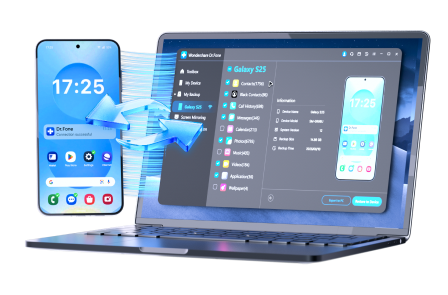
Dual SIM itself is managed in iOS Settings, but related problems often happen during device changes, updates, or instability. Wondershare Dr.Fone can help in legitimate scenarios like backing up your iPhone before changing SIM/eSIM configurations, transferring data to a new iPhone when you move your numbers, or repairing iOS issues if Settings keeps crashing or cellular options won’t load. It can also help recover important contacts or messages you rely on for two-line use, depending on your situation.
 Effortlessly manage data through preview, delete, export, etc.
- Transfer all data between devices.
- Robust backup solutions for reliable data protection.
- Mirror screens to PC for meetings, teaching, and control.
-
Step 1 Back up key data before SIM/eSIM changes
Use Dr.Fone to back up key data (contacts, messages, photos) before making carrier or eSIM changes.
-
Step 2 Transfer data when moving to a new device
If you’re moving to a new device, use Dr.Fone to transfer your data so both lines’ contacts and work/personal info stay organized.
-
Step 3 Repair iOS issues before rechecking settings
If iOS is unstable (for example, Settings freezing), use Dr.Fone’s system repair approach to address software issues before rechecking Dual SIM options.
- If you can still access the phone, back up your data before changing cellular plans or eSIM profiles.
- If you forgot the passcode, follow Apple’s official device recovery steps; only proceed if you’re the verified owner.
- If the device is stuck or unstable, resolve the iOS issue first, then return to Dual SIM settings and carrier activation.




Part 8. Security, privacy, and compliance notes
Dual SIM is designed to give users legitimate flexibility (two lines, clearer separation of identities, and better reachability) while still relying on carrier authentication and device security. Don’t try to bypass carrier activation, account ownership checks, or restrictions tied to an eSIM plan—those controls exist to prevent fraud and protect the rightful account holder. If a line can’t be activated because it’s tied to an account, billing status, or enterprise policy, the correct next step is to contact the carrier or the organization that manages the plan and be ready to verify ownership (for example, proof of purchase or account credentials).
Conclusion
Dual SIM on iPhone is a built-in way to use two cellular lines on one device, helping you separate work and personal use, travel more smoothly, and manage coverage. You can find and manage it in Settings > Cellular/Mobile Data, where you label lines and choose defaults for calls, texts, and data. If you’re preparing for changes or dealing with device instability, Dr.Fone can be a practical, legitimate option for backup, transfer, or iOS repair before you continue setup.
FAQ
Q1. Can an iPhone use two phone numbers at the same time?
Yes—on supported models, Dual SIM allows two lines to be active on standby so either number can receive calls and texts. Cellular data is generally used by one selected line at a time, and you can switch which line is used in Settings.
Q2. Does Dual SIM mean I need two physical SIM cards?
Not necessarily. Many iPhones use one physical SIM plus one eSIM, and some configurations support two eSIM lines (depending on model and region). The exact setup depends on your iPhone and carrier support.
Q3. How do I choose which number iPhone uses for calls and texts?
You can set a default voice line in Settings > Cellular/Mobile Data and also pick a line per contact or per call. For messaging, iOS typically shows which line is being used in the conversation so you can confirm or change it.
Q4. Will turning off a line in Settings cancel my plan?
No. Turning a line off in Settings only disables that line on the iPhone; it doesn’t cancel the carrier plan. To change or cancel service, you must do so through your carrier account or support channel.
 Add Wondershare Dr.Fone as a preferred source on Google