Effortlessly manage data through preview, delete, export, etc.

 100% Security Verified | No Subscription Required | No Malware

 :
: 
 ChatGPT
 Perplexity
 Gemini
 Claude
 Grok
Grok
what is dynamic island? It’s an iPhone interface element that turns the front camera "pill" area on certain newer models into an interactive space for live alerts, background activities, and quick controls. Instead of a static cutout, it expands and contracts to show things like timers, calls, music, and navigation updates.
In plain English: Dynamic Island is the spot at the top of some iPhones that "comes alive" to show what’s happening right now, and lets you tap or long-press for quick actions. One key takeaway: it doesn’t replace notifications—it adds a faster, at-a-glance way to manage ongoing activities while you stay in your current app.
In this article
- Part 1. What Dynamic Island is used for: core uses & scenarios (Why it matters)
- Part 2. How Dynamic Island works: official working logic (How it works, non-technical + technical-lite)
- Part 3. Where to find Dynamic Island: settings paths and entry points (Where to find it)
- Part 4. How to use, enable, disable, or check Dynamic Island
- Part 5. Requirements and compatibility
- Part 6. Dynamic Island vs related concepts
- Part 7. Common issues and misconceptions
- Part 8. Security, privacy, and compliance notes
Part 1. What Dynamic Island is used for: core uses & scenarios (Why it matters)
Core uses and real-world scenarios
Dynamic Island matters because it reduces app-switching and keeps time-sensitive info visible without fully interrupting what you’re doing. It’s designed for "ongoing" events (like a timer or ride status) where quick glances and controls are more useful than a full notification.
- You start a timer while cooking and quickly pause or check remaining time without opening the Clock app.
- You answer a call, switch apps, and still see call status or controls in the Dynamic Island.
- You play music or a podcast and use the Dynamic Island to see what’s playing or jump back to controls.
- You follow turn-by-turn navigation and glance at upcoming directions while messaging.
- You track a live activity (for supported apps), such as delivery or ride progress, without keeping the app on screen.
Who needs it most
Dynamic Island is most useful for everyday users who multitask and want fewer interruptions, commuters who rely on navigation and calls, and people who use timers, media playback, and real-time updates frequently. It also helps parents and caregivers who want quick visibility into ongoing activities without handing over full app access. For second-hand buyers and sellers, it’s a quick visual cue that the phone model likely supports the newer "pill" design (though model checks are still essential).
Part 2. How Dynamic Island works: official working logic (How it works, non-technical + technical-lite)
Plain explanation
Dynamic Island works by using the area around the front camera sensors as a dynamic display region. iOS can temporarily expand that region into a small banner-like shape to show live status (for example, a timer running), then shrink it back when you’re done. Interactions like tapping or long-pressing typically open quick controls or take you back into the relevant app.
Key components
- Hardware-dependent display layout: Only iPhones with the pill-shaped Face ID/camera cutout support the Dynamic Island UI.
- iOS system animations and layout rules: iOS manages how the island expands, stacks multiple activities, and returns to its resting state.
- Live Activities support (iOS feature): Many "ongoing" updates rely on Live Activities, which apps can opt into and you can manage in settings.
- App integration and permissions: Whether you see a Dynamic Island element depends on the app supporting it and having the needed notification/activity permissions.
- User interaction gestures: Tap usually opens the related app; long-press often reveals expanded controls (behavior varies by app).
Part 3. Where to find Dynamic Island: settings paths and entry points (Where to find it)
Settings or menu paths
Dynamic Island itself isn’t typically a standalone setting you can open; it appears automatically at the top of the screen during supported activities. What you can manage are the features that feed it:
- Settings > Notifications > Live Activities
- Settings > Notifications > [App Name] > Allow Notifications (and related options)
- Settings > Face ID & Passcode > Lock Screen Access (controls what can appear when the phone is locked; options vary by iOS version)
Search keywords and entry tips
Try searching in the Settings search bar for:
- "Live Activities"
- "Notifications"
- App name (for per-app notification controls)
If labels vary by iOS version, look for anything referring to "live updates," "ongoing activities," or notification permissions for the specific app you expect to appear in Dynamic Island.
Part 4. How to use, enable, disable, or check Dynamic Island
Safe how-to steps
-
Step 1 Confirm you’re on a supported iPhone model
(Dynamic Island appears only on certain newer iPhones with the pill-shaped cutout).
-
Step 2 Check Live Activities permissions
Go to Settings > Notifications > Live Activities and make sure Live Activities are allowed (if available on your iOS version).
-
Step 3 Start a supported activity
Open a supported activity (for example, start a timer, begin navigation, start media playback, or use an app known to provide live updates).
-
Step 4 Interact safely
Tap the Dynamic Island to return to the related app, or long-press to see expanded controls (behavior depends on the activity/app).
Official help resources
If you need Apple-approved guidance without guessing settings names, use Apple’s built-in Tips app (if available) and the Apple Support app on iPhone, which can surface model- and iOS-specific instructions.
Part 5. Requirements and compatibility
Quick compatibility table
| Item | Requirement / behavior |
|---|---|
| Supported devices | iPhone models with Dynamic Island hardware (for example, iPhone 14 Pro/Pro Max and many later models; exact availability varies by model year/region) |
| iOS requirement | iOS version varies; Live Activities are associated with iOS 16-era and later releases (exact behavior can change by update) |
| Account sign-in | Not required for the feature itself; some apps may require an account to show live updates |
| Required toggles | Typically tied to Notifications and Live Activities (and per-app permissions) |
| Connectivity | Some activities work offline (timers, calls in progress); others may need data (navigation traffic, delivery/ride tracking) |
| Offline behavior | May show last-known or local status; network-based activities can pause or become less accurate without connectivity |
| Notable limitations | Not available on iPhones with a traditional notch or Touch ID designs; not all apps support it; Lock Screen privacy settings can limit what’s shown |
Notes and caveats
Dynamic Island behavior depends on both iOS version and app support. Even on supported devices, you may see different layouts, animations, or available controls after iOS updates, and some regions/apps may provide fewer Live Activities due to app design or privacy choices.
Part 6. Dynamic Island vs related concepts
Key differences
| Concept | Purpose | Where it appears | Depends on | Typical trigger | Common confusion |
|---|---|---|---|---|---|
| Dynamic Island | Interactive, compact hub for ongoing activities | Top cutout area on supported iPhones | Supported hardware + iOS + app support | Timers, calls, media, navigation, Live Activities | Mistaken as a "notification setting" you can toggle on/off |
| Notification banners | One-time alerts and messages | Top of screen (banner) | Notification permissions | Incoming alerts (messages, reminders, app alerts) | People expect banners to "live" in the island continuously |
| Lock Screen Live Activities | Persistent live updates on the Lock Screen | Lock Screen (and sometimes via the island while unlocked) | Live Activities + app support | Ongoing tracked events | Confused with Dynamic Island itself, which is the display area |
| Status bar indicators | System status (signal, battery, etc.) | Top edges | iOS system | Always-on system state | Confused with interactive controls (usually not interactive like the island) |
When readers confuse them
- Thinking Dynamic Island is the same as notification banners, when it’s mainly for ongoing activities.
- Expecting a universal on/off toggle for Dynamic Island (it’s largely automatic; you manage inputs like Live Activities and app permissions).
- Assuming every app can use it immediately (apps must implement support).
- Mixing up Lock Screen Live Activities with what appears while you’re actively using the phone.
Part 7. Common issues and misconceptions
Symptom → likely reason → what to check
- "I don’t see Dynamic Island at all." → Device may not support it → Check your exact iPhone model (Dynamic Island requires specific hardware).
- "It never shows live updates." → Live Activities or notifications may be off → Check Settings > Notifications > Live Activities, and per-app notification settings.
- "It works for timers but not for my delivery/ride app." → App may not support Live Activities/Dynamic Island → Update the app and iOS; review the app’s notification permissions.
- "It shows info on the Lock Screen that I don’t want others to see." → Lock Screen preview/privacy settings → Check notification preview settings and Lock Screen access options (wording varies by iOS version).
- "It’s glitchy or doesn’t respond." → Temporary iOS/app instability → Restart the iPhone, update iOS, and update the affected app; test with a built-in activity like a timer.
When Dr.Fone can help
If Dynamic Island behaviors seem inconsistent after updates, crashes, or system instability, the issue may be broader than a single app setting. In those cases, Dr.Fone can be relevant for legitimate maintenance tasks such as backing up your iPhone before troubleshooting, or repairing iOS system issues when the UI is unstable. It’s not needed for normal Dynamic Island use, but it can be a practical option when standard steps don’t resolve system-level problems.
 Effortlessly manage data through preview, delete, export, etc.
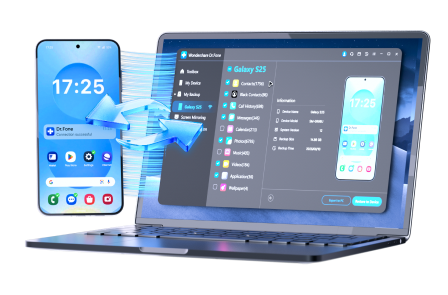
- Transfer all data between devices.
- Robust backup solutions for reliable data protection.
- Mirror screens to PC for meetings, teaching, and control.
-
Step 1 Back up important data before major changes
Use Dr.Fone to back up important data from your iPhone to a computer before making major changes (like reinstalling or restoring).
-
Step 2 Run system repair (where available) for device instability
If the iPhone is unstable, run system repair features (where available) to address iOS issues without attempting any security bypass.
-
Step 3 Re-check permissions and test Dynamic Island
After the device is stable, re-check Notifications/Live Activities settings and test Dynamic Island using a built-in activity (timer, call, media).
- If you can still access the phone, start with iOS/app updates and settings checks, and back up before bigger changes.
- If you forgot the passcode, use Apple’s official account and device recovery methods (and only for a device you own).
- If the device is stuck or unstable, consider a reputable repair workflow and data backup before restore-level steps.




Part 8. Security, privacy, and compliance notes
Dynamic Island is designed to surface timely information quickly, which can also expose snippets of sensitive content if your notification previews are permissive. Use notification preview and Lock Screen access settings to reduce what others can see when your phone is locked or nearby. Don’t try to bypass iPhone security (passcodes, Face ID, Apple ID/Activation Lock, or any MDM/workplace controls); those protections exist to prevent unauthorized access. If ownership, Apple ID, or organizational management is involved (for example, a second-hand phone still linked to someone else, or a work-managed device), the official next step is to contact the original owner, your organization’s IT admin, or Apple support channels with proof of purchase where required.
Conclusion
Dynamic Island is Apple’s interactive top-of-screen hub on certain newer iPhones, designed to show and control ongoing activities without pulling you out of what you’re doing. It matters most for multitasking and quick visibility, and it’s managed indirectly through Live Activities and notification permissions rather than a single switch. If broader iOS instability is affecting it, Dr.Fone may fit as a careful backup or system-repair step alongside standard Apple-approved troubleshooting.
FAQ
Which iPhones have Dynamic Island?
Dynamic Island is available on iPhone models that use the pill-shaped front cutout design (starting with iPhone 14 Pro/Pro Max and many later models). Availability can vary by model year and region, so the most reliable check is your exact iPhone model name in Settings.
Can I turn Dynamic Island off?
There’s typically no single "off" switch for Dynamic Island because it’s part of the supported iPhone’s interface. You can reduce what appears by managing Live Activities and per-app notification permissions, and by tightening Lock Screen preview settings.
Why doesn’t Dynamic Island show for my app?
Not all apps support Live Activities or Dynamic Island behaviors. Update the app and iOS, enable the app’s notifications (and Live Activities if available), and test with a built-in activity like a timer to confirm the feature works on your device.
Does Dynamic Island affect privacy?
It can, depending on what you allow to appear while the phone is locked or in use (for example, message previews or live updates). Review notification preview settings, Lock Screen access options, and per-app notification controls to limit sensitive information from appearing at a glance.
 Add Wondershare Dr.Fone as a preferred source on Google