Effortlessly manage data through preview, delete, export, etc.

 100% Security Verified | No Subscription Required | No Malware

 :
: 
 ChatGPT
 Perplexity
 Gemini
 Claude
 Grok
Grok
What is Live Photos? Live Photos is an iPhone camera feature that captures a short moment of motion and sound around a photo, so the image "comes alive" when you press and hold it in the Photos app. It saves both a still key photo and a brief clip to preserve context.
In plain English: Live Photos is like taking a photo that also records a tiny bit of what happened right before and after you pressed the shutter. One key takeaway: it’s still a photo in your library, but it contains extra motion/audio data that can make memories feel more complete.
In this article
- Part 1. What Live Photos is used for: core uses & scenarios (Why it matters)
- Part 2. How Live Photos works: official working logic (How it works, non-technical + technical-lite)
- Part 3. Where to find Live Photos: settings paths and entry points (Where to find it)
- Part 4. How to use, enable, disable, or check Live Photos
- Part 5. Requirements and compatibility
- Part 6. Live Photos vs related concepts
- Part 7. Common issues and misconceptions
- Part 8. Security, privacy, and compliance notes
Part 1. What Live Photos is used for: core uses & scenarios (Why it matters)
Core uses and real-world scenarios
Live Photos matters because it helps you capture moments that a single frame can miss—like a smile forming, a wave, or the sound in the room—while still keeping a normal photo you can share and edit.
- Capturing kids or pets where the "best moment" happens just before/after the shutter
- Recording a quick ambient sound with a memory (cheering, laughter, waves) without switching to video
- Choosing a different "Key Photo" later if the first frame has closed eyes or blur
- Turning a Live Photos into a short video clip for easy sharing in apps that prefer video
- Making simple animated effects (like Loop or Bounce) for a more dynamic look
Who needs it most
Everyday iPhone users benefit most—especially anyone photographing people, pets, travel, or events. Parents often use it to catch fleeting expressions. Second-hand buyers and sellers may care because Live Photos can take more storage than standard photos. Creators and social sharers may use it to quickly generate short, shareable motion clips without filming full video.
Part 2. How Live Photos works: official working logic (How it works, non-technical + technical-lite)
Plain explanation
When Live Photos is on, your iPhone continuously buffers a brief moment while the Camera app is open. When you tap the shutter, it saves a still image plus a short slice of movement and audio around that tap. In Photos, pressing and holding plays that moment back.
Key components
- Key Photo: the main still frame used as the default thumbnail in your library.
- Short motion + audio segment: a brief capture stored alongside the still photo (length varies by device/OS version).
- Photos app playback: press and hold (or long-press) to preview the motion.
- Editing tools: options to change the Key Photo, trim the motion portion, or mute audio (options vary).
- Sharing/export behavior: some apps/services may receive only the still photo unless you explicitly share as video or in a compatible format.
Part 3. Where to find Live Photos: settings paths and entry points (Where to find it)
Settings or menu paths
- Camera app: Open Camera > look for the Live Photos icon (concentric circles) near the top of the screen (placement can vary by model/orientation).
- Settings path: Settings > Camera > Preserve Settings (helps keep Live Photos on/off state between launches, depending on iOS version).
Search keywords and entry tips
- Settings search keywords: "Live Photos", "Preserve Settings", "Camera"
- If labels vary, look for wording about preserving camera mode/settings or a toggle that keeps your last-used Live Photos state.
Part 4. How to use, enable, disable, or check Live Photos
Safe how-to steps
-
Step 1 Open Camera in Photo mode
Open the Camera app and choose Photo mode.
-
Step 2 Toggle Live Photos on or off
Tap the Live Photos icon to turn it on or off (it typically indicates the current state).
-
Step 3 Take the photo
Take a photo as usual; if Live Photos is on, the capture will include motion/audio.
-
Step 4 Play the Live Photo in Photos
Open Photos and press-and-hold the image to play the Live Photos.
-
Step 5 Edit (optional)
(Optional) In Photos > Edit, adjust the Key Photo or mute audio if those controls are available on your iOS version.
Official help resources
Apple’s official help resources vary by region and iOS version, and no official URL was provided in the inputs, so it’s best to use the Apple Support app on your device or Apple’s official support site via your browser search for "Apple Live Photos".
Part 5. Requirements and compatibility
Quick compatibility table
| Item | Requirement / behavior |
|---|---|
| Supported platforms | Apple iPhone (and often iPad) with a compatible iOS/iPadOS version; availability can vary by device and OS version |
| Where it works | Camera app (Photo mode) and Photos app playback |
| Account sign-in | Not required to capture; Apple ID may be used for iCloud Photos syncing if enabled |
| Required toggles | Live Photos icon in Camera; optional "Preserve Settings" control in Settings |
| Connectivity | Not required to capture or view locally; needed for cloud sync/sharing features like iCloud Photos |
| Offline behavior | Live Photos records and plays back offline when stored on-device |
| Notable limitations | Larger storage than a standard still; some platforms/apps may share only the still image unless exported/shared as video or supported format |
Notes and caveats
Exact behavior depends on iOS version, device model, and sharing method. For example, some messaging apps preserve Live Photos motion, while others convert them to a still image. Storage impact also varies with resolution and capture settings.
Part 6. Live Photos vs related concepts
Key differences
| Concept | Purpose | Where it appears | What it includes | Common dependency/confusion |
|---|---|---|---|---|
| Live Photos | Adds motion + optional audio around a still photo | Camera app + Photos app | Still key photo + short motion/audio segment | Often mistaken for "video" or assumed to share everywhere the same way |
| Video | Full motion recording for a chosen duration | Camera app (Video mode) + Photos | Continuous motion/audio | Typically larger files; more universal playback/sharing |
| Burst (if available) | Captures many still frames quickly | Camera app (varies by model/settings) | Multiple still photos | Confused with Live Photos because both help with action shots |
| Portrait (related mode) | Depth effect/background blur | Camera app (Portrait) + Photos | Still photo with depth data | Not motion; can be confused because it’s also a "special" photo type |
When readers confuse them
- Live Photos can look like a normal photo until you press and hold, so people assume it’s "just a still."
- Some apps strip the motion and only send the Key Photo, making users think Live Photos "didn’t work."
- Burst and Live Photos both help with action, but Burst is many stills while Live Photos is one still plus brief motion.
- "Convert to video" workflows can make it seem like Live Photos is natively a video file, even though it starts as a photo with extra data.
Part 7. Common issues and misconceptions
Symptom → likely reason → what to check
- Live Photo won’t play → Live Photos is off or reduced-motion playback → check the Live Photos icon in Camera for new shots, and in Photos try press-and-hold on the image (not just a tap).
- Shared Live Photo becomes a still image → app/service doesn’t support Live Photos → check whether you’re sharing as a video/compatible format or using a platform known to preserve motion.
- Live Photos taking too much storage → added motion/audio data increases file size → check iPhone Storage in Settings and consider turning Live Photos off for routine shots.
- No sound on Live Photos → audio muted in edit or captured in a quiet environment → check Photos > Edit for a mute/audio control (availability varies) and confirm your device wasn’t set to silent-related restrictions affecting capture audio behavior (varies).
- Live Photos missing after transfer → transfer method didn’t preserve the motion component → check whether you used iCloud Photos or a transfer tool/method that supports Live Photos metadata.
When Dr.Fone can help
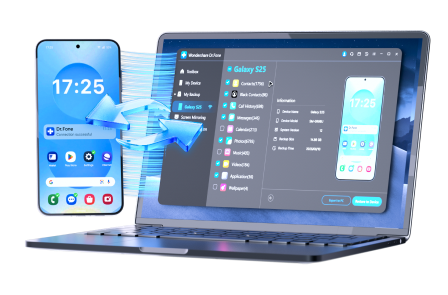
If Live Photos are important memories, the main risk is losing them during device changes, resets, or partial transfers. Wondershare Dr.Fone’s Backup & Restore can be relevant when you want an organized backup before troubleshooting, updating iOS, or moving to a new phone. It can also help you verify what content is included in a backup and restore it later if something goes wrong. Use it as a preventive step rather than a fix for unsupported sharing formats.

Backup & Restore
iOS backup and restore toolkit
Best for flexible backups, selective restore, and data safety planning.
Use this module when the article should guide readers toward safe backup habits, restore options, or pre-repair data protection.
 Effortlessly manage data through preview, delete, export, etc.
- Transfer all data between devices.
- Robust backup solutions for reliable data protection.
- Mirror screens to PC for meetings, teaching, and control.
-
Step 1 Connect iPhone and open the module
Connect your iPhone to a computer and open Dr.Fone Backup & Restore.
-
Step 2 Create a backup that includes photos/media
Create a backup that includes photos/media, then confirm the backup completes successfully.
-
Step 3 Restore when needed and verify motion
Restore the backup to the same or another device when needed, then verify Live Photos in the Photos app (press-and-hold to confirm motion).
- If you can still access the phone, back up before changing camera settings, transferring data, or updating iOS.
- If you forgot the passcode, use Apple’s official account and device recovery options to regain access before attempting any backup or restore.
- If the device is stuck or unstable, stabilize iOS first (official update/restore paths) and then back up to reduce the risk of media loss.


Part 8. Security, privacy, and compliance notes
Live Photos is designed for personal memory capture, but it can record brief audio and movement that people nearby may not expect—so it’s worth being mindful of privacy and local recording laws. Avoid trying to access, extract, or transfer someone else’s photos without permission; Live Photos can contain more context than a still image. In workplaces or schools, device policies (including MDM restrictions) may govern camera features and backups—follow your organization’s compliance rules. If ownership or account access is in question (for example, a second-hand device still tied to someone else), use official Apple ID recovery and proof-of-purchase support channels rather than attempting any workaround.
Conclusion
Live Photos is an iPhone camera feature that pairs a still photo with a brief moment of motion and sound, making memories feel more complete while remaining easy to browse in Photos. It matters most for capturing fleeting expressions and choosing better key frames later, but it can affect storage and sharing behavior. If you’re preparing to transfer devices or safeguard media, Dr.Fone Backup & Restore can be a practical, legitimate way to back up your photo library before making changes.


FAQ
Does Live Photos record audio?
Often yes—Live Photos can include a short audio segment along with the motion, depending on device and iOS version and how the photo is edited (for example, audio may be muted in Photos).
Q1. Do Live Photos take more storage than normal photos?
Yes. Because they include extra motion/audio data in addition to the key still image, they typically use more storage than a standard photo.
Q2. Why do my Live Photos turn into normal photos when I send them?
Some apps, email services, or platforms don’t support the Live Photos format and will only send the key still image. Trying a different sharing method (such as exporting/sharing as a video where available) may preserve motion.
Q3. Can I turn Live Photos off and keep existing Live Photos?
Yes. Turning Live Photos off only affects new photos you take; existing Live Photos already in your library remain Live Photos unless you convert them to a still or edit/export them in a way that removes motion.
 Add Wondershare Dr.Fone as a preferred source on Google