Effortlessly manage data through preview, delete, export, etc.

 100% Security Verified | No Subscription Required | No Malware

 :
: 
 ChatGPT
 Perplexity
 Gemini
 Claude
 Grok
Grok
What is Stage Manager? It’s an iPadOS multitasking feature that lets you run multiple apps in overlapping, resizable windows and switch between "stages" (groups of apps) to stay organized. It’s designed to make iPad workflows feel closer to desktop-style multitasking while keeping touch-first controls.
In plain English: Stage Manager helps you juggle several apps at once without constantly going back to the Home Screen. One key takeaway: it’s most useful when you’re doing real work—writing, researching, messaging, and managing files—because it keeps related apps grouped and easy to return to.
In this article
- Part 1. What Stage Manager is used for: core uses & scenarios (Why it matters)
- Part 2. How Stage Manager works: official working logic (How it works, non-technical + technical-lite)
- Part 3. Where to find Stage Manager: settings paths and entry points (Where to find it)
- Part 4. How to use, enable, disable, or check Stage Manager
- Part 5. Requirements and compatibility
- Part 6. Stage Manager vs related concepts
- Part 7. Common issues and misconceptions
- Part 8. Security, privacy, and compliance notes
Part 1. What Stage Manager is used for: core uses & scenarios (Why it matters)
Core uses and real-world scenarios
Stage Manager matters because it reduces app-switching friction: you can keep related apps visible, resize them, and return to the same working set later—especially helpful when tasks span multiple apps.
- Writing an email while referencing a PDF and copying details from Notes or Safari.
- Comparing two documents side-by-side, then quickly switching to a separate "stage" for messaging and calendar.
- Editing a photo or video while keeping Files open for drag-and-drop imports.
- Managing a class or project: browser research + document editor + chat app in one workspace.
- Using an external display (on supported setups) to spread out your workspace for more room.
Who needs it most
Stage Manager is most useful for students, creators, and knowledge workers who regularly combine research, writing, communication, and file management. It also helps everyday users who feel limited by single-app-fullscreen use. For enterprise or school deployments, IT teams may care because it changes how users multitask (and may be controlled by device policies).
Part 2. How Stage Manager works: official working logic (How it works, non-technical + technical-lite)
Plain explanation
Stage Manager lets you build a working "stage" by opening apps and arranging them as windows. You can keep a few apps visible at once, resize and overlap them, then switch to another stage when you change tasks. iPadOS keeps these groups so you can return to them quickly.
Key components
- Stages (app groups): Collections of apps you’ve opened together that you can switch between.
- Active window vs. background windows: One window is in focus; others remain available behind or beside it.
- Recent apps strip (optional): A visual area to jump between recent stages/apps (appearance varies by iPadOS version).
- Window controls and resizing: Drag edges/corners (where available) to resize; windows may "snap" into common layouts.
- External display support (where available): Some iPads can extend Stage Manager to a second screen; exact behavior depends on iPad model and iPadOS version.
- App support and constraints: Some apps have minimum sizes or limited windowing behavior, so layouts can differ by app.
Part 3. Where to find Stage Manager: settings paths and entry points (Where to find it)
Settings or menu paths
- Settings > Home Screen & Multitasking > Stage Manager
- You can also commonly access it from Control Center (availability and placement can vary by iPadOS version and your Control Center customization).
Search keywords and entry tips
- In Settings search, try: "Stage Manager" or "Multitasking".
- If you don’t see it, look under Home Screen & Multitasking (or similarly named multitasking sections), and confirm your iPad model supports the feature.
Part 4. How to use, enable, disable, or check Stage Manager
Safe how-to steps
-
Step 1 Open the Stage Manager settings
Open Settings > Home Screen & Multitasking > Stage Manager.
-
Step 2 Turn Stage Manager on or off
Toggle Stage Manager On (or Off to disable it).
-
Step 3 Create a stage with multiple apps
Open a few apps, then arrange them by dragging/resizing windows to create a stage.
-
Step 4 Switch between stages
Switch between stages using the on-screen recent-apps area (if shown) or by selecting another app group.
-
Step 5 Confirm it’s active
To confirm it’s active, check whether apps appear as windows rather than taking over the entire screen.
Official help resources
If you need guided instructions, use Apple’s built-in Tips app on iPad or the Apple Support app (if installed) and search for "Stage Manager" for official, device-matched guidance.
Part 5. Requirements and compatibility
Quick compatibility table
| Item | Requirement / behavior |
|---|---|
| Supported devices | Supported on select iPad models (commonly newer iPad Pro models and iPad Air 4th gen or later); exact support varies by iPadOS version and hardware |
| OS requirement | iPadOS 16 or later (feature availability and external display behavior vary by iPadOS version) |
| Apple ID sign-in | Not required to use Stage Manager itself |
| Required toggles | Stage Manager must be enabled in Settings (or via Control Center, where available) |
| Connectivity | No internet required for basic windowing; internet depends on the apps you use |
| Offline behavior | Works offline for local tasks (notes, local files) as supported by each app |
| Notable limitations | App window sizes/layouts may be limited by the app; older iPads may not show the feature at all; external display support depends on model/OS |
Notes and caveats
Stage Manager’s interface and external display options have changed across iPadOS releases, so menus and behaviors may look slightly different on your iPad. If the option is missing, it’s most often due to device compatibility or a restriction/policy profile.
Part 6. Stage Manager vs related concepts
Key differences
| Concept | Purpose | Where it appears | Dependencies | Common confusion |
|---|---|---|---|---|
| Stage Manager (iPad) | Desktop-like windowing with grouped "stages" | Settings, Control Center, multitasking UI | Requires supported iPad model and iPadOS version | Mistaken for Split View because both show multiple apps |
| Split View | Two apps side-by-side (more fixed layout) | Multitasking controls / app switch behaviors | Generally broader device support than Stage Manager | Users expect freeform resizing like Stage Manager |
| Slide Over (legacy on some iPads) | A floating app panel over another app | Multitasking gestures/UI (varies by iPadOS) | Availability varies by iPadOS/device | Confused with "a window," but it behaves differently |
| Stage Manager (Mac) | Organizes Mac app windows into focused groups | macOS multitasking features | macOS version-dependent | Same name, different input model and windowing conventions |
When readers confuse them
- Expecting freeform windows in Split View (Split View is more structured).
- Assuming every iPad has Stage Manager (it’s model-dependent).
- Mixing up Stage Manager on Mac vs iPad (same idea—grouping focus—but different UI and controls).
- Thinking Stage Manager is an app (it’s a system feature in iPadOS).
Part 7. Common issues and misconceptions
Symptom → likely reason → what to check
- Stage Manager option missing → iPad model not supported or iPadOS too old → Check your iPad model and update iPadOS (if supported).
- Toggle is present but feature doesn’t seem to activate → Another multitasking setting/UI expectation mismatch → Confirm apps are showing as windows; try closing apps and reopening after enabling.
- Windows won’t resize or snap oddly → App-specific minimum sizes/limitations → Test with Apple apps (e.g., Safari, Notes, Files) to compare behavior.
- External display doesn’t extend workspace as expected → Hardware/OS limitations or settings differences → Check iPad model support, iPadOS version, and display/cable compatibility.
- Work setup keeps changing → Stages update as you open/close apps → Rebuild a stage intentionally by opening only the apps you want in that group.
When Dr.Fone can help
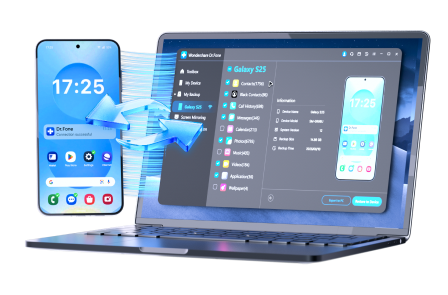
Stage Manager itself is a built-in iPadOS feature, so most problems are solved through settings checks, updates, or compatibility confirmation. However, if iPadOS is unstable—apps crashing, settings not sticking, or the system behaving inconsistently— Wondershare Dr.Fone can help with legitimate device maintenance such as system repair workflows or backing up data before troubleshooting. Dr.Fone can also help you transfer or back up important files before you update iPadOS or reset settings.
 Effortlessly manage data through preview, delete, export, etc.
- Transfer all data between devices.
- Robust backup solutions for reliable data protection.
- Mirror screens to PC for meetings, teaching, and control.
-
Step 1 Connect and choose a tool
Connect your iPad to a computer and open Dr.Fone, then choose a relevant tool such as System Repair or Backup (depending on your need).
-
Step 2 Follow the prompts
Follow the on-screen prompts to back up important data and/or run the recommended official repair process for iPadOS issues.
-
Step 3 Re-check Stage Manager after updates
After completion, update iPadOS (if needed) and re-check Settings > Home Screen & Multitasking > Stage Manager.
- If you can still access the phone (iPad) normally, try settings checks and a standard iPadOS update first.
- If you forgot the passcode, use Apple’s official recovery methods; avoid any bypass-style tools or instructions.
- If the device is stuck or unstable, consider a reputable repair/backup workflow (such as Dr.Fone) before deeper resets.




Part 8. Security, privacy, and compliance notes
Stage Manager is primarily a productivity feature, but it still affects privacy in shared spaces because multiple apps can be visible at once (notifications, messages, and documents may appear side-by-side). In managed environments (school or enterprise), device policies may limit multitasking features for compliance or data-handling reasons. Don’t try to bypass restrictions, management profiles, or account-based protections; if Stage Manager is disabled by policy or ownership is unclear, the correct next step is to contact the organization’s IT/admin or Apple Support with proof of ownership where required.
Conclusion
Stage Manager is iPadOS multitasking that groups apps into resizable window "stages," making it easier to keep task-related apps together and switch contexts quickly. If it’s missing or not working, compatibility and iPadOS version are the first things to check; and if your iPad is unstable during troubleshooting, Dr.Fone can be a practical, safe option for backup or system repair support.
FAQ
-
Q1. Does every iPad have Stage Manager?
No. Stage Manager is only available on certain iPad models, generally newer iPad Pro and iPad Air models, and it also depends on your iPadOS version. -
Q2. Is Stage Manager the same on iPad and Mac?
Not exactly. Both aim to organize multitasking by grouping windows, but the controls and behaviors differ because iPadOS is touch-first while macOS is built around pointer/keyboard window management. -
Q3. Why can’t I find Stage Manager in Settings?
The most common reasons are an unsupported iPad model, an older iPadOS version, or restrictions from Screen Time or an organizational management policy. Check model compatibility, update iPadOS if possible, and review any device restrictions. -
Q4. Can Stage Manager improve performance or battery life?
Stage Manager is about workflow and organization rather than performance. Running multiple active apps and windows can increase resource use depending on what those apps are doing, so battery impact varies by workload and device.
 Add Wondershare Dr.Fone as a preferred source on Google