Effortlessly manage data through preview, delete, export, etc.

 100% Security Verified | No Subscription Required | No Malware

 :
: 
 ChatGPT
 Perplexity
 Gemini
 Claude
 Grok
Grok
What is Lockdown Mode? It’s an optional, Apple-designed security setting on iPhone that sharply reduces certain features and connections to lower the risk of highly targeted attacks, including sophisticated spyware. It’s meant for rare, high-risk situations—not as a general "better security" switch for everyone.
In plain English: Lockdown Mode makes your iPhone stricter about what it will accept (like certain messages, web technologies, and incoming requests) so there are fewer ways for an attacker to reach you. One key takeaway: it trades convenience and some app/website functionality for extra protection in exceptional threat scenarios.
In this article
- Part 1. What Lockdown Mode is used for: core uses & scenarios (Why it matters)
- Part 2. How Lockdown Mode works: official working logic (How it works, non-technical + technical-lite)
- Part 3. Where to find Lockdown Mode: settings paths and entry points (Where to find it)
- Part 4. How to use, enable, disable, or check Lockdown Mode
- Part 5. Requirements and compatibility
- Part 6. Lockdown Mode vs related concepts
- Part 7. Common issues and misconceptions
- Part 8. Security, privacy, and compliance notes
Part 1. What Lockdown Mode is used for: core uses & scenarios (Why it matters)
Core uses and real-world scenarios
Lockdown Mode exists to protect people who may be specifically targeted by well-resourced attackers, where the usual built-in iPhone security may not be enough on its own against advanced, tailored threats.
- You’re a journalist, activist, or public figure who may face targeted surveillance attempts.
- You’re handling sensitive investigations or sources and want to reduce exposure to "zero-click" style attacks via messages.
- You travel to or work in high-risk environments and want to minimize unexpected device interactions.
- You suspect you’re being targeted with unusually sophisticated phishing, malicious links, or spyware campaigns.
- You’re supporting an at-risk person and want to temporarily harden their device during a sensitive period.
Who needs it most
Lockdown Mode is mainly for a small set of users at elevated risk: journalists, human-rights defenders, political campaigns, diplomats, executives in sensitive industries, and security researchers. Most everyday users are better served by standard protections (updates, strong passcodes, two-factor authentication, and safe browsing habits). For organizations, enterprise IT teams may recommend it for specific roles, but it can interfere with normal workflows and managed-device policies.
Part 2. How Lockdown Mode works: official working logic (How it works, non-technical + technical-lite)
Plain explanation
When you enable Lockdown Mode, iOS applies a stricter "allow less by default" rule set to areas attackers often abuse—like message content handling, certain web features, and unsolicited inbound connection types. The goal is to reduce the iPhone’s attack surface, even if that means some content won’t load or some features won’t work the same way.
Key components
- Messages hardening: Limits certain message attachments or rich content that can be used as delivery vectors.
- Web browsing restrictions: Reduces exposure to complex web technologies in Safari and web views that can increase attack surface.
- Incoming connection controls: Blocks or limits certain inbound requests and device-to-device connection behavior when not explicitly needed.
- Service and configuration limitations: Restricts some installation/configuration flows that could be abused in targeted scenarios.
- Per-device setting with a restart prompt: Enabling/disabling typically requires confirmation and restarting the iPhone so protections apply consistently.
- App and site behavior changes: Some websites may render differently and some app features may be limited, depending on how they rely on restricted capabilities.
Part 3. Where to find Lockdown Mode: settings paths and entry points (Where to find it)
Settings or menu paths
On iPhone, you can typically find it here:
- Settings > Privacy & Security > Lockdown Mode
Labeling and placement can vary slightly by iOS version, but it generally remains under privacy/security controls.
Search keywords and entry tips
- Try searching in Settings for: "Lockdown Mode" or "Lockdown".
- If you don’t see it, confirm your iPhone is on a supported iOS version; older versions may not include the option.
Part 4. How to use, enable, disable, or check Lockdown Mode
Safe how-to steps
-
Step 1 Open Privacy & Security in Settings
Open Settings and go to Privacy & Security.
-
Step 2 Review what changes
Tap Lockdown Mode to read what changes when it’s enabled.
-
Step 3 Turn on and restart if requested
Tap Turn On Lockdown Mode, confirm the prompts, and restart your iPhone if requested.
-
Step 4 Turn it off later from the same menu
To turn it off later, return to the same menu and choose Turn Off Lockdown Mode, then confirm.
-
Step 5 Check current status anytime
To check status at any time, revisit Settings > Privacy & Security > Lockdown Mode and look for whether it’s shown as on or off.
Official help resources
Use the explanatory text inside the Lockdown Mode settings page and the built-in iOS help prompts. If you’re managing devices in an organization, follow your IT team’s approved security guidance.
Part 5. Requirements and compatibility
Quick compatibility table
| Item | What to expect on iPhone |
|---|---|
| Supported devices/platforms | iPhone models that can run iOS 16 or later (exact support varies by model and iOS version) |
| Apple Account sign-in | Not strictly required to toggle the setting, but an Apple Account is commonly used for broader security and recovery workflows |
| Where the toggle lives | Settings app under Privacy & Security |
| Connectivity | Works regardless of cellular/Wi‑Fi state; it changes device behavior, not just network settings |
| Offline behavior | Protections remain in effect offline; limitations apply to local handling of content and connections |
| Notable limitations | Some websites may not work normally; certain message content/attachments may be limited; some connection/configuration scenarios may be blocked |
Notes and caveats
Lockdown Mode is intentionally disruptive for compatibility, so you may notice "broken" pages or missing message content that would otherwise load. Exact behaviors can change across iOS releases as Apple refines protections and exceptions.
Part 6. Lockdown Mode vs related concepts
Key differences
| Feature | Lockdown Mode | Stolen Device Protection (related concept) |
|---|---|---|
| Primary purpose | Reduce attack surface against highly targeted, sophisticated digital attacks | Reduce account takeover risk if someone has your iPhone + passcode in familiar locations |
| Where it appears | Settings > Privacy & Security | Settings > Face ID & Passcode (placement may vary by iOS version) |
| Dependencies | Works as a device security posture; may require restart to apply changes | Relies on Face ID/Touch ID, location context, and security delay behaviors |
| What it changes | Limits certain message/web/connection capabilities | Adds friction to sensitive account changes and credential actions |
| Common trade-off | Reduced app/website functionality | Extra steps/time for sensitive actions in certain contexts |
When readers confuse them
- Thinking Lockdown Mode is a "lost phone" tool (that’s closer to Find My and Activation Lock concepts).
- Assuming it prevents theft or passcode guessing by itself (it mainly limits advanced remote attack surfaces).
- Expecting it to improve everyday performance or battery life (it’s not designed for that).
- Mixing it up with parental controls or app restrictions (those are typically Screen Time features).
Part 7. Common issues and misconceptions
Symptom → likely reason → what to check
- Some websites don’t load correctly → web features are restricted → check whether Lockdown Mode is on, and try the site with it off only if you’re not in a high-risk situation.
- Message content or attachments look missing → Messages handling is limited → check if the sender is trusted and whether the content type is affected by Lockdown Mode.
- An accessory/computer connection fails unexpectedly → inbound/connection behavior may be restricted → check whether the connection is essential and whether you can use an alternative trusted workflow.
- An app feature stops working → the app may rely on restricted services or embedded web content → check for app updates and review whether the feature is necessary while in Lockdown Mode.
- You expected "maximum security" for everyone → Lockdown Mode is for exceptional threat models → check whether standard security best practices cover your needs instead.
When Dr.Fone can help
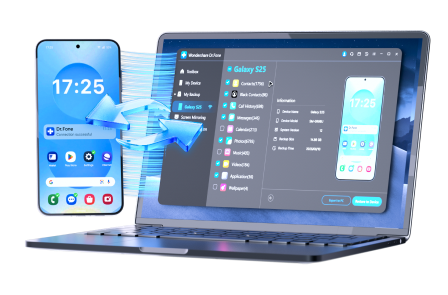
Lockdown Mode itself is a protective setting, but it can surface practical problems—like needing a safe backup before deeper troubleshooting, or needing device stability after an iOS update. In those legitimate scenarios, Wondershare Dr.Fone can help with backup and restore workflows (and, if needed, broader device maintenance like data transfer or system repair) without changing the purpose of Lockdown Mode. If your goal is to preserve data before you troubleshoot compatibility issues, a computer backup is often the safest first step.
 Effortlessly manage data through preview, delete, export, etc.
- Transfer all data between devices.
- Robust backup solutions for reliable data protection.
- Mirror screens to PC for meetings, teaching, and control.
-
Step 1 Install Dr.Fone and connect your iPhone
Install and open Dr.Fone on a trusted computer, then connect your iPhone with a cable and keep the iPhone unlocked to trust the computer if prompted.
-
Step 2 Choose backup and select data types
Choose a backup option in Dr.Fone and select the data types you want to save (photos, messages, contacts, etc.).
-
Step 3 Run the backup and verify completion
Start the backup and verify it completes, then proceed with any further troubleshooting (such as updating iOS, adjusting settings, or consulting your organization’s guidance).
- If you can still access the phone, back it up first before changing security settings or troubleshooting app issues.
- If you forgot the passcode, use Apple’s official recovery options and be prepared to verify ownership; avoid any "bypass" claims.
- If the device is stuck or unstable, prioritize data protection (backup) and then use reputable repair steps or professional support.




Part 8. Security, privacy, and compliance notes
Lockdown Mode is designed to protect users who may be targeted by advanced attackers, reducing the chance that malicious content or unexpected connections can compromise the device. You should not try to bypass security prompts, device management controls, or account protections connected to Apple services—those safeguards exist to prevent unauthorized access. If a device is organization-managed (MDM) or ownership is in question (second-hand devices, inherited devices, workplace phones), the correct next step is to contact the original owner, your IT administrator, or Apple through official ownership/account recovery channels and provide proof of purchase or authorization where required.
Conclusion
Lockdown Mode is an advanced iPhone security setting that intentionally limits certain features to reduce exposure to highly targeted attacks, and it matters most for people with elevated threat risk. You can find it in Settings under Privacy & Security and toggle it on or off based on your situation. If you need a safe way to preserve your data before troubleshooting side effects, Dr.Fone can be a practical backup-first step.
FAQ
Q1. Does Lockdown Mode make my iPhone "more secure" in general?
It can reduce specific high-end attack paths, but it also reduces functionality and isn’t necessary for most people. For everyday security, keeping iOS updated, using a strong passcode, enabling two-factor authentication, and avoiding suspicious links are usually the right baseline.
Q2. Will Lockdown Mode stop phishing or scam calls?
It can’t prevent all scams, and it doesn’t replace safe behavior. It mainly limits certain technical routes used in sophisticated attacks; you still need to avoid unknown links, attachments, and requests for personal information.
Q3. Can I use normal apps and websites with Lockdown Mode on?
Many will work normally, but some sites may render incorrectly and some app features may be limited depending on what technologies they rely on. If you must disable it temporarily for compatibility, do so only if your risk level allows.
Q4. Is Lockdown Mode the same as Find My or Activation Lock?
No. Find My and Activation Lock are anti-theft and account-protection systems, while Lockdown Mode is about reducing the device’s attack surface against advanced digital threats. For lost or stolen devices, use Find My and follow official account recovery steps.
 Add Wondershare Dr.Fone as a preferred source on Google