Effortlessly manage data through preview, delete, export, etc.

 100% Security Verified | No Subscription Required | No Malware

 :
: 
 ChatGPT
 Perplexity
 Gemini
 Claude
 Grok
Grok
what is reference mode? It’s a pro display feature on certain iPad models (especially iPad Pro) that prioritizes accurate, consistent color and tone reproduction for color-critical work. When enabled, it reduces or disables "adaptive" display behaviors so the iPad behaves more like a calibrated reference monitor.
In plain English: Reference Mode makes your iPad show colors more "truthfully," even if that looks less vivid than normal. One key takeaway: it’s designed for professional review and matching (photos, video, design), not for everyday browsing comfort.
In this article
- Part 1. What Reference Mode is used for: core uses & scenarios (Why it matters)
- Part 2. How Reference Mode works: official working logic (How it works, non-technical + technical-lite)
- Part 3. Where to find Reference Mode: settings paths and entry points (Where to find it)
- Part 4. How to use, enable, disable, or check Reference Mode
- Part 5. Requirements and compatibility
- Part 6. Reference Mode vs related concepts
- Part 7. Common issues and misconceptions
- Part 8. Security, privacy, and compliance notes
Part 1. What Reference Mode is used for: core uses & scenarios (Why it matters)
Core uses and real-world scenarios
Reference Mode matters when you need what you see on the iPad to closely match a known color standard, a camera workflow, or another calibrated screen. It aims to reduce surprises when your work leaves the iPad and appears on other devices, in print, or in broadcast deliverables.
- Reviewing photo edits so skin tones and neutrals don’t drift due to adaptive display changes
- Checking HDR/SDR video grading decisions against a more stable on-screen baseline
- Comparing an iPad preview with a calibrated studio monitor during client review
- Verifying brand colors in design comps (logos, UI colors) before export and handoff
- On-set monitoring or quick approvals where consistent color presentation is required
Who needs it most
Reference Mode is most useful for photographers, videographers, colorists, and designers who must evaluate color and tone reliably. It can also help educators or studios running consistent classroom/lab setups. Most everyday users don’t need it, and may prefer standard display features that optimize comfort and readability.
Part 2. How Reference Mode works: official working logic (How it works, non-technical + technical-lite)
Plain explanation
Normally, iPads can adjust how the screen looks based on ambient light, viewing conditions, and comfort settings. Reference Mode shifts the priority to accuracy and consistency by limiting those automatic adjustments and targeting specific reference behaviors, so color and tone remain steadier across time and environments.
Key components
- Supported display hardware: Only certain iPad displays can meet the tighter consistency targets required for reference viewing.
- Preset, standards-oriented behavior: The mode aims for predictable color/tone behavior aligned with professional expectations (exact behavior can vary by model and iPadOS version).
- Reduced adaptive processing: Features that change white point or perceived warmth may be limited so the image doesn’t "float" over time.
- Brightness/tonal stability focus: The system prioritizes stable tone response over eye-comfort changes.
- System-level setting: It applies at the OS level, affecting how content is displayed across compatible apps.
Part 3. Where to find Reference Mode: settings paths and entry points (Where to find it)
Settings or menu paths
On supported iPad models, you typically find it here:
- Settings > Display & Brightness > Reference Mode
Labels can vary slightly by iPad model and iPadOS version. If you don’t see it, the iPad may not support the feature, or a device management profile may restrict display settings.
Search keywords and entry tips
- Settings search keyword: "Reference Mode"
- If you don’t find it, search "Display & Brightness" and look for advanced/pro display options. On managed (work/school) iPads, some options may be hidden by policy.
Part 4. How to use, enable, disable, or check Reference Mode
Safe how-to steps
-
Step 1 Open Settings
Open Settings on the iPad.
-
Step 2 Go to Display & Brightness
Tap Display & Brightness.
-
Step 3 Toggle Reference Mode
Tap Reference Mode (or the closest matching option) and switch it On or Off.
-
Step 4 Confirm in your review app
Re-open the app you’re using for review and confirm the image looks consistent with your intended workflow.
-
Step 5 Turn it off after review
When you’re done with color-critical review, consider turning it Off to restore normal comfort/adaptive behavior.
Official help resources
If the toggle is missing or you’re unsure whether your iPad supports it, use Apple’s built-in documentation (iPad User Guide) for your specific iPad model, or contact Apple Support with your iPad model name and iPadOS version.
Part 5. Requirements and compatibility
Quick compatibility table
| Item | What to expect |
|---|---|
| Supported devices/platforms | Certain iPad Pro models with pro-grade displays; support varies by iPad model and iPadOS version |
| iPadOS version | Typically requires a newer iPadOS release; exact minimum version varies |
| Apple ID / sign-in | Not generally required just to toggle the feature |
| Related display toggles | Some adaptive features (for comfort/ambient changes) may be reduced/limited while Reference Mode is on |
| Connectivity | Not required for basic use once the feature exists on the device |
| Offline behavior | Works offline; it’s a device display mode |
| Notable limitations | Not all iPads show the option; managed devices may restrict it; results depend on content, app color management, and viewing environment |
Notes and caveats
Reference Mode is hardware- and OS-dependent, so two iPads can behave differently even on the same iPadOS version. Also, "accurate" doesn’t guarantee a perfect match to every external monitor unless the rest of the workflow (app color management, export settings, and the other display’s calibration) is also correct.
Part 6. Reference Mode vs related concepts
Key differences
| Feature | Purpose | Where it appears | Dependencies | Common confusion |
|---|---|---|---|---|
| Reference Mode | Consistent, standards-oriented viewing for color-critical work | Settings > Display & Brightness | Supported iPad hardware + iPadOS version | Can look less vivid; may feel "dimmer" or less adaptive |
| True Tone | Adjusts white balance based on ambient light for comfort | Display settings / Control Center (varies) | Ambient light sensing | People assume it improves accuracy; it changes appearance dynamically |
| Night Shift | Warmer color temperature to reduce blue light at night | Display settings / Control Center (varies) | Schedule/time settings | Can skew color significantly—bad for color review |
| Color Filters (Accessibility) | Helps users with color vision needs | Settings > Accessibility > Display & Text Size | Accessibility configuration | Can be mistaken for a "calibration" tool |
When readers confuse them
- Turning on True Tone or Night Shift can make colors look "better," but it usually makes them less consistent for professional matching.
- Accessibility Color Filters can intentionally alter colors and may be mistaken for a display defect.
- A "vivid" look is not the same as accurate color; Reference Mode may look flatter by design.
Part 7. Common issues and misconceptions
Symptom → likely reason → what to check
- Reference Mode option missing → iPad doesn’t support it or iPadOS is outdated → check your exact iPad model and iPadOS version; look under Display & Brightness; check for device management restrictions.
- Colors look dull or less punchy → Reference Mode prioritizes accuracy/stability over vividness → check that you intended to use it for review, not general viewing; compare with it off.
- Display seems less adaptive in different lighting → adaptive comfort features may be limited → check True Tone/Night Shift expectations and your ambient lighting conditions.
- Mismatch vs external monitor → different calibration/standards/app color management → verify the external display is calibrated and the app/export settings match your target color space.
- Unexpected tint or odd colors across the whole system → accessibility or display settings interfering → check Accessibility > Display & Text Size for Color Filters and other visual adjustments.
When Dr.Fone can help
Reference Mode itself is a normal setting, but display settings can become hard to verify when an iPad is unstable, stuck after an update, or you can’t access the system reliably. In those cases, Wondershare Dr.Fone can be relevant for legitimate maintenance tasks like iPadOS system repair (for update/boot issues) or backup/recovery if you need to safeguard project files before troubleshooting. It is not a tool for bypassing ownership, account locks, or management controls.
 Effortlessly manage data through preview, delete, export, etc.
- Transfer all data between devices.
- Robust backup solutions for reliable data protection.
- Mirror screens to PC for meetings, teaching, and control.
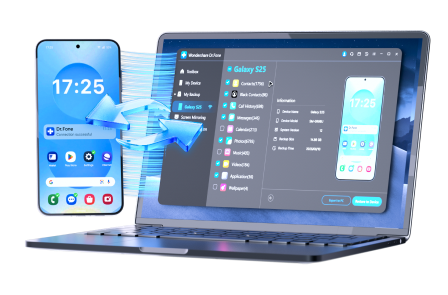
-
Step 1 Connect the iPad to your computer
Install and open Dr.Fone on a computer, then connect the iPad with a cable.
-
Step 2 Pick the appropriate module
Choose an appropriate module such as System Repair (for update/boot instability) or Backup/Restore (to protect data before deeper fixes).
-
Step 3 Follow prompts to finish
Follow the on-screen instructions to complete the repair or backup using official, device-authorized prompts.
- If you can still access the phone/tablet, check Display & Brightness and disable conflicting settings (True Tone/Night Shift/Color Filters) before deeper troubleshooting.
- If you forgot the passcode, use Apple’s official account recovery and device restore paths (Dr.Fone should not be used to bypass ownership protections).
- If the device is stuck or unstable, prioritize a backup and then consider a system repair workflow.




Part 8. Security, privacy, and compliance notes
Reference Mode is about display accuracy, not access control, but it still intersects with compliance in managed environments. On a work or school iPad, an MDM profile may restrict display settings to enforce consistency or policy. Don’t try to bypass management, supervision, or account-related protections; those controls exist to protect the organization and the device owner. If you believe a restriction is applied incorrectly, the official next step is to contact the organization’s IT admin or Apple Support with proof of ownership and the device details.
Conclusion
Reference Mode is a pro display setting on certain iPad models that prioritizes consistent, accurate color and tone for professional review. It matters most for photo/video/design workflows where "adaptive" display behavior can mislead decisions. If iPadOS instability prevents you from checking or changing settings safely, Dr.Fone can be a reasonable next step for backup or system repair—without bypassing ownership or management controls.
FAQ
-
Q1. What is reference mode on iPad?
Reference Mode is a display setting on supported iPads (commonly certain iPad Pro models) that aims for stable, accurate color and tone reproduction for professional evaluation, reducing adaptive behaviors that can change how content appears. -
Q2. Why don’t I see Reference Mode in Settings?
It’s usually because the iPad model doesn’t support it, the iPadOS version is too old, or the device is managed by an organization that restricts display options. Check Settings > Display & Brightness and confirm your model and iPadOS version. -
Q3. Should I leave Reference Mode on all the time?
Most people shouldn’t. It’s best for color-critical review, and it may look less vivid or less adaptive in changing lighting. For everyday reading and browsing, standard display settings (with comfort features) are often preferable. -
Q4. Does Reference Mode calibrate my iPad like a professional monitor?
It helps the iPad behave more like a reference display, but it doesn’t guarantee a perfect match to every external monitor or print output. Your app color management, export settings, and the calibration of other displays still matter.
 Add Wondershare Dr.Fone as a preferred source on Google