Effortlessly manage data through preview, delete, export, etc.

 100% Security Verified | No Subscription Required | No Malware

 :
: 
 ChatGPT
 Perplexity
 Gemini
 Claude
 Grok
Grok

I’m stuck between a flagship and a mid-range phone—on paper they both look fine, but I don’t want to regret the trade-offs a month later.
Reddit user, r/Android
Choosing between a flagship and a mid-range phone is rarely about which one is “best”—it’s about which trade-offs you’ll actually notice (and care about) after a few weeks.
AI can help you turn vague preferences like “good camera” or “fast enough” into a structured comparison that makes the decision feel less fuzzy and more personal.
What AI can’t do is confirm the real-life feel: comfort in hand, your daily workflow friction, or whether you’ll resent a compromise over time—so the goal is decision clarity first, then practical execution after.
In this article
- How to compare flagship vs mid-range based on real priorities
- Start with your real usage (not specs)
- Spot your regret risk
- Focus on daily patterns
- Watch for edge-case differences
- What the AI needs to compare
- AI prompts to evaluate more clearly
- When to stop researching and make the call
- After choosing: switch or prepare smoothly with Dr.Fone

Part 1. How to Compare flagship or mid range phone decision with ai guide Based on Real Priorities
1-1. Start with your real usage (not specs)
You’re deciding whether it’s worth paying more for a flagship—or whether a mid-range model will cover your needs without the “extra” you won’t use.
1-2. Spot your regret risk
The tension usually comes down to regret risk: a flagship can feel like overspending if you don’t benefit from it, while a mid-range can feel like “almost enough” if your usage pushes it into its weaker spots.
1-3. Focus on daily patterns
A better comparison focuses on your daily patterns (photos, apps, travel, battery anxiety, device lifespan expectations, upgrade cycle) rather than generic recommendations.
1-4. Watch for edge-case differences
The hard part is that both can look great on paper, and the differences often show up in edge cases.
Part 2. What the AI Needs to Compare
Give the AI enough context to map trade-offs to your actual usage:
- Your budget range and how strict it is (hard cap vs flexible)
- How long you plan to keep the phone (1–2 years vs 3–5 years)
- Top 3 daily uses (e.g., photos of kids, gaming, work calls, social video)
- Your pain points with your current phone (battery, lag, storage, camera, overheating)
- Your tolerance for compromises (camera consistency, performance under load, storage, charging speed)
- Your environment (low-light photos, travel, poor signal areas, lots of video calls)
- Your risk profile (hate hassles/slowdowns vs okay with “good enough”)
- Whether you’ll switch ecosystems or keep the same one (apps, accessories, backups)
Part 3. Using AI Prompts to Evaluate flagship or mid range phone decision with ai guide More Clearly
Use these prompts to force clearer trade-offs instead of spec-shopping.
3-1. Level 1: Basic Prompt
I’m choosing between a flagship phone and a mid-range phone.
Ask me 6–8 questions about how I use my phone, then tell me which category fits better and why, focusing on real-life trade-offs instead of specs.
3-2. Level 2: Advanced Prompt
Help me compare flagship vs mid-range based on my priorities.
1) First, list the top decision factors you infer from my answers (ranked).
2) Then compare what each option does better/worse for those factors, including “what I gain / what I give up.”
3) End with which option I’m likely to be happier with after 6 months, and who the other option is better for.
3-3. Level 3: Evidence Prompt
Here’s my context: [budget range], [how long I keep phones], [top 3 daily uses], [current phone frustrations], [must-haves], [nice-to-haves]. I’m deciding between a flagship and a mid-range phone.
Recommend one category and justify it with:
- The 3 trade-offs that matter most for me
- What I gain and what I give up with flagship
- What I gain and what I give up with mid-range
- One key assumption you’re making that—if wrong—would flip your recommendation
3-4. Prompt Refinement
If I choose mid-range, what are the most likely “slow-burn” regrets after 3–12 months (not day-one impressions)?
If I choose flagship, where am I most likely wasting money based on my usage?
Create a two-sentence rule for me: “Choose flagship if ____. Choose mid-range if ____.”
What’s the single most important question I should answer that determines the outcome?
Give me a decision matrix with weights (you propose the weights), then show how changing one weight would change the result.
What compromise would I notice weekly, not yearly—and which category reduces that risk?
3-5. AI Recommendation vs Real-World Fit
| Likely AI recommendation or conclusion | What real-life use may change or reveal |
|---|---|
| “Mid-range is enough because your usage is mostly messaging, browsing, and casual photos.” | You may discover you care a lot about camera consistency (especially indoors/night) or smoothness under multitasking more than you expected. |
| “Flagship fits because you keep phones longer and hate performance dips.” | You might still feel the cost isn’t worth it if your day-to-day apps don’t stress the device and your mid-range would have felt fine. |
| “Flagship is safer if you do lots of video, photos, or heavy apps.” | Ergonomics, battery behavior with your specific carrier/signal quality, and your editing/sharing workflow can matter more than headline capabilities. |
| “Mid-range is better value; upgrade sooner instead of overpaying now.” | Upgrade friction (setup time, transfers, resale effort) can make “upgrade sooner” less appealing in practice than it sounds. |
AI can clarify likely fit and make trade-offs explicit, but hands-on use, workflow friction, and daily habits are what ultimately decide satisfaction.
Part 4. When to Stop Researching flagship or mid range phone decision with ai guide and Make the Call
- You can name two trade-offs you accept with your chosen category (not just benefits you want).
- You know your upgrade horizon (keep longer vs replace sooner) and your choice matches it.
- You’ve identified your top regret risk (camera consistency, performance under load, battery anxiety, cost) and you’re choosing to reduce that risk.
- You can explain the decision in one sentence without mentioning specs: “I’m choosing X because my daily use is Y and I care most about Z.”
At that point, more browsing usually adds noise—your next value comes from setting up the phone cleanly and avoiding migration mistakes.
Part 5. After Choosing flagship or mid range phone decision with ai guide: Switch or Prepare Smoothly with Dr.Fone
Once you’ve chosen a category (and likely a model), the practical work is making sure your data, accounts, and storage are ready—especially if you’re switching brands, cleaning up before transfer, or preparing an old device for resale. Dr.Fone - Phone Transfer can help with the execution steps below.
 Move data between iOS to Android and vice versa.
- Transfer contacts, SMS, photos, videos, music, and more types.
- Available with all phones with Android and iOS versions.
- Simple, click-through process.
-
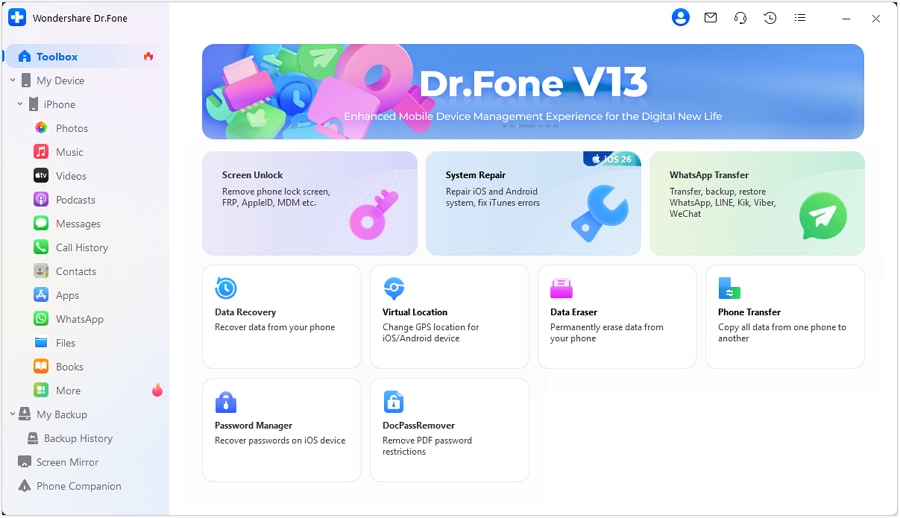
Step 1 Plan what actually moves (and what shouldn’t)
Action: Use Dr.Fone to transfer the data you intend to keep (like contacts, photos, and key files) and avoid dragging over clutter you don’t want.
Limitation: Not every app’s internal data transfers cleanly—some apps require in-app login or their own backup method.
-
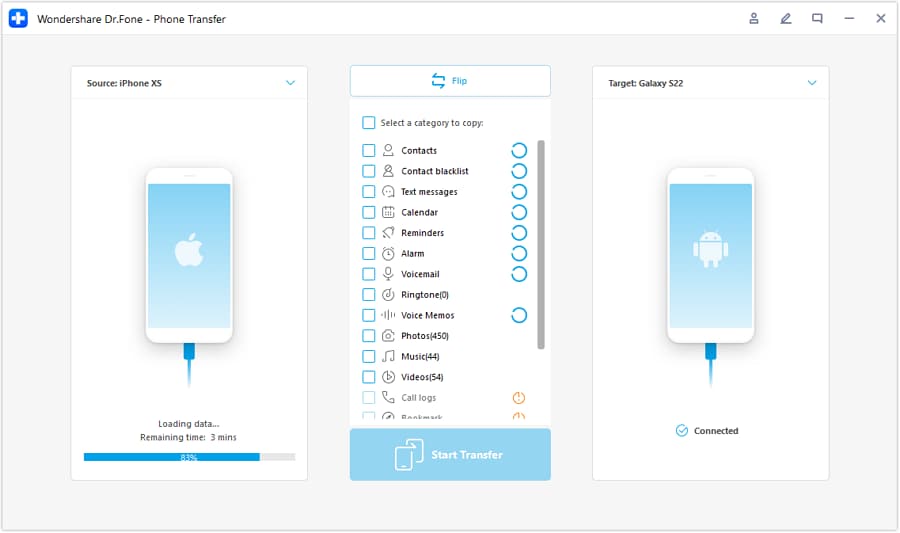
Step 2 Do a clean transfer
Action: Transfer your selected content first, so you can evaluate the result without mixing in extra clutter.
-
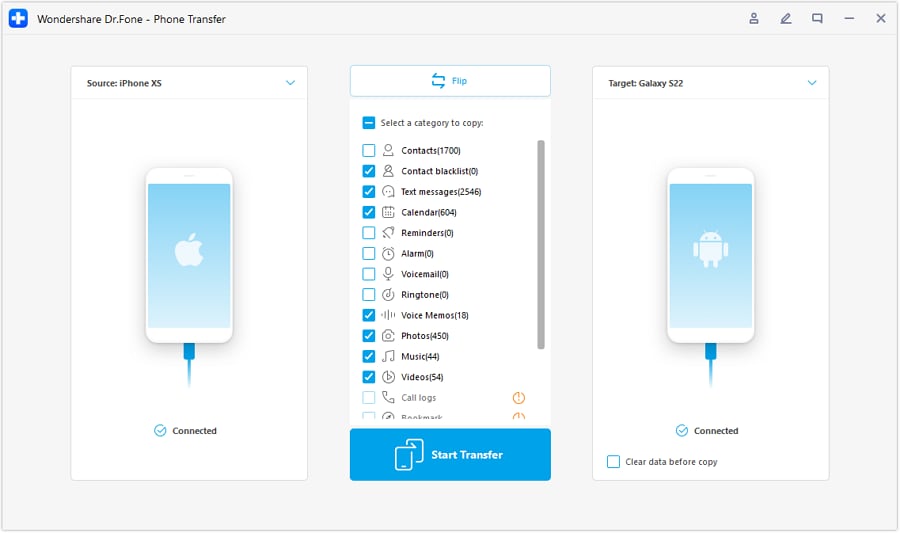
Step 3 Sanity-check the results before you wipe or trade in
Action: After the transfer, verify a small checklist (recent photos, important chats, essential contacts, 2FA access) before you wipe or trade in the old phone.
Limitation: If you miss account recovery steps (like authenticator apps or SIM-based verification), tools can’t fully prevent lockouts.
-
Step 4 Prepare the old phone for handoff or resale
Action: Use Dr.Fone-supported workflows to help remove leftover personal data and organize what you’re keeping vs deleting, then reset the device when you’re confident.
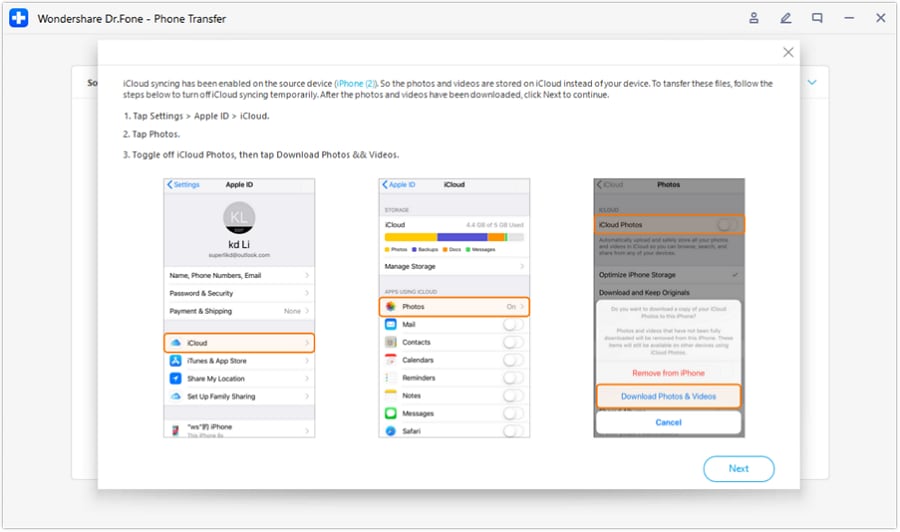
Limitation: You still need to follow your phone brand’s official reset/sign-out steps (accounts, activation locks) to fully prevent access issues.




Conclusion
AI is best used as decision support to make your trade-offs clear; real use is the final proof of fit—and once you’ve chosen, a smooth switch (or resale prep) is where tools like Dr.Fone become practical.
FAQ
-
Can I trust AI to tell me which phone category is better?
Trust it for structured reasoning and trade-offs—not for “feel,” camera taste, signal performance, or long-term reliability in your exact conditions. -
What’s the biggest real-world trade-off between flagship and mid-range?
Consistency under stress: flagships tend to feel more stable in tougher scenarios (low light photos, heavy multitasking, longer ownership), while mid-range wins on value if you stay in lighter usage. -
How do I avoid getting stuck in spec comparisons?
Force the decision into daily outcomes: what you do most, what annoys you now, and what you refuse to compromise on weekly—not what looks impressive in a chart. -
What assumption most commonly flips the recommendation?
How long you keep the phone. If you upgrade often, mid-range becomes easier to justify; if you keep phones for years and hate slowdowns, flagship becomes safer. -
What should I prepare after I decide?
A short migration checklist: account logins, 2FA methods, photo backups, storage cleanup, and whether you’re wiping/reselling the old phone.
 Add Wondershare Dr.Fone as a preferred source on Google