Effortlessly manage data through preview, delete, export, etc.

 100% Security Verified | No Subscription Required | No Malware

 :
: 
 ChatGPT
 Perplexity
 Gemini
 Claude
 Grok
Grok
what is back tap? Back Tap is an iPhone Accessibility feature that lets you trigger selected actions by double-tapping or triple-tapping the back of your iPhone. It works like a gesture-based shortcut, often used to open Control Center, take a screenshot, run a Shortcut, or improve one-handed accessibility.
In plain English: Back Tap turns a quick tap on the back of your iPhone into a button you can "press" without touching the screen. One key takeaway: it’s an Accessibility shortcut meant to make common actions faster, especially when the screen is hard to reach or you need a quick control.
In this article
- Part 1. What Back Tap is used for: core uses & scenarios (Why it matters)
- Part 2. How Back Tap works: official working logic (How it works, non-technical + technical-lite)
- Part 3. Where to find Back Tap: settings paths and entry points (Where to find it)
- Part 4. How to use, enable, disable, or check Back Tap
- Part 5. Requirements and compatibility
- Part 6. Back Tap vs related concepts
- Part 7. Common issues and misconceptions
- Part 8. Security, privacy, and compliance notes
Part 1. What Back Tap is used for: core uses & scenarios (Why it matters)
Core uses and real-world scenarios
Back Tap matters because it gives you a consistent, low-effort way to trigger frequent actions without changing your home screen layout or adding extra buttons.
- Take a screenshot when the on-screen controls are awkward to reach with one hand.
- Open Control Center or Notification Center quickly while using a large iPhone.
- Trigger a personal automation or workflow via the Shortcuts app (for example, start a timer or log an event).
- Turn on accessibility tools like Magnifier in a hurry.
- Launch a common function such as the camera (depending on available actions and your setup).
Who needs it most
Back Tap is most helpful for everyday users who want faster one-handed controls, and for people who rely on Accessibility features to reduce repeated screen taps. It can also be useful for parents setting up simpler interactions for a family member, and for second-hand buyers/sellers who want to reset personal Accessibility preferences during setup.
Part 2. How Back Tap works: official working logic (How it works, non-technical + technical-lite)
Plain explanation
Your iPhone uses built-in motion sensing to detect a distinct double-tap or triple-tap pattern on the back of the device. When it recognizes that tap pattern, iOS runs the action you assigned—similar to pressing a shortcut button—provided the phone’s conditions allow it (for example, the gesture is recognized and the action is permitted in the current state).
Key components
- Accessibility gesture setting (Back Tap): The place where you assign actions to Double Tap and Triple Tap.
- Motion sensors (accelerometer/gyroscope): Hardware that helps iOS distinguish taps from normal movement.
- Gesture recognition logic: System-level filtering that reduces accidental triggers from bumps or normal handling.
- Assigned action list: Built-in actions (like system controls) and optional Shortcuts actions you choose.
- Device state constraints: iOS behavior may vary depending on whether apps are open, the screen is locked, Low Power Mode is enabled, or other Accessibility features are active.
Part 3. Where to find Back Tap: settings paths and entry points (Where to find it)
Settings or menu paths
On iPhone, you can typically find it here:
- Settings > Accessibility > Touch > Back Tap
Menu names can vary slightly by iOS version, but it remains under Accessibility and then Touch on modern iOS releases.
Search keywords and entry tips
- Settings search keywords to try: "Back Tap", "Accessibility", "Touch"
If you don’t see "Back Tap" immediately, look for the Touch settings within Accessibility and scroll toward the bottom, where gesture-related options often appear.
Part 4. How to use, enable, disable, or check Back Tap
Safe how-to steps
-
Step 1 Open the Back Tap setting
Go to Settings > Accessibility > Touch > Back Tap.
-
Step 2 Choose Double Tap or Triple Tap
Tap Double Tap (or Triple Tap) and select the action you want.
-
Step 3 Test the gesture
Test the gesture by tapping the back of the iPhone (around the Apple logo area is a common spot).
-
Step 4 Disable Back Tap if needed
To disable, return to Double Tap/Triple Tap and choose None.
Official help resources
Apple provides built-in explanations inside Settings > Accessibility. If you need additional guidance, use the Help tips within Accessibility settings or consult Apple Support through official Apple channels (availability varies by region).
Part 5. Requirements and compatibility
Quick compatibility table
| Requirement | What to expect |
|---|---|
| Supported devices/platforms | iPhone models that support Back Tap (commonly iPhone 8 and later), iOS version varies by device |
| iOS version | Generally requires iOS 14 or later (exact availability can vary by model and iOS release) |
| Apple ID sign-in | Not required for Back Tap itself; some Shortcut actions may depend on your apps/services |
| Required toggles/settings | Back Tap must be enabled and assigned to an action under Accessibility |
| Connectivity | Not required for the gesture; specific actions (e.g., online shortcuts) may require internet |
| Offline behavior | Works offline for local actions (e.g., screenshots, Control Center); network-dependent actions may fail offline |
| Notable limitations | Can misfire with certain cases/handling, and some actions may behave differently on the Lock Screen |
Notes and caveats
Back Tap sensitivity and reliability can vary depending on your iPhone model, case thickness, and how you tap. Some assigned actions may not run in every situation (for example, if an app restricts behavior, if the phone is locked, or if system conditions prevent it).
Part 6. Back Tap vs related concepts
Key differences
| Feature | Back Tap | AssistiveTouch |
|---|---|---|
| Main purpose | Trigger an action via a double/triple tap on the phone’s back | Provide an on-screen menu button for gestures and shortcuts |
| Where it appears | Settings > Accessibility > Touch > Back Tap | Settings > Accessibility > Touch > AssistiveTouch |
| Trigger method | Physical tap gesture detected by sensors | On-screen button tap (floating control) |
| Dependencies | Motion sensing + gesture recognition | On-screen overlay + touch input |
| Common advantage | No extra on-screen button | More visible, more customizable menu and gestures |
| Common downside | Can be inconsistent with cases/movement | Adds a visible overlay that some users dislike |
When readers confuse them
- Back Tap is a gesture on the device body; AssistiveTouch is an on-screen control.
- Back Tap runs two assigned actions (double/triple); AssistiveTouch can expose a menu of many actions.
- If Back Tap feels unreliable, AssistiveTouch may be a steadier alternative for quick access.
Part 7. Common issues and misconceptions
Symptom → likely reason → what to check
- Back Tap doesn’t do anything → not enabled or set to "None" → check Settings > Accessibility > Touch > Back Tap and confirm an action is assigned.
- Triggers randomly → case/handling causes false positives → try a different case, change to Triple Tap, or choose a less disruptive action.
- Works sometimes but not always → recognition varies by model/movement → tap more deliberately, avoid tapping while the phone is moving, and retest.
- Assigned Shortcut doesn’t run → Shortcut requires permissions/connectivity → open the Shortcuts app once, verify permissions, and confirm the shortcut works when run manually.
- Doesn’t work on Lock Screen as expected → action may be restricted while locked → test the same action while unlocked and consider a lock-screen-appropriate action.
When Dr.Fone can help
Back Tap itself is a simple iOS setting, so most fixes are handled in Accessibility or by adjusting your Shortcut. However, if your iPhone becomes unstable (settings crashing, touch issues, repeated freezes) or you need to back up data before troubleshooting, Wondershare Dr.Fone can help with legitimate maintenance tasks like backup/restore workflows or iOS system repair. It can also be useful if you’re transferring data to a new phone and want a cleaner setup experience afterward.
 Effortlessly manage data through preview, delete, export, etc.
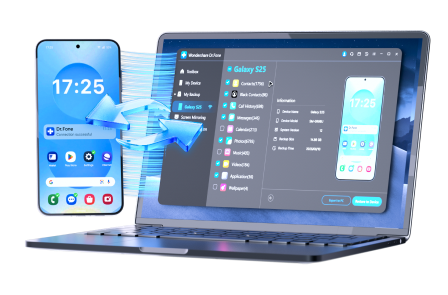
- Transfer all data between devices.
- Robust backup solutions for reliable data protection.
- Mirror screens to PC for meetings, teaching, and control.
-
Step 1 Back up important data
Use Dr.Fone to back up important data to a computer before making bigger settings changes or updates.
-
Step 2 Run system repair for abnormal behavior
If the phone is behaving abnormally, run system repair in Dr.Fone to address iOS stability issues (without attempting any security bypass).
-
Step 3 Re-check Back Tap after stability
After the device is stable, re-check Back Tap in Accessibility and reassign actions as needed.
- If you can still access the phone, start by adjusting Back Tap settings and testing with the phone unlocked.
- If you forgot the passcode, use Apple’s official account and device recovery options (Dr.Fone should not be used to bypass ownership protections).
- If the device is stuck or unstable, consider a backup and system repair workflow before reconfiguring gestures.




Part 8. Security, privacy, and compliance notes
Back Tap is designed to improve accessibility and speed, not to weaken security. Be mindful of what you assign to Double Tap/Triple Tap, because quick actions can expose information (for example, screenshots or opening sensitive apps) if someone else handles your phone. Do not attempt to bypass Lock Screen, Apple ID, Activation Lock, MDM policies, or any account-bound protections using gestures or third-party tools. If ownership, employment management (MDM), or account access is involved, the correct next step is to use Apple’s official recovery flows, contact the organization that manages the device, and provide proof of purchase or original-owner verification when required.
Conclusion
Back Tap is an iPhone Accessibility gesture that lets you run chosen actions by double- or triple-tapping the back of the device, making common tasks faster and easier to reach. If Back Tap isn’t behaving due to broader iOS instability or you need a safer backup-first approach, Dr.Fone may fit as a practical next step for legitimate backup or system repair—after you’ve checked the built-in Accessibility settings.
FAQ
Q1. Does Back Tap work on all iPhones?
No. Availability depends on the iPhone model and iOS version; it’s commonly supported on iPhone 8 and later running iOS 14 or later, but details can vary by device and iOS release.
Q2. Can Back Tap run Shortcuts?
Yes. You can assign a Shortcut to Double Tap or Triple Tap, but the Shortcut must work on its own first (including any permissions), and some actions may behave differently depending on whether the phone is locked or offline.
Q3. Why does Back Tap trigger by accident?
Accidental triggers are often caused by certain cases, tight grips, movement (like walking), or tapping too broadly. Switching to Triple Tap, changing the case, or choosing a less disruptive action usually helps.
Q4. Is Back Tap a security risk?
It’s not intended as a security feature or a bypass method, but it can affect privacy if you assign actions that expose content quickly. Use lock-screen-appropriate actions, and rely on official Apple recovery and support routes for any account, lock, or ownership issues.
 Add Wondershare Dr.Fone as a preferred source on Google