Effortlessly manage data through preview, delete, export, etc.

 100% Security Verified | No Subscription Required | No Malware

 :
: 
 ChatGPT
 Perplexity
 Gemini
 Claude
 Grok
Grok
What is External Display Support on iPad? It’s iPadOS functionality that lets an iPad send video output to a TV or monitor—either by mirroring the iPad screen or, on supported models and iPadOS versions, extending the workspace so you can use the iPad and external display as separate screens.
In plain English: it’s how your iPad works with a bigger screen for presentations, entertainment, or a more desktop-like setup. One key takeaway: some iPads only mirror, while others can create a true second screen (often tied to Stage Manager support and the connected display type).
In this article
- Part 1. What External Display Support is used for: core uses & scenarios (Why it matters)
- Part 2. How External Display Support works: official working logic (How it works, non-technical + technical-lite)
- Part 3. Where to find External Display Support: settings paths and entry points (Where to find it)
- Part 4. How to use, enable, disable, or check External Display Support
- Part 5. Requirements and compatibility
- Part 6. External Display Support vs related concepts
- Part 7. Common issues and misconceptions
- Part 8. Security, privacy, and compliance notes
Part 1. What External Display Support is used for: core uses & scenarios (Why it matters)
Core uses and real-world scenarios
External Display Support matters because it changes how much space you have to view, edit, and present content—and it affects what people around you can see (mirroring) versus what stays on your iPad (extended display).
- Giving a slideshow or demo on a projector while keeping notes or controls on the iPad (extended display on supported setups).
- Watching videos on a larger TV/monitor from the iPad (mirroring or playback on the external screen).
- Using a monitor at a desk to work with multiple app windows and a bigger canvas (typically via Stage Manager where available).
- Reviewing photos/videos on a color-calibrated monitor while editing on the iPad.
- Sharing a whiteboard or notes in a meeting room without handing over the iPad (wired or AirPlay).
Who needs it most
Everyday users benefit when they want a "bigger screen" experience for media, school, or home office work. Students and creators often rely on it for multitasking and presentations. Second-hand buyers and sellers may want to verify that the iPad’s USB‑C/Lightning port and video output work properly. Enterprise/education IT teams care because external display and AirPlay behavior can be restricted by MDM policies for privacy and compliance.
Part 2. How External Display Support works: official working logic (How it works, non-technical + technical-lite)
Plain explanation
When you connect an iPad to a display (by cable/adapter or wirelessly with AirPlay), iPadOS negotiates a supported video mode with the display. Depending on your iPad model and iPadOS features, the iPad either duplicates what’s on the iPad (mirroring) or provides an additional desktop area on the external screen (extended display), letting you place different apps/windows on each screen.
Key components
- Connection method: wired (USB‑C/Thunderbolt or Lightning with an adapter) or wireless (AirPlay to Apple TV or compatible receivers).
- Display mode: screen mirroring vs extended display (often associated with Stage Manager support; availability varies by model and iPadOS version).
- Resolution/refresh negotiation: iPadOS and the monitor agree on a compatible output format; unsupported formats can cause black screens or borders.
- UI scaling and aspect ratio handling: some displays will show letterboxing/pillarboxing if the aspect ratio doesn’t match.
- Input and windowing (when supported): keyboard/trackpad/mouse and Stage Manager window management can change how external display workflows feel.
Part 3. Where to find External Display Support: settings paths and entry points (Where to find it)
Settings or menu paths
Common places to manage or access external display behavior include:
- Settings > Home Screen & Multitasking > Stage Manager (options may appear only on supported models/iPadOS versions)
- Settings > Display & Brightness > Display Zoom (or "More Space"/scaling options on some models)
- Control Center > Screen Mirroring (for AirPlay and some wired mirroring workflows)
On some iPadOS versions, extra display options may appear in Settings only while an external monitor is connected (labels and placement can vary).
Search keywords and entry tips
Use Settings search with keywords like:
- "Stage Manager"
- "Screen Mirroring"
- "Displays"
- "Display Zoom" or "More Space"
If your iPad doesn’t show Stage Manager options, it may mean your model or iPadOS version supports only mirroring (or the feature is located under a different multitasking menu name).
Part 4. How to use, enable, disable, or check External Display Support
Safe how-to steps
-
Step 1 Connect the display
Plug in a USB‑C/Thunderbolt cable (or use the appropriate Apple/compatible adapter), or prepare AirPlay on the TV/Apple TV.
-
Step 2 Check Screen Mirroring
Open Control Center and check Screen Mirroring to select the target display (for AirPlay) or confirm the external display is active.
-
Step 3 Turn on Stage Manager (if available)
If available, go to Settings > Home Screen & Multitasking > Stage Manager and turn Stage Manager on (and enable external display options if shown).
-
Step 4 Move an app to the external screen
Move an app to the external screen (on supported setups) by dragging it to the monitor area or using multitasking controls; otherwise, confirm mirroring is working.
-
Step 5 Adjust scaling if needed
Adjust scaling if needed via Settings > Display & Brightness > Display Zoom (and any external-display-specific options that appear while connected).
Official help resources
If your setup is unusual (docks, KVMs, conferencing displays), use Apple’s built-in Tips app and the iPad User Guide in Settings (availability varies) to confirm the correct cable/adapter requirements for your iPad model—without relying on unofficial "workarounds."
Part 5. Requirements and compatibility
Quick compatibility table
| Item | What to expect |
|---|---|
| Supported iPad models | Mirroring is broadly supported; true extended display typically requires iPad models that support Stage Manager (availability varies by model and iPadOS version). |
| iPadOS version | External display behavior and Stage Manager options vary by iPadOS release; newer versions generally add more flexibility. |
| Account sign-in | Not required for basic wired output; AirPlay may require being on the same network and may involve Apple TV settings. |
| Required toggles | Stage Manager (if you want extended workspace and your iPad supports it); Screen Mirroring for AirPlay selection. |
| Connectivity | Wired: USB‑C/Thunderbolt or Lightning + adapter; Wireless: AirPlay to Apple TV/compatible receiver over Wi‑Fi. |
| Offline behavior | Wired usually works offline; wireless AirPlay typically needs a local network (not necessarily internet). |
| Notable limitations | Some apps may restrict external playback (DRM), some monitors require specific resolutions, and aspect ratio mismatches can cause black bars. MDM may block AirPlay/external display features. |
Notes and caveats
"External display support" is not one single toggle: it’s the combination of hardware output, iPadOS multitasking features, and what the connected monitor supports. If you’re expecting a full second-screen desktop and only see mirroring, that’s often due to model/iPadOS limits or Stage Manager availability.
Part 6. External Display Support vs related concepts
Key differences
| Concept | Purpose | Where it appears | Dependencies | Common confusion |
|---|---|---|---|---|
| External Display Support (iPad) | Output iPad visuals to a monitor/TV; sometimes extend workspace | Control Center, Display/Multi-tasking settings (varies) | Cable/adapter or AirPlay; model/iPadOS capabilities | People expect a second screen but get mirroring only |
| Screen Mirroring (AirPlay) | Duplicate iPad screen on another display | Control Center > Screen Mirroring | Wi‑Fi/AirPlay receiver; may be restricted by policy | Mistaken for "extended desktop" |
| Stage Manager | Windowed multitasking; can enable extended display workflows on supported iPads | Settings > Home Screen & Multitasking > Stage Manager | Supported iPad model + iPadOS version | Users look for "external display" but the option is under multitasking |
| Display Zoom / Scaling | Change UI scale on the iPad’s own screen | Settings > Display & Brightness | Device support varies | Confused with scaling/resolution on the external monitor |
When readers confuse them
- "External display" vs "Screen Mirroring": mirroring duplicates content; extended display can show different apps on each screen (when supported).
- "Display Zoom/More Space" affects the iPad display UI scale, not necessarily the monitor’s resolution.
- Stage Manager is often the switch that enables advanced external display behavior, but it may not be available on every iPad.
Part 7. Common issues and misconceptions
Symptom → likely reason → what to check
- External monitor shows "No Signal" → cable/adapter or input mismatch → confirm the monitor input source, try a known-good cable/adapter, and connect directly (avoid hubs temporarily).
- Black screen or flicker → unsupported resolution/refresh or HDCP/DRM behavior → try a different HDMI port/cable, lower the monitor’s mode if it has a setting, and test with a non-DRM app first.
- You only get mirroring (no second desktop) → device/iPadOS doesn’t support extended display or Stage Manager is off → check Settings > Home Screen & Multitasking > Stage Manager and confirm your iPad model/iPadOS version supports it.
- Big borders or wrong sizing → aspect ratio/scaling mismatch → check monitor aspect settings (e.g., "Just Scan," "Fit," "Auto") and iPad Display Zoom/More Space options if available.
- AirPlay won’t connect → network/policy restrictions → confirm both devices are on the same Wi‑Fi, and check for MDM restrictions if it’s a school/work iPad.
When Dr.Fone can help
External display problems are often hardware/setting related, but software instability can also cause freezes, black screens, or repeated disconnects—especially after an iPadOS update. In those cases, Wondershare Dr.Fone can be relevant for legitimate maintenance tasks like backing up important data, repairing iPadOS issues, or recovering files if the iPad becomes unstable during troubleshooting. Use it as a support tool, not as a way to bypass security controls or ownership checks.
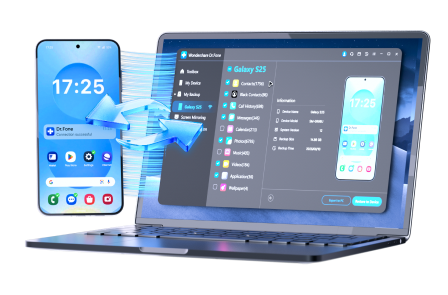
 Effortlessly manage data through preview, delete, export, etc.
- Transfer all data between devices.
- Robust backup solutions for reliable data protection.
- Mirror screens to PC for meetings, teaching, and control.
-
Step 1 Back up iPad data
Back up the iPad data to a computer using Dr.Fone before making major changes (updates, resets, or extensive troubleshooting).
-
Step 2 Try a standard system repair
If the iPad is stuck, repeatedly crashing, or failing to output reliably after updates, use Dr.Fone’s system repair workflow to attempt a standard repair.
-
Step 3 Recover lost files (where supported)
If you lost files during troubleshooting, use Dr.Fone’s recovery features (where supported) to scan for recoverable data and export it safely.
- If you can still access the phone (iPad) normally, prioritize built-in settings checks and a full backup before deeper repairs.
- If you forgot the passcode, use Apple’s official recovery/erase methods and account sign-in—do not attempt bypass methods.
- If the device is stuck or unstable, consider system repair after you’ve secured a backup and confirmed cables/displays are working.




Part 8. Security, privacy, and compliance notes
External display features are designed to help you share or expand your workspace, but they can also expose sensitive content (notifications, messages, meeting details) to anyone who can see the screen. Use Focus modes, notification privacy settings, and app-specific privacy controls when presenting. Don’t try to bypass restrictions such as AirPlay blocks, HDCP/DRM playback limits, or MDM policies on managed iPads—those exist to protect content rights and organizational data. If an iPad is enterprise/school-managed or you’re not the verified owner, the official next step is to contact the organization’s IT admin or Apple Support and provide proof of purchase/ownership where applicable.
Conclusion
External Display Support on iPad is the set of iPadOS capabilities that let you mirror or (on supported setups) extend your iPad onto an external monitor, improving productivity and presentations while requiring the right model, OS, and connection method. If software instability gets in the way, Dr.Fone can be a reasonable next step for backup or system repair alongside Apple’s official settings and support paths.
FAQ
-
Q1. Can any iPad connect to an external monitor?
Most iPads can output to a TV/monitor in some form (often mirroring), but extended desktop-style use depends on the iPad model, iPadOS version, and whether features like Stage Manager are supported. -
Q2. Why does my iPad only mirror instead of extending the display?
This is usually expected behavior on models or iPadOS versions that don’t support extended display, or when Stage Manager/external display options are unavailable or turned off in multitasking settings. -
Q3. How do I change display scaling on iPad?
Check Settings > Display & Brightness for Display Zoom (or "More Space" on some models). This typically affects the iPad’s UI scale; external monitor scaling may be controlled by the monitor’s own aspect/fit settings and iPadOS behavior. -
Q4. Is it safe to use AirPlay in public or at work?
It can be safe, but be mindful of privacy: your screen and notifications may be visible. On managed iPads, AirPlay/external display use may be restricted by policy—follow your organization’s rules and use official IT support if access is blocked.
 Add Wondershare Dr.Fone as a preferred source on Google