Effortlessly manage data through preview, delete, export, etc.

 100% Security Verified | No Subscription Required | No Malware

 :
: 
 ChatGPT
 Perplexity
 Gemini
 Claude
 Grok
Grok
What is Universal Control? It’s an Apple Continuity feature that lets you use a single keyboard, trackpad, or mouse to control multiple nearby Apple devices—typically a Mac and an iPad—by moving the pointer seamlessly between their screens. It’s designed for cross-device productivity without pairing peripherals each time.
In plain English: Universal Control makes your Mac and iPad feel like they share the same mouse and keyboard, so you can move your cursor from one screen to the other and keep working. One key takeaway: it’s about controlling devices side-by-side (and dragging content between them), not mirroring or extending one screen onto another.
In this article
- Part 1. What Universal Control is used for: core uses & scenarios (Why it matters)
- Part 2. How Universal Control works: official working logic (How it works, non-technical + technical-lite)
- Part 3. Where to find Universal Control: settings paths and entry points (Where to find it)
- Part 4. How to use, enable, disable, or check Universal Control
- Part 5. Requirements and compatibility
- Part 6. Universal Control vs related concepts
- Part 7. Common issues and misconceptions
- Part 8. Security, privacy, and compliance notes
Part 1. What Universal Control is used for: core uses & scenarios (Why it matters)
Core uses and real-world scenarios
Universal Control matters because it reduces friction when you work with both an iPad and a Mac—especially when you want the iPad as a companion device while keeping your main workflow on the Mac.
- Use your Mac keyboard/trackpad to reply to messages or edit notes on your iPad without switching inputs.
- Drag a photo or file from your iPad into a Mac app (or the other way around) while organizing a project.
- Use an iPad as a reference screen (PDF, textbook, sheet music) while writing on the Mac.
- Control a second Mac with the same keyboard/trackpad while monitoring chats, dashboards, or email.
- Switch between sketching on iPad and composing on Mac, without re-pairing a Bluetooth keyboard.
Who needs it most
Universal Control is most useful for everyday users who own both a Mac and iPad and want a smoother desk setup. It also helps students and creators who keep an iPad as a companion display. In workplaces, it can benefit employees who use an iPad for field apps or approvals alongside a Mac—though enterprise/MDM rules may limit Continuity features.
Part 2. How Universal Control works: official working logic (How it works, non-technical + technical-lite)
Plain explanation
Universal Control works when your compatible Apple devices are near each other, signed in to the same Apple Account (Apple ID), and have the right Continuity settings enabled. Once active, you "push" the cursor past the edge of one screen toward the other device, and the system links them so the same keyboard and pointing device can control both.
Key components
- Apple Account sign-in: Devices typically need to be signed in to the same Apple Account with two-factor authentication enabled.
- Continuity/Handoff framework: Universal Control is part of Apple’s Continuity features and depends on related handoff settings being allowed.
- Local wireless discovery: Devices use nearby wireless signals (commonly Wi‑Fi and Bluetooth) to discover and connect securely.
- Proximity and trust: It’s intended for devices that are physically near each other; connection prompts or confirmations may appear depending on settings.
- Input and drag-and-drop integration: Keyboard, trackpad/mouse input can cross devices; supported drag-and-drop actions depend on the apps and content types.
Part 3. Where to find Universal Control: settings paths and entry points (Where to find it)
Settings or menu paths
Labels vary by macOS/iPadOS version, but you can usually find Universal Control here:
- Mac (macOS): System Settings > Displays > Advanced > Universal Control (wording may appear as "Allow your pointer and keyboard to move between any nearby Mac or iPad")
- Mac (macOS): System Settings > General > AirDrop & Handoff (check related Continuity toggles)
- iPad (iPadOS): Settings > General > AirPlay & Continuity > Cursor and Keyboard (or a Universal Control-related toggle, depending on version)
Search keywords and entry tips
- Settings search keywords to try: "Universal Control", "Handoff", "Continuity", "AirDrop & Handoff", "AirPlay & Continuity".
- If you don’t see "Universal Control" by name, look for a longer description about allowing the pointer and keyboard to move between nearby devices.
Part 4. How to use, enable, disable, or check Universal Control
Safe how-to steps
-
Step 1 Enable Universal Control on Mac
On your Mac, open the Displays settings and ensure Universal Control (pointer/keyboard between nearby devices) is turned on; also confirm Handoff/Continuity is enabled if shown.
-
Step 2 Enable cursor/keyboard on iPad
On your iPad, go to AirPlay & Continuity (or the closest Continuity section) and enable the cursor/keyboard or Universal Control-related option if available.
-
Step 3 Initiate the link by moving the cursor
Make sure both devices are nearby, unlocked, and signed in to the same Apple Account, then move your cursor to the edge of the Mac screen toward the iPad to initiate the link.
-
Step 4 Disable Universal Control when needed
To disable it, turn off the Universal Control toggle on the Mac (and the iPad setting if present), especially if you don’t want cross-device input while traveling or presenting.
Official help resources
Apple’s exact menu labels and requirements can change by macOS/iPadOS version. If you need the most current guidance for your version, use Apple’s built-in Help app (on Mac) or the iPad User Guide in Settings, and search for "Universal Control."
Part 5. Requirements and compatibility
Quick compatibility table
| Item | Requirement / behavior (may vary by device and OS version) |
|---|---|
| Supported platforms | Typically Mac + iPad, and in some cases Mac + Mac, on supported macOS/iPadOS releases |
| OS requirement | Commonly requires macOS 12.3+ and iPadOS 15.4+ (or later); exact support varies |
| Account sign-in | Usually requires the same Apple Account on each device and two-factor authentication enabled |
| Required toggles | Universal Control enabled on Mac; relevant Handoff/Continuity options enabled on both devices |
| Connectivity | Nearby wireless discovery typically relies on Wi‑Fi and Bluetooth being on; devices must be close together |
| Offline behavior | Setup and discovery are local, but some Continuity features may expect iCloud sign-in; behavior can vary |
| Notable limitations | Not the same as screen sharing/second display; some drag-and-drop/app interactions depend on app support; managed devices may restrict it |
Notes and caveats
If you’re using older hardware or older macOS/iPadOS versions, Universal Control may not appear at all. In managed (work/school) environments, Mobile Device Management (MDM) policies can disable Continuity features, even if your devices are otherwise compatible.
Part 6. Universal Control vs related concepts
Key differences
| Feature | Universal Control | Sidecar | Universal Clipboard |
|---|---|---|---|
| Purpose | Use one keyboard/trackpad/mouse across nearby devices | Use iPad as a second display (extend/mirror Mac) | Copy on one device, paste on another |
| Where it appears | Continuity/Displays settings | Display settings (Sidecar) | No dedicated UI; works through the clipboard |
| What you "move" | Cursor/input focus (and some drag-and-drop content) | A Mac window/desktop image to the iPad | Text/images/files via copy/paste |
| Dependencies | Same Apple Account, proximity, wireless discovery, Continuity toggles | Same Apple Account, compatible devices, wireless or wired | Same Apple Account, Handoff/Continuity enabled |
| Common confusion | People expect screen extension | People expect shared keyboard without display extension | People expect cursor movement |
When readers confuse them
- Expecting Universal Control to mirror or extend the Mac screen on iPad (that’s typically Sidecar).
- Thinking Universal Control works like remote control over the internet; it’s designed for nearby devices.
- Assuming copy/paste between devices requires Universal Control; Universal Clipboard can work independently.
Part 7. Common issues and misconceptions
Symptom → likely reason → what to check
- Universal Control toggle missing → OS/device not supported or feature restricted → check macOS/iPadOS version, hardware support, and any MDM restrictions.
- Devices don’t connect when you push the cursor to the edge → discovery/sign-in conditions not met → confirm same Apple Account, Bluetooth/Wi‑Fi on, devices unlocked and close together.
- Cursor crosses but keyboard input is inconsistent → focus/app permission/state issue → click into a text field on the target device; confirm no accessibility or input-manager conflicts.
- Connection works sometimes but drops → wireless interference or sleep/lock state → keep devices awake, reduce distance, and ensure stable Wi‑Fi/Bluetooth conditions.
- Drag-and-drop doesn’t work for a specific item → app/content type limitation → try a different app or use AirDrop/iCloud Drive as an alternative.
When Dr.Fone can help
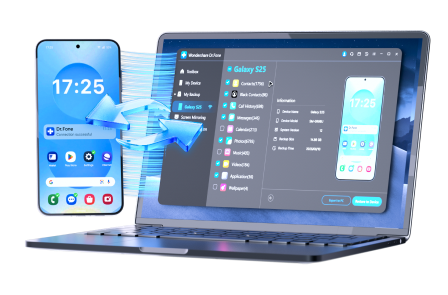
Universal Control itself is a built-in Apple feature, so Wondershare Dr.Fone is not usually needed for setup. However, if your iPad or iPhone is unstable, stuck during updates, or you need a safer way to back up data before deeper troubleshooting, Dr.Fone can help with device backup/transfer or system repair workflows. Use it for legitimate device maintenance, not to bypass Apple Account protections or management policies.
 Effortlessly manage data through preview, delete, export, etc.
- Transfer all data between devices.
- Robust backup solutions for reliable data protection.
- Mirror screens to PC for meetings, teaching, and control.
-
Step 1 Install Dr.Fone and choose a tool
Install Dr.Fone on a computer, open it, and choose a relevant tool such as System Repair or Phone Backup (options vary by device).
-
Step 2 Connect the device and follow prompts
Connect your iPad/iPhone via cable and follow the on-screen prompts to detect the device and proceed with the recommended, data-safe path when available.
-
Step 3 Re-check Universal Control after stabilizing
After the device is stable and backed up, return to Apple’s settings to re-check Universal Control requirements (account, wireless, and Continuity toggles).
- If you can still access the phone or iPad, prioritize a backup before changing major settings or updating.
- If you forgot the passcode, use official Apple recovery methods and proof-of-ownership steps rather than attempting workarounds.
- If the device is stuck or unstable, address stability first (update/repair), then retry Universal Control setup.




Part 8. Security, privacy, and compliance notes
Universal Control is designed to protect users by requiring trusted devices that are signed in and physically near each other, reducing the risk of unintended cross-device control. Don’t try to bypass Apple Account sign-in, activation/security locks, or workplace/school management (MDM) restrictions—those exist to protect ownership, data, and compliance. If you’re setting this up on a second-hand device, ensure the previous owner has removed it from their Apple Account and that the device is fully signed out and reset through official steps; if it’s managed, contact the organization’s IT admin for approved options.
Conclusion
Universal Control is Apple’s nearby cross-device input feature that lets one keyboard and pointing device control a Mac and iPad side-by-side, improving day-to-day productivity when the compatibility and Continuity requirements are met. If your setup issues are caused by device instability or you need a backup before deeper troubleshooting, Dr.Fone can be a reasonable supporting tool—while account, ownership, and policy limitations should always be handled through official Apple and IT channels.
FAQ
-
Q1. Does Universal Control work between an iPad and a Mac without Wi‑Fi?
It typically relies on local wireless discovery (often involving Wi‑Fi and Bluetooth), so turning off Wi‑Fi can prevent it from working reliably. Exact behavior can vary by device and OS version, but you should expect both Wi‑Fi and Bluetooth to be enabled for the smoothest experience. -
Q2. Is Universal Control the same as using the iPad as a second monitor?
No. Universal Control shares input (and supports some drag-and-drop) across devices, while Sidecar is the feature that turns an iPad into an extended or mirrored display for a Mac. -
Q3. Can I use Universal Control with different Apple Accounts on each device?
In most cases, it’s intended to work when devices are signed in to the same Apple Account and meet Continuity requirements. If the accounts differ, the feature may not connect or may be restricted. -
Q4. Why can’t I find Universal Control in Settings on my iPad or Mac?
Common reasons include an unsupported macOS/iPadOS version, incompatible hardware, disabled Continuity/Handoff settings, or management restrictions (MDM) on work/school devices. Updating to a supported OS version and checking Continuity-related toggles usually resolves the "missing" settings issue.
 Add Wondershare Dr.Fone as a preferred source on Google