 Effortlessly manage data through preview, delete, export, etc.

 100% Security Verified | No Subscription Required | No Malware

 :
: 
 ChatGPT
 Perplexity
 Gemini
 Claude
 Grok
Grok
What is Face ID? Face ID is Apple’s biometric authentication system on iPhone that uses facial recognition to securely unlock the device and approve actions like payments and sign-ins. It’s designed to replace (or supplement) a passcode by verifying that the person holding the phone is its authorized user.
In plain English, Face ID lets your iPhone recognize your face so you can get in quickly without typing a code every time. The key takeaway: it helps protect your data while keeping everyday access convenient—especially when you unlock your phone dozens of times a day.
In this article
Part 1. What Face ID Is and Why It Matters
1-1. Core uses and real-world scenarios
Face ID matters because it’s a frontline security layer for your iPhone and your accounts. It reduces reliance on easily observed passcodes and can prevent casual access if your phone is lost, stolen, or picked up by someone else.
Common scenarios where Face ID is used:
- Unlocking your iPhone at the Lock Screen without typing your passcode.
- Confirming Apple Pay purchases in stores or within apps.
- Autofilling saved passwords and signing in to apps (when an app supports Face ID).
- Approving App Store or media purchases (depending on settings and region).
- Accessing private areas like locked notes or third-party banking apps that use Face ID.
1-2. Who needs it most
- Everyday users who want faster unlocking without weakening security.
- People who carry sensitive data (work email, financial apps, health data) and need strong on-device access control.
- Second-hand buyers and sellers who should understand that Face ID is not a “reset” tool—ownership is still tied to Apple ID activation and device security settings.
- Parents/guardians who want to prevent kids from approving purchases or opening restricted apps.
- Enterprise and IT teams that manage iPhones under organizational policies and need predictable authentication behavior.
Part 2. How Face ID Works and Where to Find It
2-1. How it works
Face ID works by scanning your face and comparing it to the facial data enrolled on your iPhone. When you look at the device, it checks whether your face matches the stored enrollment. If it matches, the iPhone unlocks or approves the request; if not, it asks for your passcode.
Key components:
- TrueDepth camera system (front sensor array used for Face ID on supported iPhones).
- Face enrollment (the initial “set up Face ID” scan that creates a mathematical representation of your face).
- Attention awareness (an optional behavior that can require you to look at the screen to authenticate).
- Secure storage and processing (Face ID data is designed to remain on-device rather than being stored as a photo).
- Fallback to passcode (required after certain events, such as restarts or multiple failed attempts).
2-2. Where to find it
On iPhone, Face ID settings are typically located here:
- Settings > Face ID & Passcode
If you don’t see it, it may be under restrictions (such as Screen Time) or your iPhone model may not support Face ID.
Search tip:
- In the Settings search bar, type “Face ID” or “Passcode” to jump to the relevant menu.
Platform notes:
- Face ID is an iPhone feature (and some iPad models also support Face ID, but menus and availability can vary by device and iPadOS version).
Part 3. How to Use Face ID and What It Requires
3-1. How to use, enable, disable, or check it
- Go to Settings > Face ID & Passcode, then enter your device passcode.
- Tap Set Up Face ID (or Reset Face ID if you’re re-enrolling) and follow the on-screen prompts.
- Under Use Face ID For, toggle what you want Face ID to control (for example, iPhone Unlock or Apple Pay).
- If Face ID fails or is unavailable, use your passcode when prompted and consider re-checking settings like Require Attention for Face ID.
3-2. Requirements and compatibility
| Item | What it requires | Notes / behavior |
|---|---|---|
| Supported devices | iPhone models with Face ID hardware (TrueDepth camera) | Availability depends on iPhone model; older iPhones use Touch ID or passcode only. |
| iOS requirement | iOS version that supports Face ID on your model | Exact behavior can vary by iOS version. |
| Device passcode | A passcode must be set | Face ID is tied to passcode fallback and security policy. |
| Apple ID sign-in | Not required to unlock the phone | May be needed for iCloud features, Apple Pay setup, or restoring services. |
| Toggles to enable | Settings > Face ID & Passcode > Set Up Face ID and Use Face ID For | You can enable Face ID for unlock, Apple Pay, and supported apps. |
| Attention settings | Optional: Require Attention for Face ID | Can reduce unintended unlocks if you’re not looking at the device. |
| Connectivity | Not required for basic unlock | Unlocking and local authentication typically work offline; some services (payments, account checks) may require network depending on the app or region. |
| Fallback and lockout | Passcode required after certain security events | Common examples include restart, extended inactivity, or repeated failed Face ID attempts. |
Part 4. Face ID vs Related Features and Common Issues
4-1. Face ID vs related features
| Feature | Purpose | Where it appears | Dependencies | Common confusion |
|---|---|---|---|---|
| Face ID | Biometric authentication using your face | Settings > Face ID & Passcode | Face ID-capable iPhone hardware + passcode | Mistaken for an Apple ID/password reset tool (it is not). |
| Touch ID | Biometric authentication using fingerprint | Settings > Touch ID & Passcode | Touch ID-capable device + passcode | Users expect Face ID options on Touch ID models. |
| Passcode | Primary local device unlock and security fallback | Settings > Face ID/Touch ID & Passcode | Works on all iPhones | People think Face ID replaces passcode; passcode still matters. |
| Apple ID / iCloud sign-in | Account access, Activation Lock, iCloud services | Settings > [your name] | Internet often needed for sign-in and verification | Not the same as Face ID; Face ID can’t remove account locks. |
4-2. Common issues and misconceptions
- “Face ID is not available” → temporary restriction or sensor/OS issue → restart the iPhone, ensure iOS is up to date, and verify Face ID is enabled in Settings > Face ID & Passcode.
- Face ID works sometimes but fails often → environmental or enrollment mismatch → check if the camera area is blocked, confirm you’re looking at the screen (attention setting), and consider Reset Face ID then re-enroll.
- “I bought a used iPhone—can I use Face ID to unlock it?” → confusion between Face ID and ownership controls → Face ID only authenticates the enrolled face on that device; for ownership transfer, you need the prior owner to remove the device from their Apple ID and disable Activation Lock.
- Face ID stopped working after a repair or screen change → hardware calibration or component issue → contact Apple Support or an authorized service provider; avoid unofficial “fixes” that compromise security.
- “Face ID should let me bypass the passcode” → misconception about security design → Apple requires passcode entry after certain events; this is normal and intended to protect the device.
Part 5. When Dr.Fone Helps and What to Keep in Mind
5-1. When Dr.Fone can help
Face ID issues often show up alongside broader access problems, such as being locked out after repeated failures, iOS glitches, or needing to secure data before repairs. In legitimate scenarios, Dr.Fone tools may help with areas like device backup/transfer, iOS system repair, or recovery workflows—especially when the device is unstable, or you’re trying to protect data you already own. It can also be relevant when you’re following official steps, but the phone is stuck during updates or recovery mode.
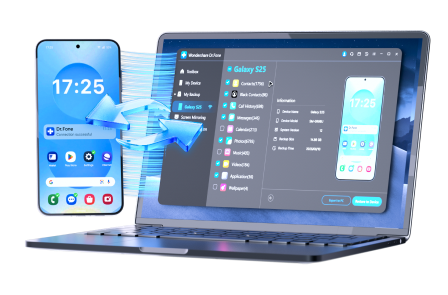
 Easily manage data through preview, delete, export, etc.
- Transfer all data between devices.
- Robust backup solutions for reliable data protection.
- Mirror screens to PC for meetings, teaching, and control.
- If you can still access the phone, consider backing up and checking Face ID settings before making major changes.
- If you forgot the passcode, use Apple’s official recovery/restore options and be prepared for account verification steps.
- If the device is stuck or unstable, system repair and data-protection workflows may be the safer starting point than repeated retries.
5-2. Security, privacy, and compliance notes
Face ID exists to protect the device owner’s personal data and prevent unauthorized access. You should not try to bypass Face ID, the passcode, Activation Lock, or any organization-controlled management (such as MDM) on a device you don’t own or aren’t authorized to manage. If ownership is unclear, the correct next step is to verify proof of purchase, contact the original owner to remove the device from their Apple ID, or work with Apple Support (and, for business devices, your organization’s IT administrator).


Conclusion
Face ID is Apple’s facial-recognition authentication on iPhone that helps you unlock your device and approve sensitive actions securely. It matters because it balances convenience with strong on-device protection. If Face ID isn’t working or you’re locked out, stick to official settings checks and Apple recovery/support paths to stay secure and compliant.


FAQ
-
Q1. What is Face ID on iPhone used for?
Face ID is used to unlock your iPhone and authenticate actions like Apple Pay, password autofill, and app sign-ins when supported. -
Q2. Where do I find Face ID settings on iPhone?
Go to Settings > Face ID & Passcode. You can also search Settings for “Face ID”. -
Q3. How does Face ID work in simple terms?
It scans your face using the iPhone’s front sensors and matches it to the face you enrolled; if it matches, access is granted, otherwise you use your passcode. -
Q4. Does Face ID replace my passcode?
No. A passcode is still required and will be requested after certain events like restarts, multiple failed attempts, or some security checks. -
Q5. Can Face ID unlock a used iPhone I just bought?
Only if you can set it up as the device owner. Face ID does not remove Apple ID/Activation Lock requirements; the prior owner must sign out and remove the device from their account. -
Q6. Why is Face ID not available sometimes?
It can be disabled by settings, restricted by policy, or temporarily unavailable due to system conditions. Check Settings > Face ID & Passcode, restart, and update iOS if needed.
 Add Wondershare Dr.Fone as a preferred source on Google


