Effortlessly manage data through preview, delete, export, etc.

 100% Security Verified | No Subscription Required | No Malware

 :
: 
 ChatGPT
 Perplexity
 Gemini
 Claude
 Grok
Grok
What is iPadOS? iPadOS is Apple’s operating system designed specifically for iPad, responsible for running apps, managing files, handling security and privacy protections, and enabling iPad-specific multitasking and input features. It’s the core software layer that connects your iPad’s hardware (screen, battery, camera, Wi‑Fi) to everything you do on it.
In plain English: iPadOS is the "system software" that makes an iPad work and feel like an iPad, not just a bigger iPhone. One key takeaway: keeping iPadOS updated and healthy is central to app compatibility, security patches, and fixing many everyday performance or stability problems.
In this article
- Part 1. What iPadOS is used for: core uses & scenarios (Why it matters)
- Part 2. How iPadOS works: official working logic (How it works, non-technical + technical-lite)
- Part 3. Where to find iPadOS: settings paths and entry points (Where to find it)
- Part 4. How to use, enable, disable, or check iPadOS
- Part 5. Requirements and compatibility
- Part 6. iPadOS vs related concepts
- Part 7. Common issues and misconceptions
- Part 8. Security, privacy, and compliance notes
Part 1. What iPadOS is used for: core uses & scenarios (Why it matters)
Core uses and real-world scenarios
iPadOS matters because it controls how your iPad runs, how safely it stores and encrypts your data, and which apps and accessories it can support—especially as Apple adds iPad-only features over time.
- Installing and updating apps from the App Store, including iPad-optimized versions
- Multitasking for school or work (Split View, Slide Over, Stage Manager on supported models)
- Using Apple Pencil and keyboard/trackpad features for note-taking, drawing, and editing
- Managing files in the Files app, including external drives and cloud storage
- Enabling accessibility features (VoiceOver, AssistiveTouch, guided access, display accommodations)
- Staying protected with security updates, permissions, and device encryption
Who needs it most
- Everyday iPad users who want smoother performance, better battery life, and reliable apps after updates.
- Students and professionals who rely on multitasking, keyboard shortcuts, and file management.
- Parents who manage child accounts, Screen Time, and content restrictions.
- Second-hand buyers and sellers who need to check software version, activation status, and whether the iPad is ready for transfer.
- Enterprise and school IT teams deploying iPads with policies, managed Apple IDs, and compliance requirements.
Part 2. How iPadOS works: official working logic (How it works, non-technical + technical-lite)
Plain explanation
iPadOS sits between your iPad’s hardware and your apps. It starts when the iPad boots, loads Apple’s built-in services (networking, graphics, storage, security), and then runs apps in a controlled environment. It also manages system updates, background tasks, and permissions so apps can’t freely access sensitive data without your approval.
Key components
- Kernel and system services: coordinate CPU, memory, storage, and background processes so the device remains stable.
- App sandboxing and permissions: apps run in isolated spaces and must request access (photos, microphone, location).
- Apple ID and iCloud integration: enables syncing for photos, files, messages (where available), and Find My protections.
- Update and restore framework: supports over-the-air updates and recovery/restore through Finder (macOS) or Apple Devices/iTunes (Windows), depending on setup.
- File system and encryption: protects on-device data, typically using hardware-backed encryption tied to device security settings.
- iPad-specific UI features: multitasking tools, pointer support, external display behaviors, and Apple Pencil-related subsystems (availability varies by model and iPadOS version).
Part 3. Where to find iPadOS: settings paths and entry points (Where to find it)
Settings or menu paths
- Check your iPadOS version: Settings > General > About > iPadOS Version
- Check for updates: Settings > General > Software Update
- Storage and system space: Settings > General > iPad Storage
- Device management (if applicable): Settings > General > VPN & Device Management (label may vary by region/policy)
Search keywords and entry tips
In Settings search, try keywords like "Software Update", "About", "iPad Storage", or "Device Management." If labels vary, look for General first—Apple groups most system-level iPadOS controls there.
Part 4. How to use, enable, disable, or check iPadOS
Safe how-to steps
Because iPadOS is the operating system itself, you don’t "enable/disable" it—but you can safely check and maintain it:
-
Step 1 Check version and model
Go to Settings > General > About to note the iPadOS version and model.
-
Step 2 Check for updates
Go to Settings > General > Software Update and check whether an update is available.
-
Step 3 Confirm free storage
Confirm you have enough free space in Settings > General > iPad Storage before installing updates.
-
Step 4 Back up before major updates
Back up your iPad (iCloud or computer backup) before major updates to reduce data-loss risk.
-
Step 5 Retry if an update fails
If an update fails, restart the iPad and try again; if needed, use Apple’s official restore flow via a computer.
Official help resources
Apple’s official guidance and step-by-step flows can vary by iPad model and iPadOS version; use the built-in Tips app and Settings prompts for the most accurate on-device instructions.
Part 5. Requirements and compatibility
Quick compatibility table
| Requirement area | What to know |
|---|---|
| Supported devices | iPadOS runs on supported iPad models; exact compatibility varies by iPad generation and iPadOS version. |
| Apple ID sign-in | Not required to power on, but commonly required for iCloud, downloads, and many synced services. |
| Storage space | Updates often require free storage; the amount varies by version and device. |
| Connectivity | Wi‑Fi is typically needed for over-the-air updates; some models support cellular updates depending on settings and plan. |
| Power/battery | Updates generally require sufficient battery or being plugged in to avoid interruption. |
| Offline behavior | Core iPad functions work offline, but iCloud syncing, downloads, and many services need internet. |
| Notable limitations | Some features (advanced multitasking/external display) depend on hardware and iPadOS version; older models may not get the newest iPadOS releases. |
Notes and caveats
Feature availability can differ by iPad model, region, language, and iPadOS version. If your iPad can’t install the latest iPadOS, you may still receive security updates for a period, but app compatibility may gradually change as developers raise minimum OS requirements.
Part 6. iPadOS vs related concepts
Key differences
| Concept | Purpose | Where it appears | Dependencies | Common confusion |
|---|---|---|---|---|
| iPadOS | Operating system built for iPad with iPad-specific UI and multitasking | Runs the whole iPad; managed in Settings | Device hardware + system updates; Apple services optional | Mistaken as "an app" or a single feature you toggle |
| iOS | Operating system primarily for iPhone (and historically iPad before iPadOS split) | Runs on iPhone; similar Settings structure | iPhone hardware + system updates | People assume iPad uses iOS only; many basics overlap |
| iPad firmware / restore | Low-level software + full reinstall process | Accessed through recovery/restore workflows via computer | Cable + computer software; Apple verification | Confused with "updating iPadOS"; restore is more drastic |
| Apps (e.g., Files, Safari) | Individual programs running on top of iPadOS | Home Screen/App Library | iPadOS permissions and resources | Users blame "iPadOS" when a single app is crashing |
When readers confuse them
- iPad operating system can mean iPadOS, but people may call it "iOS" out of habit.
- Updating an app is not the same as updating iPadOS; they happen in different places (App Store vs Software Update).
- A "restore" reinstalls the system and can erase data; an "update" usually keeps data intact.
- Some iPad-only features depend on the model, so two iPads on the same iPadOS version can still behave differently.
Part 7. Common issues and misconceptions
Symptom → likely reason → what to check
- iPad feels slow after an update → background indexing or low storage → check Settings > General > iPad Storage and give it time on power/Wi‑Fi.
- "Software Update" won’t download/install → unstable network or insufficient space → confirm Wi‑Fi strength and free storage; restart and retry.
- Apps say they require a newer system → iPadOS version is below the app’s minimum requirement → check Settings > General > About and the app’s App Store requirements.
- Battery drains faster than expected → new iPadOS version plus background activity or aged battery → check Battery settings and recent usage; update apps.
- iPad stuck on Apple logo or boot loop → system instability or interrupted update → try a restart; if persistent, use official recovery/restore methods.
When Dr.Fone can help
If iPadOS issues lead to missing files or inaccessible data (for example, after a failed update, accidental deletion, or a restore attempt), Wondershare Dr.Fone can be relevant as a recovery workflow—specifically Dr.Fone - Data Recovery (iOS) —to help retrieve supported data types in legitimate scenarios. It’s most appropriate when you’re trying to recover your own content from an iPad you own and can lawfully access. It is not a substitute for Apple ID recovery or device-ownership verification.
 Recover Android data by scanning your Android phone & tablet directly.
- Preview and selectively recover what you want from your Android phone & tablet.
- Supports various file types, including WhatsApp, Messages & Contacts & Photos & Videos & Audio & Document.
- Supports 6000+ Android Device Models & Various Android OS.
-
Step 1 Install, open, and connect
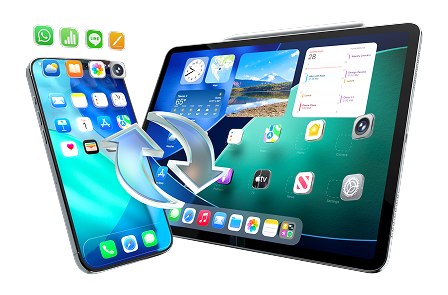
Install and open Dr.Fone - Data Recovery (iOS) on a computer, then connect the iPad and follow the on-screen prompts.
-
Step 2 Choose a recovery source and scan
Choose the appropriate recovery source (for example, device storage or a backup, depending on what’s available) and run a scan.
-
Step 3 Preview and recover, then re-check stability
Preview results (when available) and recover the needed items to a safe location, then re-check iPadOS stability and backups.
- If you can still access the phone (or iPad) and Settings, start with backups and standard troubleshooting before recovery.
- If you forgot the passcode or the iPad is linked to an Apple ID you can’t verify, use Apple’s official account recovery and support routes.
- If the device is stuck or unstable after an update, prioritize official recovery/restore steps first, then consider data recovery if needed.




Part 8. Security, privacy, and compliance notes
iPadOS is designed to protect users through encryption, app sandboxing, permissions, and account-based services like iCloud and Find My. These protections help prevent unauthorized access if an iPad is lost, stolen, or managed by an organization. You should not try to bypass activation locks, managed-device controls (MDM), passcodes, or Apple ID ownership checks. If ownership or compliance is involved—such as a second-hand iPad still linked to someone else—use legitimate steps: contact the original owner to remove the device from their account, present proof of purchase, or work with Apple Support or the organization that manages the iPad.
Conclusion
iPadOS is Apple’s operating system for iPad, handling everything from app performance and multitasking to updates and security. Understanding where to check your iPadOS version and how updates work helps prevent compatibility and stability issues. If you run into data-loss scenarios during troubleshooting, Dr.Fone – Data Recovery may be a reasonable next step alongside official Apple recovery methods.
FAQ
-
Q1. Is iPadOS the same as iOS?
They share many foundations and look similar, but iPadOS is tailored for iPad with iPad-specific features (especially multitasking and input). iOS is primarily for iPhone, and feature availability differs by device and OS version. -
Q2. How do I check what iPadOS version I have?
Go to Settings > General > About and look for iPadOS Version. You can also check Settings > General > Software Update to see whether a newer version is available. -
Q3. Why can’t my iPad update to the latest iPadOS?
Your iPad model may not support that version, or you may be blocked by low storage, low battery, or network issues. Check iPad compatibility, free up storage, and try again on stable Wi‑Fi while charging. -
Q4. What should I do if my iPad is stuck after an iPadOS update?
Start with a restart and ensure it has time to complete background tasks. If it won’t boot or remains stuck, use Apple’s official recovery/restore process via a computer; if you’re concerned about lost data afterward, consider a legitimate data recovery approach.
 Add Wondershare Dr.Fone as a preferred source on Google