 Effortlessly manage data through preview, delete, export, etc.

 100% Security Verified | No Subscription Required | No Malware

 :
: 
 ChatGPT
 Perplexity
 Gemini
 Claude
 Grok
Grok
What is ProMotion? ProMotion is Apple’s name for an adaptive display refresh-rate technology that can raise an iPhone’s screen refresh rate up to 120Hz (on supported models) and dynamically lower it when full speed isn’t needed. The goal is smoother motion while balancing power use and performance.
In plain English: ProMotion makes scrolling and animations look smoother on certain iPhone Pro models, but it doesn’t run at 120Hz all the time. One key takeaway: ProMotion is "adaptive," meaning the iPhone automatically changes refresh rate based on what you’re doing to help manage battery life.
In this article
- Part 1. What ProMotion is used for: core uses & scenarios (Why it matters)
- Part 2. How ProMotion works: official working logic (How it works, non-technical + technical-lite)
- Part 3. Where to find ProMotion: settings paths and entry points (Where to find it)
- Part 4. How to use, enable, disable, or check ProMotion
- Part 5. Requirements and compatibility
- Part 6. ProMotion vs related concepts
- Part 7. Common issues and misconceptions
- Part 8. Security, privacy, and compliance notes
Part 1. What ProMotion is used for: core uses & scenarios (Why it matters)
Core uses and real-world scenarios
ProMotion matters because refresh rate directly affects how fluid motion looks on-screen—and how responsive the phone can feel—especially when you scroll, play games, or view fast-moving content.
- Scrolling social feeds or long web pages with less perceived blur and judder
- Gaming that supports higher frame rates for smoother animation and input feel
- Navigating iOS (swiping, app switching, animations) with more fluid transitions
- Watching certain high-frame-rate videos (when available) with smoother motion
- Using Apple Pencil-like fast interactions is more relevant on iPad, but the same "smooth motion" benefit applies on iPhone for touch interactions
Who needs it most
ProMotion is most noticeable for everyday users who scroll a lot, play mobile games, or are sensitive to motion smoothness. It also matters to second-hand buyers and sellers verifying device specs (some iPhones have it, many don’t). For parents managing battery life, and for enterprise IT teams supporting mixed fleets, knowing when ProMotion may reduce to 60Hz (e.g., battery saving modes) helps explain "why it feels different."
Part 2. How ProMotion works: official working logic (How it works, non-technical + technical-lite)
Plain explanation
Instead of refreshing the screen at one fixed speed, ProMotion lets the iPhone adjust the refresh rate moment by moment. When you’re scrolling or interacting, the phone can refresh more often for smoother motion. When the content is mostly static (like reading), it can refresh less often to save power.
Key components
- Adaptive refresh-rate controller: Adjusts refresh rate based on on-screen motion and interaction patterns
- iOS power management: May reduce refresh behavior when saving power (for example, under certain battery conditions)
- App and content support: Some apps or views may be capped at 60Hz depending on how they’re built
- Thermal/performance limits: If the device is hot or under heavy load, it may prioritize stability over maximum refresh
- User-facing toggles: Accessibility and battery settings can influence whether ProMotion reaches higher refresh rates
Part 3. Where to find ProMotion: settings paths and entry points (Where to find it)
Settings or menu paths
On iPhone, ProMotion is generally automatic, but you can often influence it via related settings:
- Settings > Accessibility > Motion > Limit Frame Rate (wording can vary by iOS version)
- Settings > Battery > Low Power Mode (Low Power Mode can reduce smoothness by limiting performance)
Depending on model and iOS version, you may not see a "ProMotion" label directly—Apple often presents it as a behavior rather than a branded on/off switch.
Search keywords and entry tips
- Try searching in Settings for: "Limit Frame Rate", "Motion", or "Low Power Mode".
If you don’t find "Limit Frame Rate," look under Accessibility’s Motion options, or check Battery settings—labels and availability can vary by device and iOS version.
Part 4. How to use, enable, disable, or check ProMotion
Safe how-to steps
-
Step 1 Search for "Limit Frame Rate"
Open Settings and use the search bar to look for "Limit Frame Rate."
-
Step 2 Open the Motion options
Tap Accessibility > Motion, then find Limit Frame Rate (if present).
-
Step 3 Allow higher refresh behavior (supported models)
To allow smoother motion, make sure Limit Frame Rate is Off (this permits higher refresh behavior on supported models).
-
Step 4 Check Low Power Mode
Go to Settings > Battery and check Low Power Mode—turning it on can reduce smoothness and performance.
Official help resources
Apple’s exact support documentation and wording can change by iOS version and device model, so rely on your iPhone’s built-in Settings search to find the current label and location on your device.
Part 5. Requirements and compatibility
Quick compatibility table
| Item | What to know |
|---|---|
| Supported devices | iPhone Pro models with ProMotion displays (availability varies by generation and region); non‑Pro iPhones typically use 60Hz |
| OS requirement | iOS support varies by model and iOS version; ProMotion behavior is handled by iOS on supported hardware |
| Account sign-in | No Apple ID sign-in required for ProMotion itself |
| Required toggles | Typically automatic; Accessibility "Limit Frame Rate" (if available) can restrict refresh behavior |
| Connectivity | Not required; ProMotion is a local display feature |
| Offline behavior | Works offline; app behavior may differ by app design |
| Notable limitations | Low Power Mode, thermal conditions, and some apps/content may prevent sustained high refresh |
Notes and caveats
ProMotion is hardware-dependent—if an iPhone doesn’t have a ProMotion display, no setting can "add" 120Hz. Even on supported models, the refresh rate is adaptive and may not stay at 120Hz continuously, especially in power-saving or demanding conditions.
Part 6. ProMotion vs related concepts
Key differences
| Concept | Purpose | Where it appears | Dependencies | Common confusion |
|---|---|---|---|---|
| ProMotion (adaptive up to 120Hz) | Smooth motion while balancing battery | Mostly automatic; influenced by Accessibility/Battery settings | Supported display hardware + iOS behavior + app support | People expect a constant 120Hz at all times |
| Fixed 120Hz mode (non-adaptive, concept) | Forces constant high refresh (common on some devices/platforms) | Often a dedicated toggle on some phones (not typically how iPhone presents it) | Battery/thermal impact; may be user-selected | Users look for a "120Hz On" switch on iPhone |
| Standard 60Hz display | Baseline refresh for most phones | Default on many iPhone models | Hardware-limited | Users assume "all iPhones can do 120Hz" |
When readers confuse them
- Expecting a visible "ProMotion" master switch in Settings (it’s usually automatic).
- Assuming ProMotion equals "always 120Hz," instead of "up to 120Hz when appropriate."
- Not realizing Low Power Mode or Limit Frame Rate can make the phone feel closer to 60Hz.
- Comparing across apps: one app may feel smoother than another due to app-level limits.
Part 7. Common issues and misconceptions
Symptom → likely reason → what to check
- "My iPhone doesn’t feel like 120Hz." → Low Power Mode or a frame-rate limit is active → Check Settings > Battery > Low Power Mode and Accessibility > Motion > Limit Frame Rate.
- "It was smooth yesterday, not today." → Thermal throttling or heavy background activity → Let the device cool, close intensive apps, and ensure iOS is up to date.
- "Only some apps look smooth." → App may be capped at 60Hz or uses animations that don’t benefit → Test scrolling in Apple apps (e.g., Safari) vs the affected app, and update the app.
- "I can’t find any ProMotion setting." → Many iPhones don’t support it; Apple may not label it directly → Confirm your iPhone model and look for ‘Limit Frame Rate’ rather than ‘ProMotion.’
- "Battery drains faster at times." → Higher refresh during active use can consume more power → Compare behavior with Low Power Mode on/off and review Battery usage in Settings.
When Dr.Fone can help
ProMotion itself is a display capability, but problems that feel like "refresh rate issues" can sometimes come from broader iOS glitches, app instability, or performance slowdowns. In those cases, Wondershare Dr.Fone can be relevant for legitimate maintenance tasks like backing up important data or attempting an iOS system repair workflow when the device is stuck, lagging severely, or crashing. Use it only on devices you own or are authorized to service.
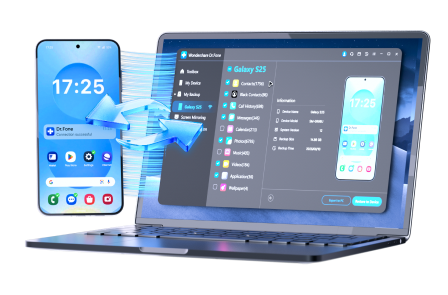
 Effortlessly manage data through preview, delete, export, etc.
- Transfer all data between devices.
- Robust backup solutions for reliable data protection.
- Mirror screens to PC for meetings, teaching, and control.
-
Step 1 Create a backup
Use Dr.Fone to create a backup of your iPhone data to a computer (so troubleshooting doesn’t risk data loss).
-
Step 2 Run system repair
Run the system repair feature to address iOS instability (follow on-screen guidance and choose data-preserving options when available).
-
Step 3 Re-check settings and test
After the device stabilizes, re-check Low Power Mode and Limit Frame Rate settings and test smoothness in multiple apps.
- If you can still access the phone, start with backup and iOS/app updates before deeper repair steps.
- If you forgot the passcode, use Apple’s official recovery options first; only use tools in lawful, owner-authorized scenarios.
- If the device is stuck or unstable, system repair and then a clean settings check is often more effective than chasing a "120Hz toggle."




Part 8. Security, privacy, and compliance notes
ProMotion is designed to improve display responsiveness and efficiency, not to provide access control or data protection. Still, settings that affect performance (Accessibility, Battery, device management profiles) can be restricted on managed devices. Don’t try to bypass management controls, restrictions, or ownership safeguards—if the iPhone is enterprise-managed (MDM) or not yours, the correct next step is to contact the organization’s IT admin or Apple Support with proof of ownership/authorization.
Conclusion
ProMotion is Apple’s adaptive refresh-rate technology that can make supported iPhone Pro displays feel smoother (up to 120Hz) while dynamically managing power. It’s mostly automatic, but settings like Low Power Mode or Limit Frame Rate can change how it feels. If the "not smooth" problem is really broader iOS instability, Dr.Fone may be a reasonable, owner-authorized next step for backup or system repair.
FAQ
Q1. Is ProMotion the same as "120Hz always on"?
No. ProMotion is adaptive—on supported iPhones it can reach higher refresh rates when needed, but it can also drop lower to save power depending on content, system conditions, and settings.
Q2. How can I tell if my iPhone supports ProMotion?
ProMotion requires specific hardware found on certain iPhone Pro models (varies by generation). If your model isn’t a ProMotion-equipped device, you won’t get 120Hz behavior, and you may not see related settings like "Limit Frame Rate."
Q3. Why does ProMotion feel slower when Low Power Mode is on?
Low Power Mode reduces power consumption by limiting performance behaviors, which can make scrolling and animations feel closer to 60Hz on some devices.
Q4. Can an app prevent ProMotion from reaching 120Hz?
Yes. Some apps or specific screens may be capped at 60Hz due to app design, rendering choices, or content limitations, so smoothness can vary from app to app even on the same iPhone.
 Add Wondershare Dr.Fone as a preferred source on Google


