Effortlessly manage data through preview, delete, export, etc.

 100% Security Verified | No Subscription Required | No Malware

 :
: 
 ChatGPT
 Perplexity
 Gemini
 Claude
 Grok
Grok
What is Haptic Touch? Haptic Touch is an iPhone interaction feature that lets you press and hold on items (like app icons, links, or notifications) to reveal quick actions, previews, or menus, often paired with a subtle vibration. It’s Apple’s modern replacement for 3D Touch on newer iPhones.
In plain English, Haptic Touch is a “press-and-hold shortcut” that makes your iPhone feel responsive. The key takeaway: it helps you do common tasks faster (like previewing content or accessing quick actions) without opening full screens.
In this article
Part 1. What Haptic Touch Is and Why It Matters
Haptic Touch is Apple’s modern alternative to 3D Touch, using a simple long-press gesture instead of pressure sensitivity. It enables faster access to shortcuts and menus across iPhone models, especially those without 3D Touch hardware.
1-1. Core uses and real-world scenarios
Haptic Touch matters because it reduces taps, speeds up navigation, and provides tactile confirmation (haptic feedback) that an action was recognized. It also standardizes the experience across iPhones that don’t have pressure-sensitive displays.
- Press and hold an app icon to open Quick Actions (for example, “Take Selfie,” “Scan QR Code,” or “Compose”).
- Press and hold on a notification to expand it and view more details or reply (supported apps vary).
- Press and hold a link in Safari or Messages to preview it or open a context menu.
- Press and hold a photo or file in supported apps to bring up actions like Share, Copy, or Delete.
- Press and hold the flashlight or camera on the Lock Screen (models and iOS versions vary) to launch the feature quickly.
1-2. Who needs it most
- Everyday iPhone users who want faster access to common actions without digging through menus.
- People switching from older iPhones with 3D Touch who need to understand what changed and how to trigger similar shortcuts.
- Accessibility-focused users who benefit from consistent, predictable long-press behavior and adjustable touch timing.
- Second-hand buyers and sellers who want to quickly validate that touch interactions and vibration feedback behave normally after setup.
Part 2. How Haptic Touch Works and Where to Find It
2-1. How it works
Haptic Touch works by detecting a long press (press-and-hold) on the screen, then showing a context menu or preview. When the action is recognized, the iPhone may produce a small vibration “tap” so you feel confirmation—this is the haptic feedback part.
- Touch-and-hold gesture recognition (timing-based, not pressure-based).
- Context menus and previews (app-provided quick actions and options).
- The iPhone’s vibration system (haptics) for tactile confirmation.
- iOS settings that control touch duration and overall haptic/vibration behavior.
- App support (some menus/actions depend on what the app implements).
2-2. Where to find it
You don’t “open” Haptic Touch as a standalone app—most of it appears when you press and hold on supported items. However, you can find related controls in Settings:
- Touch timing/behavior: Settings > Accessibility > Touch > Haptic Touch (wording and placement can vary by iOS version)
- Vibration/haptics controls (affects how strong/when you feel feedback): Settings > Sounds & Haptics > System Haptics

Part 3. How to Use Haptic Touch and What It Requires
3-1. How to use, enable, disable, or check it
-
Step 1 Press and hold an app icon (or a link/photo) until a menu or preview appears.
-
Step 2 Lift your finger, then tap the action you want (for example, a shortcut like “Share” or “Reply”).
-
Step 3 If menus appear too slowly/quickly, go to Settings > Accessibility > Touch > Haptic Touch and adjust the touch duration (if available).
-
Step 4 If you want to reduce the vibration feedback, go to Settings > Sounds & Haptics and toggle System Haptics (if available).
3-2. Requirements and compatibility
The exact experience varies by device model, iOS version, and app support, but these general requirements are typical:
| Item | Requirement / Notes |
|---|---|
| Supported platform | iPhone running iOS (specific options vary by iOS version) |
| Hardware need | A touch screen; haptic feedback depends on the iPhone’s haptic/vibration hardware |
| 3D Touch requirement | Not required; Haptic Touch is the long-press replacement on newer iPhones |
| Key settings (timing) | Settings > Accessibility > Touch (Haptic Touch timing options may vary) |
| Key settings (feedback) | Settings > Sounds & Haptics > System Haptics (availability varies) |
| App support | Quick actions/menus depend on each app; not all items show the same options |
| Account sign-in | Not required for the feature itself; some actions (messages, cloud files) may require app accounts |
| Connectivity | Not required for the gesture; some results (web previews, online content) may require internet |
| Offline behavior | Menus can still appear offline; online previews or cloud actions may fail without connectivity |
Part 4. Haptic Touch vs Related Features and Common Issues
4-1. Haptic Touch vs related features
Haptic Touch is often confused with 3D Touch because both can reveal quick actions and previews. The main difference is how the iPhone decides you meant “open the menu.”
| Feature | Trigger | Hardware dependency | Where it appears | Common confusion |
|---|---|---|---|---|
| Haptic Touch | Press-and-hold (time-based) | No pressure-sensitive screen required; haptics may vary | App icons, links, notifications, items in apps | People expect “press harder” to work like older phones |
| 3D Touch (older iPhones) | Press with more force (pressure-based) | Requires pressure-sensitive display hardware | Similar areas (icons, links, some app views) | Users think it’s a setting you can turn on for all iPhones |
| Haptic feedback (general) | Vibration response to actions (not only long-press) | Requires haptic/vibration hardware | Keyboard taps, toggles, system actions | “Haptic Touch” is sometimes mistaken for “any vibration” |
4-2. Common issues and misconceptions
- Haptic Touch menus don’t appear → the item/app may not support a context menu, or the press is too short → try press-and-hold a little longer and test on Apple apps (like Photos or Safari) for comparison.
- No vibration “tap” when long-pressing → System Haptics may be off, the phone may be in a mode that reduces vibrations, or hardware behavior differs by model → check Settings > Sounds & Haptics and any relevant sound/vibration settings.
- “I can’t enable 3D Touch on my newer iPhone” → many newer models don’t have 3D Touch hardware → use Haptic Touch (press-and-hold) and adjust touch timing under Accessibility if available.
- Haptic Touch feels slow or inconsistent → touch duration settings or app responsiveness can affect timing → check Settings > Accessibility > Touch and update iOS/apps if behavior is broadly inconsistent.
- Haptic Touch works in some apps but not others → context menus are partly app-defined → verify the same gesture works in multiple built-in apps to separate app limitations from device issues.
Part 5. When Dr.Fone Helps and What to Keep in Mind
5-1. When Dr.Fone can help
Haptic Touch itself is a built-in iOS interaction, but problems around it can overlap with broader device usability—like an unresponsive screen, unstable system behavior, or the need to back up data before troubleshooting. In those cases, tools in the Dr.Fone family are sometimes used for legitimate tasks such as device backup/transfer or iOS system repair workflows (depending on device state and what’s supported). If touch input is failing, it can also be helpful to secure your data before you attempt deeper fixes.
 Easily manage data through preview, delete, export, etc.
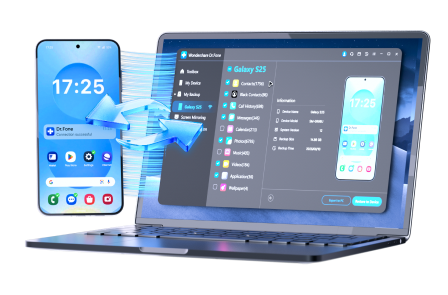
- Transfer all data between devices.
- Robust backup solutions for reliable data protection.
- Mirror screens to PC for meetings, teaching, and control.
- If you can still access the phone, consider backing up important data before troubleshooting further.
- If you forgot the passcode, use Apple’s official recovery options first; only proceed with legitimate ownership verification paths.
- If the device is stuck or unstable, system repair-style troubleshooting may be appropriate after basic iOS steps (restart/update) are tried.
5-2. Security, privacy, and compliance notes
Haptic Touch is designed to speed up normal interactions without weakening iPhone security. Some Haptic Touch actions can appear on the Lock Screen (like quick controls), but access to private data still depends on iOS authentication rules (passcode/Face ID/Touch ID) and app permissions. Do not try to bypass iPhone security features or someone else’s account protections; if you’re locked out or the device is account-bound, the correct next step is Apple’s official account recovery and support process, ideally with proof of purchase or original owner assistance.


Conclusion
Haptic Touch is iPhone’s press-and-hold feature that reveals quick actions and previews, often with a small vibration to confirm your touch. It matters because it replaces 3D Touch for most everyday shortcuts and makes navigation faster. If it feels inconsistent, the safest next step is to check Accessibility touch timing and system haptics settings, then validate behavior in built-in apps.


FAQ
-
What is haptic touch on iPhone?
Haptic Touch is a press-and-hold gesture that brings up quick actions or previews, often with haptic feedback so you feel a confirmation tap. -
Where do I find Haptic Touch settings?
Common paths include Settings > Accessibility > Touch (for touch timing options) and Settings > Sounds & Haptics > System Haptics (for vibration feedback). Labels can vary by iOS version. -
Is Haptic Touch the same as haptic feedback on iPhone?
Not exactly. Haptic Touch is a long-press interaction that can trigger haptics; “haptic feedback” is the broader term for vibration responses across iOS (keyboard taps, toggles, system actions). -
Haptic Touch vs 3D Touch: what’s the difference?
Haptic Touch is time-based (press-and-hold). 3D Touch was pressure-based and required special display hardware found on some older iPhones. -
Why doesn’t Haptic Touch work in a specific app?
Not all apps or screen elements support context menus. Test the same gesture in Apple apps (Photos, Safari) to confirm the feature works system-wide, then check for app updates. -
Can I turn off the vibration when using Haptic Touch?
Often yes, by adjusting haptics settings such as Settings > Sounds & Haptics > System Haptics (availability varies). Turning off system haptics may also reduce other vibration feedback across iOS.
 Add Wondershare Dr.Fone as a preferred source on Google