Effortlessly manage data through preview, delete, export, etc.

 100% Security Verified | No Subscription Required | No Malware

 :
: 
 ChatGPT
 Perplexity
 Gemini
 Claude
 Grok
Grok
What is Center Stage? It’s an iPad camera feature that automatically keeps you (and sometimes others) framed during video calls by digitally panning and zooming the view from the front Ultra Wide camera. It’s designed to make calls feel more natural when you move around, lean in, or someone else joins the shot.
In plain English: Center Stage helps your iPad "follow" you on screen during a call so you don’t have to stay perfectly still. One key takeaway: it doesn’t physically move the camera—your iPad crops and adjusts the image in real time to keep faces centered.
In this article
- Part 1. What Center Stage is used for: core uses & scenarios (Why it matters)
- Part 2. How Center Stage works: official working logic (How it works, non-technical + technical-lite)
- Part 3. Where to find Center Stage: settings paths and entry points (Where to find it)
- Part 4. How to use, enable, disable, or check Center Stage
- Part 5. Requirements and compatibility
- Part 6. Center Stage vs related concepts
- Part 7. Common issues and misconceptions
- Part 8. Security, privacy, and compliance notes
Part 1. What Center Stage is used for: core uses & scenarios (Why it matters)
Core uses and real-world scenarios
Center Stage matters because many people don’t sit still in front of a tablet. By automatically reframing the shot, it reduces awkward off-center angles and helps others see you clearly without constant manual adjustments.
- You pace slightly during a FaceTime call and want to stay centered without repositioning the iPad.
- You lean in to show something on paper and the frame adjusts to keep you in view.
- A second person joins a call and the camera widens to include both faces.
- You’re cooking or demonstrating something and move around the kitchen while staying in frame.
- You’re in a classroom or tutoring session and need the camera to keep up with natural movement.
Who needs it most
Center Stage is most useful for everyday users who make frequent video calls, students attending online classes, and professionals in meetings who want a more consistent on-camera presence. It can also help parents on family calls (where kids move a lot). For enterprise or school-managed iPads, IT teams may care because camera features and permissions can be restricted by policy.
Part 2. How Center Stage works: official working logic (How it works, non-technical + technical-lite)
Plain explanation
Center Stage uses the iPad’s front Ultra Wide camera to capture a wider view than you typically see on screen. The iPad then automatically selects the best crop and shifts it as you move, aiming to keep faces comfortably framed without you needing to adjust the device.
Key components
- Ultra Wide front camera coverage: a wider field of view provides "extra room" to crop while still keeping you in frame.
- On-device image processing: the iPad analyzes the scene in real time and adjusts framing dynamically.
- Face/subject detection logic: framing decisions generally prioritize faces and can widen when more people appear.
- App support layer: Center Stage works in supported apps (such as FaceTime and compatible third-party video apps).
- User toggle/control: the feature can typically be turned on or off, depending on app and iPadOS version.
Part 3. Where to find Center Stage: settings paths and entry points (Where to find it)
Settings or menu paths
Depending on iPad model and iPadOS version, you’ll usually find Center Stage in one of these places:
- Settings > FaceTime > Center Stage
- Settings > Camera > Center Stage (on some versions/models)
You may also see it as an in-call control (for example, in FaceTime’s on-screen controls) rather than a global switch.
Search keywords and entry tips
- Settings search keyword: "Center Stage"
If you don’t see it, look for camera/video-call sections such as FaceTime, Camera, or Video Effects. Labels can vary by iPadOS version, and the option may only appear on iPads that support the feature.
Part 4. How to use, enable, disable, or check Center Stage
Safe how-to steps
-
Step 1 Search for Center Stage in Settings
Open Settings and use the search bar to type Center Stage.
-
Step 2 Open the relevant Settings section
Tap the relevant section (commonly FaceTime or Camera).
-
Step 3 Toggle Center Stage on or off
Toggle Center Stage On or Off (if available).
-
Step 4 Confirm it works in a supported app
Open a supported app (such as FaceTime) and start a call to confirm whether framing follows your movement.
-
Step 5 Check compatibility and permissions if missing
If it still doesn’t appear, confirm your iPad model supports Center Stage and that camera permissions for the app are enabled in Settings.
Official help resources
If you need model-specific guidance, use Apple’s built-in Tips app (when available) or the Apple Support app to look up "Center Stage" for your iPad model and iPadOS version.
Part 5. Requirements and compatibility
Quick compatibility table
| Item | Requirement / behavior |
|---|---|
| Supported devices | iPad models with a front Ultra Wide camera that supports Center Stage (varies by model and year) |
| iPadOS version | Typically requires a relatively recent iPadOS release (often iPadOS 15 or later; exact behavior varies) |
| Works in | FaceTime and other compatible video-call apps that support the feature |
| Apple ID sign-in | Not required for Center Stage itself; some apps (e.g., FaceTime) may require sign-in |
| Required toggles | Center Stage toggle in Settings and/or in-app controls must be enabled (where offered) |
| Connectivity | Center Stage processing works on-device; video calling still requires an internet connection |
| Offline behavior | You can toggle settings offline; live video-call use depends on the app and network |
| Notable limitations | May not appear on unsupported iPads; some apps may not expose the feature; framing can change with lighting, movement, or multiple people |
Notes and caveats
Center Stage availability depends primarily on hardware (the front camera) and iPadOS/app support, so two iPads on the same iPadOS version may not show the same options. In some apps, you may only be able to control Center Stage during a call rather than from a global Settings switch.
Part 6. Center Stage vs related concepts
Key differences
| Feature | Purpose | Where it appears | Dependencies | Common confusion |
|---|---|---|---|---|
| Center Stage | Auto-reframe/pan/zoom to keep people in view during video | FaceTime, supported video apps, sometimes Settings | Supported iPad hardware + supported app | Mistaken for a "zoom" filter or a camera hardware movement |
| Portrait (video) / Background blur | Blur background for a more "portrait" look | Video effects in supported apps | Neural processing + app support | People assume blur and auto-framing are the same feature |
| Stage Manager | Multitasking/window management | iPad multitasking settings and UI | Supported iPad models + iPadOS | Similar name; unrelated to camera/video framing |
When readers confuse them
- "Center Stage" vs "Stage Manager" because both include the word "Stage," but only Center Stage affects the camera framing.
- Center Stage vs "zoom" because the view may look closer—this is usually digital cropping, not a lens zoom.
- Center Stage vs portrait effects because both can change how you look on calls, but they do different things.
Part 7. Common issues and misconceptions
Symptom → likely reason → what to check
- Center Stage toggle is missing → iPad may not support it → check your iPad model’s front camera specs (Ultra Wide requirement) and iPadOS version.
- Center Stage is on but doesn’t do anything → the app may not support it or doesn’t expose the control → test in FaceTime and check the app’s camera/video settings.
- Framing feels "jumpy" or keeps changing → lighting, fast movement, or multiple faces can affect tracking → improve lighting, reduce background motion, and test with one person.
- You look too "zoomed in" → Center Stage is cropping from a wider view → turn Center Stage off if you prefer a fixed wide shot.
- Camera options are greyed out on a work/school iPad → restrictions or MDM policies → check Screen Time/MDM restrictions or contact the administrator.
When Dr.Fone can help
If Center Stage isn’t appearing due to broader iPadOS glitches (settings not loading, camera-related crashes, or unstable system behavior), a device maintenance workflow may help you stabilize the iPad before deeper troubleshooting. Wondershare Dr.Fone can be relevant for legitimate tasks like backing up your iPad before resets, repairing certain iPadOS issues, or recovering important data if the device becomes unstable during troubleshooting. It is not a tool for bypassing security, ownership checks, or managed-device restrictions.
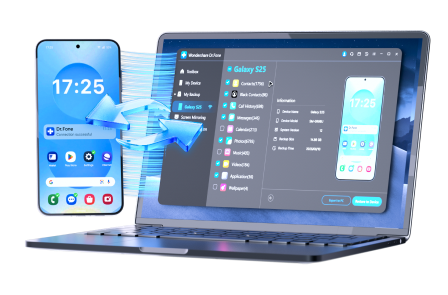
 Effortlessly manage data through preview, delete, export, etc.
- Transfer all data between devices.
- Robust backup solutions for reliable data protection.
- Mirror screens to PC for meetings, teaching, and control.
-
Step 1 Back up important data before major changes
Use Dr.Fone to back up important iPad data to a computer before making major changes (updates, resets, or profile removal with admin approval).
-
Step 2 Repair system issues if the iPad is unstable
If the iPad is unstable, use Dr.Fone’s system repair option (where supported) to address iPadOS issues, then recheck Center Stage settings.
-
Step 3 Restore and retest video apps
After the device is stable, restore your data as needed and retest Center Stage in FaceTime and another supported app.
- If you can still access the phone or iPad normally, try updates, permission checks, and settings toggles first.
- If you forgot the passcode, follow Apple’s official recovery/erase-and-restore process and be prepared for Apple ID verification.
- If the device is stuck or unstable, consider a backup and a reputable repair workflow before attempting more disruptive steps.




Part 8. Security, privacy, and compliance notes
Center Stage is primarily a usability feature, but it still involves camera input and on-device analysis to keep faces framed. You should only enable it in apps you trust and ensure camera permissions align with your privacy expectations. Don’t try to bypass app permissions, iPadOS security protections, Activation Lock, or workplace/school management (MDM) restrictions to force camera features on. If the iPad is managed, restricted, or not clearly yours, the correct next step is to contact the organization’s IT/admin team or Apple Support with proof of ownership or authorization.
Conclusion
Center Stage is an iPad camera feature that automatically reframes video calls to keep people centered, making calls more comfortable when you move or others join. It’s typically found in FaceTime/Camera settings or in-call controls, and it depends on supported iPad hardware and app support. If system instability gets in the way of normal troubleshooting, Dr.Fone may fit as a practical, safety-minded option for backup or device repair—without sidestepping security rules.
FAQ
-
Q1. Does Center Stage work on every iPad?
No. Center Stage requires specific iPad hardware (notably a compatible front Ultra Wide camera), and the option may only appear on supported models and iPadOS versions. -
Q2. Is Center Stage only for FaceTime?
It’s most commonly used with FaceTime, but it can also work in other video-call apps that support the feature. App support varies, so the best test is to check in FaceTime and one other video app you use. -
Q3. Why does Center Stage make the image look more "zoomed in"?
Center Stage typically crops from a wider camera view to keep you centered. That crop can look like a zoom even though the camera isn’t physically moving. -
Q4. Can I turn Center Stage off for privacy?
Yes. If your iPad and app offer the control, you can toggle Center Stage off in Settings (often under FaceTime or Camera) or in the app’s video controls so the framing stays fixed.
 Add Wondershare Dr.Fone as a preferred source on Google