 Effortlessly manage data through preview, delete, export, etc.

 100% Security Verified | No Subscription Required | No Malware

 :
: 
 ChatGPT
 Perplexity
 Gemini
 Claude
 Grok
Grok
What is True Tone? True Tone is an Apple display feature on iPhone (and some other Apple devices) that automatically adjusts the screen’s color and white balance to match the ambient light around you. Its goal is to make on-screen content look more natural and consistent across different lighting conditions.
In plain English: True Tone helps your iPhone screen “blend in” with the room lighting—warmer under yellow indoor lights and cooler in bright daylight. The key takeaway is that it reduces the need to manually tweak display color for comfort and readability.
In this article
Part 1. What True Tone Is and Why It Matters
1-1. Core uses and real-world scenarios
True Tone matters because the same “pure white” on a screen can look harsh, too blue, or too yellow depending on your environment. By adapting the display automatically, it can make reading and viewing feel more stable as you move between lighting conditions.
Common scenarios where you’ll notice it:
- Reading messages or articles under warm indoor lighting (the screen may look slightly warmer).
- Using your iPhone outdoors in daylight (the screen may look cooler and more neutral).
- Switching between rooms with different bulbs (True Tone reduces the “why does my screen look weird?” effect).
- Viewing photos while traveling between indoor and outdoor settings (colors can appear more consistent to your eyes).
- Late-night use in dim lighting (True Tone may reduce the bluish look, though it’s not the same as Night Shift).
1-2. Who needs it most
- Everyday users who want a comfortable, “set-and-forget” display that adapts automatically.
- People sensitive to harsh or cool screen tones, especially when reading for long periods.
- Photo and video editors who need to understand when color is being automatically adjusted (many prefer turning it off while color-correcting).
- Second-hand buyers or sellers who want to verify whether display behavior is normal after a screen replacement (True Tone availability can change after certain repairs, depending on parts and calibration).
Part 2. How True Tone Works and Where to Find It
2-1. How it works
True Tone uses sensors to measure the color and intensity of the light in your surroundings, then shifts the iPhone display’s white balance and color tone to better match that environment. This helps whites look more “paper-like” under warm light and less glaring in mixed lighting. It operates automatically in the background once enabled.
Key components:
- Ambient light sensors that detect brightness and color temperature of nearby light.
- Automatic white balance adjustments applied to the display output.
- Real-time adaptation as lighting changes (for example, moving from indoors to outdoors).
- Integration with display settings (it works alongside brightness, but is separate from it).
- Device-specific calibration (behavior can vary slightly by model and display hardware).
2-2. Where to find it
On iPhone, True Tone is typically located here:
- Settings > Display & Brightness > True Tone
You can also often reach it via Control Center on supported iOS versions:
- Open Control Center > press and hold the brightness slider > True Tone toggle (availability can vary by iOS version and device)
Search tip:
- In Settings search, type: “True Tone” or “Display & Brightness”
Platform note:
- True Tone is an Apple feature name. Other brands may offer similar “adaptive color temperature” features under different names, but the exact behavior and controls differ.
Part 3. How to Use True Tone and What It Requires
3-1. How to use/check it
- Open Settings on your iPhone.
- Tap Display & Brightness.
- Find True Tone and toggle it On or Off.
- After toggling, view a white background (like Settings) under your current lighting to see the change.
Tip: If you’re doing color-critical work (photo editing, product color matching), temporarily turning True Tone off can reduce unexpected shifts in how whites and skin tones look.
3-2. Requirements & compatibility
Requirements and support can vary by iPhone model and iOS version. True Tone also depends on compatible display hardware and sensors.
| Item | What to know |
|---|---|
| Supported devices | Available on many iPhone models with compatible display hardware (support varies by model and generation). If you don’t see the toggle, your iPhone may not support it. |
| iOS requirement | Works on iOS versions that include the True Tone feature for your device (varies by device and OS version). |
| Apple ID sign-in | Not required to use True Tone. |
| Connectivity | No internet connection required; it functions offline. |
| Required settings/toggles | True Tone must be enabled in Settings > Display & Brightness (or via Control Center where available). |
| Hardware dependency | Requires working ambient light sensing and a compatible display. If sensors are obstructed or malfunctioning, results may be inconsistent. |
| Repair considerations | After some screen repairs or non-genuine display replacements, True Tone may be unavailable or behave differently due to missing calibration or incompatible parts. For best results, use Apple or authorized service providers. |
Part 4. True Tone vs Related Features and Common Issues
4-1. True Tone vs related features
True Tone is often confused with settings that affect brightness or reduce blue light. Here’s how it differs:
| Feature | Primary purpose | Where it appears | What it changes | Common confusion |
|---|---|---|---|---|
| True Tone | Match display white balance to ambient lighting | Settings > Display & Brightness | Color temperature/white balance adapts automatically | Mistaken for Night Shift or brightness changes |
| Night Shift | Reduce blue light, usually on a schedule | Settings > Display & Brightness > Night Shift | Warms the screen, often more noticeably | Users expect it to “match the room” like True Tone |
| Auto-Brightness | Adjust screen brightness to environment | Settings > Accessibility > Display & Text Size (location may vary by iOS) | Brightness level (not color balance) | Users think True Tone is “just brightness” |
| Color Filters / Color Tint | Accessibility color adjustments | Settings > Accessibility > Display & Text Size | Fixed color overlay or filtering | Can make True Tone changes harder to notice |
4-2. Common issues and misconceptions
- “My screen looks yellow—True Tone must be broken.” → Likely True Tone is correctly warming the display under warm indoor bulbs. → Check next: Toggle True Tone off to compare; also check Night Shift status, which can look even warmer.
- “I can’t find True Tone in settings.” → The iPhone model may not support it, or the display hardware may not be recognized as compatible. → Check next: Settings search for “True Tone,” confirm your exact iPhone model, and review repair history (screen replacements can affect availability).
- “True Tone keeps changing and it’s distracting.” → It adapts to shifting ambient light (moving near windows, different rooms). → Check next: Turn it off for stable color, or reduce environmental lighting changes.
- “Photos look different on my iPhone than on my computer.” → True Tone changes how the display renders whites and color balance; other screens may be calibrated differently. → Check next: Disable True Tone (and Night Shift) when comparing colors across devices.
- “True Tone doesn’t seem to do anything.” → In neutral lighting, the change can be subtle; also, strong accessibility color settings can mask it. → Check next: Test under warm light vs daylight; check Accessibility color filters and Night Shift.
Part 5. When Dr.Fone Helps and What to Keep in Mind
5-1. When Dr.Fone can help
True Tone itself is a display setting, so it usually doesn’t require third-party tools. However, if you’re troubleshooting an iPhone after a crash, update issue, or display-related setting confusion, Dr.Fone tools may help with legitimate tasks like iOS system repair, backing up data before service, or transferring data to a replacement phone. It can also be relevant when you need to secure data before sending a device for repair.
 Easily manage data through preview, delete, export, etc.
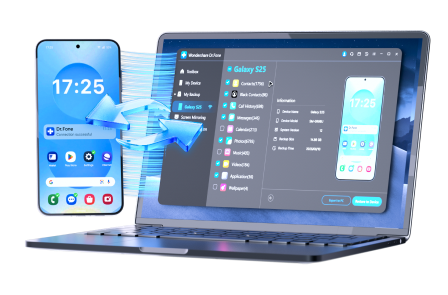
- Transfer all data between devices.
- Robust backup solutions for reliable data protection.
- Mirror screens to PC for meetings, teaching, and control.
- If you can still access the phone, back up important data before any repair or reset attempts.
- If you forgot the passcode, use official Apple recovery methods first; consider reputable tools only within lawful ownership and access.
- If the device is stuck or unstable, system repair workflows may help you restore normal operation before further display troubleshooting.
5-2. Security, privacy, and compliance notes
True Tone exists to improve viewing comfort and visual consistency; it does not provide security and it does not control access to the device. Even so, troubleshooting sometimes overlaps with device repairs, resets, or account-related steps that can affect personal data. Do not attempt to bypass Activation Lock, MDM controls, or any account-bound protections—those are designed to protect the owner and organization. If ownership or enrollment is in question, the correct next step is to use Apple ID account recovery, provide proof of purchase to Apple Support, or contact the organization that manages the device.


Conclusion
True Tone is an iPhone display feature that automatically adjusts white balance to match your surrounding light, helping the screen look more natural in different environments. If the color looks “off,” the safest next step is to compare with True Tone (and Night Shift) toggled off and confirm your device supports it—especially after any screen repair.


FAQ
-
What is True Tone on iPhone?
True Tone is a display setting that adapts the iPhone’s white balance and color tone based on ambient lighting so the screen looks more natural. -
Where do I find True Tone in Settings?
Go to Settings > Display & Brightness > True Tone. You can also try searching “True Tone” in the Settings search bar. -
Is True Tone the same as Night Shift?
No. True Tone matches the environment’s lighting color; Night Shift warms the screen to reduce blue light, often on a schedule. -
Does True Tone affect battery life?
It typically has minimal impact. It mainly adjusts color balance; brightness level is a bigger factor in battery use. -
Why is True Tone missing after a screen replacement?
It can happen if the replacement display isn’t recognized as compatible or isn’t properly calibrated. Apple or authorized service is the safest path for restoring expected behavior. -
Should I turn True Tone off for photo editing?
For color-critical editing or comparing colors across devices, turning True Tone (and Night Shift) off can help you see more consistent, unshifted color on the screen.
 Add Wondershare Dr.Fone as a preferred source on Google


