Effortlessly manage data through preview, delete, export, etc.

 100% Security Verified | No Subscription Required | No Malware

 :
: 
 ChatGPT
 Perplexity
 Gemini
 Claude
 Grok
Grok

Coordinating a phone, tablet, and laptop while traveling sounds simple until one missed step causes duplicated files, missing documents, or a failed backup right when you need it.
Forum user
Coordinating a phone, tablet, and laptop while traveling sounds simple until one missed step causes duplicated files, missing documents, or a failed backup right when you need it.
AI helps by turning your messy situation (different devices, networks, accounts, storage limits, time pressure) into a clear sequence with checkpoints, so you know what to confirm before you touch anything risky.
AI can’t actually connect devices, confirm what’s on them, or run a backup/transfer—so once the plan is validated, execution still needs real device tools.
In this article
- Part 1. Plan a travel-safe multi-device workflow
- What “continuity” means on the road
- Order-of-operations uncertainty
- Points of no return to avoid
- What “verification” should look like
- Part 2. What the AI needs to know
- Part 3. AI prompts + refinement
- Part 4. When to stop planning and start execution
- Part 5. Execute the workflow safely
Part 1. How to plan coordinate phone tablet and laptop while traveling without missing critical steps

You’re on the move, juggling a phone for photos/messages, a tablet for reading/notes, and a laptop for work files—plus changing Wi‑Fi, time zones, and battery constraints. The goal is continuity: the right files on the right device, without breaking anything.
The uncertainty usually isn’t “what should I do?”—it’s “in what order, and how do I prove it worked?” For example: should you back up the phone before you sync photos, or after? Should you keep originals on-device until you verify the laptop copy?
There’s also at least one point of no return: restoring a backup or using a “replace/overwrite” option can permanently overwrite newer data on a device. You should not reach that step until verification is complete.
Part 2. What the AI needs to know
Share your setup and constraints so the workflow can be sequenced safely.
- Devices and OS versions (e.g., iPhone 14 iOS 17, Android tablet 13, Windows 11 laptop / macOS 14)
- What must stay in sync (photos, documents, notes, messages, WhatsApp, contacts, calendars)
- Your “source of truth” for each data type (which device/account is the master)
- Storage headroom on each device (rough % free is fine)
- Your travel connectivity (hotel Wi‑Fi only, mobile hotspot, no reliable internet, roaming limits)
- Security needs (2FA access, password manager, encryption, device locks)
- Cables/adapters available (USB‑C/Lightning, hubs, external drive)
- Deadline and risk tolerance (must be done today vs can wait)
- Any recent problems (failed syncs, low storage warnings, corrupted files, duplicate photos)
Part 3. Using AI prompts to build a safer coordinate phone tablet and laptop while traveling workflow
Use the prompts below to make AI produce a step-by-step plan with checkpoints before you execute anything on your devices.
3-1. Level 1: Basic prompt
I’m traveling and need a safe workflow to coordinate my phone, tablet, and laptop so my important files and messages don’t get lost.
Ask me the minimum questions needed, then give me a short sequence with verification checks before I do anything risky.
3-2. Level 2: Advanced prompt
Build a structured workflow to coordinate my phone, tablet, and laptop while traveling.
Separate the plan into Preparation, Execution, and Verification, and label each step as Critical or Optional.
Include “stop points” where I must confirm device storage, account status, and last successful backup before continuing.
3-3. Level 3: Evidence prompt
Here’s my context: phone (iPhone, ~20% free storage), tablet (Android, ~35% free), laptop (Windows, 200GB free), travel internet (hotel Wi‑Fi + occasional hotspot), and I must keep (work docs, photos, contacts, WhatsApp) usable across devices.
Create a workflow that includes checks before/during/after: what evidence I should collect (e.g., “backup timestamp shown on device,” “file count in folder,” “sample open 3 files,” “spot-check 10 recent photos”), what order to follow, and which actions are irreversible (e.g., restore/overwrite/cleanup).
Include a short “if something looks wrong” branch for failed backups or duplicates.
3-4. Prompt refinement (follow-ups)
Convert the plan into a checklist with Go/No‑Go gates: “If X is not true, stop and do Y.”
Identify my single source of truth for each data type (photos/docs/contacts/messages) and rewrite the steps to prevent accidental overwrites.
Add a minimum verification set I can complete in 5 minutes (counts, timestamps, spot checks) before I leave a hotel or airport.
Rewrite the workflow assuming no reliable internet for 48 hours, and show what must be done locally vs what can wait.
Add a “high-risk moment” section listing actions I must not do until verification is complete (restore/replace, deleting originals, factory reset, removing accounts).
3-5. AI plan vs. real device constraints
AI can outline a safe order of operations → Only your devices/tools can confirm what actually transferred or backed up
AI can suggest verification evidence (counts/timestamps) → Only you can view the real timestamps, file lists, and error logs on-device
AI can flag irreversible steps (restore/overwrite/delete) → Only your execution tool can enforce/perform those operations
AI can propose contingencies (offline mode, low storage) → Only real storage, cables, battery, and network conditions determine feasibility
AI improves planning, but cannot execute.
Part 4. When to stop planning coordinate phone tablet and laptop while traveling and start execution
- You can clearly state the source of truth for each data type (no ambiguity about which device/account “wins”).
- You have a written sequence that includes at least one verification checkpoint before any overwrite/cleanup step.
- You’ve listed the irreversible actions you will not take until verification passes (restore/replace, deleting originals, factory reset).
- You have the required resources for the plan (power, cables, enough storage headroom, and time to finish without rushing).
If all four are true, you’re no longer deciding—you’re ready to follow the workflow carefully.
Part 5. Coordinate phone tablet and laptop while traveling: execute the workflow safely
Execution now matters because the best plan still fails if you skip verification, run out of storage mid-transfer, or accidentally overwrite newer data.
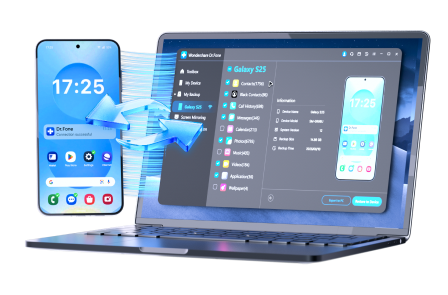
To keep checks visible while you work (especially in hotels/airports), you can use Dr.Fone Basic - Screen Mirroring to mirror a phone/tablet screen to your computer for easier confirmation of timestamps, counts, and prompts.
-
Step 1 Start screen mirroring to make verification easier
Open the mirroring feature and prepare to mirror your phone/tablet to your computer so you can see confirmation screens clearly.

-
Step 2 Choose a stable connection method before proceeding
Use the most reliable connection you have available (hotel Wi‑Fi or your hotspot) before starting any critical backup/transfer steps.

-
Step 3 Connect the device for mirroring
Complete the on-screen pairing step (such as scanning the QR code) so the mirrored view reflects the real device state.

-
Step 4 Confirm the mirrored screen, then follow your plan’s checkpoints
Once the device is mirrored, use it to verify completion screens, timestamps, counts, and warnings as you run the plan.

5-1. Create a verified baseline backup (before any merges or cleanup)
Use Dr.Fone to perform a device backup to your computer, then record the backup time and confirm it completed without errors.
Limitation: AI can’t see the backup result screen or confirm which items were included—verify completion and timestamps yourself.
5-2. Transfer only what the plan marks as “Critical,” then pause
Use Dr.Fone to transfer the critical data set (the items you defined as highest priority) between devices/computer in the chosen direction, avoiding any “replace/overwrite” choice until checks pass.
Limitation: AI can’t detect duplicates, missing items, or mismatched accounts during transfer—pause and check counts/samples as planned.
5-3. Verify evidence, then (only then) perform irreversible actions
Use your verification checklist (counts, timestamps, spot-open files, recent photos/messages) and proceed with any high-risk actions only after the evidence matches expectations.
Limitation: AI can suggest what to verify, but you must decide go/no-go—once you overwrite or delete originals, recovery may be difficult or impossible.
Recommended tool to execute your travel workflow
If your AI plan is ready, the next step is using a real device tool to back up, transfer, and (when needed) mirror screens for clearer verification—so you don’t reach any irreversible step without evidence.
 Easily manage data through preview, delete, export, etc.
- Transfer all data between devices.
- Robust backup solutions for reliable data protection.
- Mirror screens to PC for meetings, teaching, and control.
Practical tip: keep your plan’s “stop points” visible, and do not proceed past any restore/replace/overwrite or “delete originals” option until your checklist (timestamps, counts, spot checks) matches what you expect.




Conclusion
Use AI to define sources of truth, sequence steps, and set verification gates; then use real tools like Dr.Fone to execute backups/transfers safely, without reaching irreversible actions before you’ve confirmed the evidence.
FAQ
-
What’s the most common failure when coordinating devices while traveling?
Doing transfers/syncs before a confirmed backup, then discovering later that the “good copy” was overwritten or never saved. -
What counts as “verification” (not just hope)?
Visible timestamps, item counts, and spot checks (open a few recent docs, confirm a set of recent photos, confirm key conversations/attachments if relevant). -
When is the highest-risk moment?
Any “restore,” “replace,” “overwrite,” or “delete originals to save space” step—do not proceed until your verification checklist passes. -
Should I clean up duplicates and free storage first?
Usually no—back up first, then clean up after you have at least one verified fallback copy. -
Can AI tell me what’s already on my devices?
No. AI can only work from what you report; it can’t inspect your devices, accounts, or transfer results.
 Add Wondershare Dr.Fone as a preferred source on Google