Effortlessly manage data through preview, delete, export, etc.

 100% Security Verified | No Subscription Required | No Malware

 :
: 
 ChatGPT
 Perplexity
 Gemini
 Claude
 Grok
Grok
What is Quick Note? Quick Note is an iPad feature in Apple’s Notes app that lets you create a new note or open a recent one instantly from anywhere in iPadOS, without first switching to the Notes app. It’s designed for fast capture of links, text, handwriting, and small bits of information while you’re using other apps.
In plain English: Quick Note is a "pop-up note" you can summon quickly to jot something down and get back to what you were doing. One key takeaway: it’s not a separate app—Quick Note saves into Apple Notes and can sync with iCloud like any other note.
In this article
- Part 1. What Quick Note is used for: core uses & scenarios (Why it matters)
- Part 2. How Quick Note works: official working logic (How it works, non-technical + technical-lite)
- Part 3. Where to find Quick Note: settings paths and entry points (Where to find it)
- Part 4. How to use, enable, disable, or check Quick Note
- Part 5. Requirements and compatibility
- Part 6. Quick Note vs related concepts
- Part 7. Common issues and misconceptions
- Part 8. Security, privacy, and compliance notes
Part 1. What Quick Note is used for: core uses & scenarios (Why it matters)
Core uses and real-world scenarios
Quick Note matters because it reduces friction: you can capture information at the moment you see it, then continue your task without losing context.
- While browsing in Safari, you open Quick Note to save a URL and a short summary for later.
- During a video call, you jot down action items without leaving the meeting app.
- In a PDF or document viewer, you quickly note a page number or quote you need to reference.
- While studying, you capture a question to ask later, using handwriting with Apple Pencil.
- When shopping, you record model numbers, prices, or measurements while comparing items in multiple apps.
Who needs it most
Quick Note is most useful for everyday iPad users who multitask (students, remote workers, and researchers) and anyone who frequently captures small snippets—links, reminders, or quotes—while reading. It can also help families sharing an iPad (with proper privacy settings) and managed-device users (school or enterprise) who must keep notes inside approved Apple apps and accounts.
Part 2. How Quick Note works: official working logic (How it works, non-technical + technical-lite)
Plain explanation
Quick Note is a fast entry point to Apple Notes. When you trigger it (for example, with a gesture or a Control Center button), iPadOS opens a small note window over your current app. What you type or write is saved into Notes, usually to a "Quick Notes" area or your default notes account, depending on your settings.
Key components
- Notes app integration: Quick Note content is stored as a normal Apple Note and appears in the Notes app.
- Trigger methods: Quick Note can be opened via a corner gesture, Control Center, or other supported entry points depending on iPadOS version.
- Account and sync: Notes can be stored locally "On My iPad" or synced through iCloud (or another enabled notes account), depending on your configuration.
- Context capture (where supported): Quick Note may attach a link back to the webpage or content you were viewing, making it easier to return later.
- Security layer: Access to Notes can be protected by iPad passcode/Face ID if you use locked notes and device security settings.
Part 3. Where to find Quick Note: settings paths and entry points (Where to find it)
Settings or menu paths
- Settings > Notes > Quick Notes (options and behavior may vary by iPadOS version)
- Settings > Control Center > (add) Notes or Quick Note / Quick Notes (label can vary)
- Notes app > look for a "Quick Notes" section/folder (naming and placement can vary)
Search keywords and entry tips
- Settings search keywords: "Quick Note", "Notes", "Control Center"
- If you don’t see "Quick Notes" wording, look for notes-related options such as corner gesture settings, "Resume Last Quick Note," or a Notes toggle for Control Center (names vary by iPadOS version and model).
Part 4. How to use, enable, disable, or check Quick Note
Safe how-to steps
-
Step 1 Find Quick Note options in Settings
Open Settings and search for Quick Note or go to Settings > Notes to review Quick Note options (availability varies by iPadOS version).
-
Step 2 Adjust behavior (if available)
If available, adjust Quick Note behavior (for example, whether it resumes the last Quick Note or creates a new one).
-
Step 3 Add a Control Center shortcut
Open Control Center settings and add the Notes/Quick Note control if you want a button-based shortcut.
-
Step 4 Create a Quick Note from your chosen trigger
Trigger Quick Note using your chosen method (gesture or Control Center), type or write your note, then close it—your content should appear in the Notes app.
-
Step 5 Confirm it saved in Notes
To check that it saved, open Notes and look for your recent note or a Quick Notes area.
Official help resources
If you need Apple’s latest, device-specific steps, use the Tips app (if available), the Apple Support app, or the built-in help within Settings > Notes, since labels and locations can change by iPadOS version.
Part 5. Requirements and compatibility
Quick compatibility table
| Requirement area | What to know |
|---|---|
| Supported devices/platforms | iPad running iPadOS (Quick Note is commonly available on newer iPadOS versions; exact availability varies by model and iPadOS version). |
| Account sign-in | Works with Notes stored "On My iPad" or with an account (often iCloud) if Notes is enabled for that account. |
| Required toggles/settings | Notes must be available; Quick Note/gesture or Control Center entry may need to be enabled depending on your setup. |
| Connectivity | Not required for basic note-taking; needed for syncing across devices (for example, iCloud Notes). |
| Offline behavior | Notes can be created offline; syncing occurs later when connectivity returns (if syncing is enabled). |
| Notable limitations | Some entry points, labels, and context-capture features vary by iPad model, accessories, and iPadOS version; managed (MDM) devices may restrict Notes features. |
Notes and caveats
Quick Note behavior can differ across iPadOS releases (for example, where the toggle appears, or which gesture opens it). If your iPad is managed by a school or workplace, your administrator may limit Notes or iCloud syncing, which can affect Quick Note availability.
Part 6. Quick Note vs related concepts
Key differences
| Concept | Purpose | Where it appears | Dependencies | Common confusion |
|---|---|---|---|---|
| Quick Note | Instant capture without leaving the current app | Overlay window; later in Notes | iPadOS support + Notes app; optional iCloud sync | Mistaken as a separate app or a widget |
| Regular Note (Notes app) | Full note creation/organization | Inside the Notes app | Notes account/storage | Users expect the same "instant pop-up" behavior |
| Notes widget / pinned notes | Fast access to existing notes | Home Screen/Today View | Widget setup | Users expect it to "pop up" over other apps like Quick Note |
| Reminders | Task tracking with due dates/alerts | Reminders app | Reminder lists/account | Users use notes for tasks and miss reminder features |
When readers confuse them
- Quick Note saves into Notes, so it can look like "a normal note" once you open the Notes app.
- A Notes widget opens Notes, but it doesn’t behave like an overlay capture tool in the same way Quick Note does.
- Some people use Notes as a to-do list and expect reminder notifications; that’s typically a Reminders feature.
Part 7. Common issues and misconceptions
Symptom → likely reason → what to check
- Quick Note doesn’t appear when I try to open it → the trigger method isn’t enabled or isn’t supported on that iPadOS version → check Settings search for "Quick Note," and verify Control Center options for Notes/Quick Note.
- My Quick Note didn’t sync to my iPhone/Mac → Notes syncing account differs or iCloud Notes is off → check Settings > your Apple Account > iCloud > Notes (wording may vary) and confirm you’re signed into the same Apple Account.
- Quick Notes are missing in the Notes app → you’re viewing a different account (On My iPad vs iCloud) or filtering/sorting hides it → check the account list in Notes and look at "Recently Deleted" if something was removed.
- I can’t access Notes/Quick Note on a managed iPad → MDM restrictions may block Notes or iCloud sync → check device management policies with your school/work IT admin.
When Dr.Fone can help
Quick Note itself is a Notes feature, so most problems are solved through iPadOS settings and Apple account checks. However, if you’re unable to reach your Notes content because the device is unstable, you forgot the iPad passcode, or you need a safer way to back up data before troubleshooting, Wondershare Dr.Fone can help with legitimate maintenance workflows like backup/transfer or system repair (depending on your situation and device state). Use it as a recovery or maintenance tool—not to bypass ownership protections or access someone else’s data.
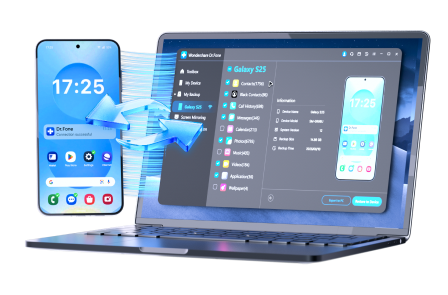
 Effortlessly manage data through preview, delete, export, etc.
- Transfer all data between devices.
- Robust backup solutions for reliable data protection.
- Mirror screens to PC for meetings, teaching, and control.
-
Step 1 Choose a relevant module and connect the iPad
In Dr.Fone, choose the relevant module (for example, Backup/Restore or System Repair) and connect the iPad to a trusted computer.
-
Step 2 Follow prompts to back up or repair
Follow the on-screen prompts to back up available data or perform a guided repair if iPadOS is malfunctioning (options vary by device/OS).
-
Step 3 Re-check Notes/iCloud settings and Quick Notes
After the device is stable, re-check Notes/iCloud settings on the iPad and confirm your Quick Notes appear in the Notes app.
- If you can still access the phone/tablet, prioritize backing up Notes (and enabling sync) before making major changes.
- If you forgot the passcode, use Apple’s official account recovery and device erase/restore process—only for devices you own.
- If the device is stuck or unstable, a system repair flow plus a backup can reduce the risk of data loss while you troubleshoot.




Part 8. Security, privacy, and compliance notes
Quick Note protects your productivity by keeping your captured information inside Apple Notes, which can be secured by your iPad passcode/Face ID and (optionally) locked notes. Don’t try to bypass device locks, Apple Account protections, or management (MDM) restrictions to access notes—those controls exist to protect the owner and comply with school/work policies. If the iPad is second-hand, belongs to an employer/school, or is signed into someone else’s Apple Account, the correct next step is to contact the original owner or your organization’s IT/admin team and use official Apple support and proof-of-ownership processes.
Conclusion
Quick Note on iPad is an instant way to open a note overlay and capture information without leaving your current app, with the content saved in Apple Notes and often synced through iCloud. It matters because it makes note-taking frictionless while multitasking. If device instability or access issues prevent you from reaching your notes, Dr.Fone may be a reasonable next step for legitimate backup or system repair workflows before you continue troubleshooting in iPadOS.
FAQ
-
Q1. Does Quick Note create a separate type of note?
No. A Quick Note is stored as a normal Apple Note and can be viewed, edited, and organized in the Notes app like any other note, though it may appear under a "Quick Notes" area depending on your setup. -
Q2. Can I use Quick Note without Apple Pencil?
Yes. Apple Pencil can make Quick Note faster for handwriting, but you can also type with the on-screen keyboard or a hardware keyboard. -
Q3. Why can’t I find Quick Note in Settings on my iPad?
Availability and labeling vary by iPad model and iPadOS version, and some devices (especially managed iPads) may restrict Notes features. Use Settings search for "Quick Note" or "Notes," and check whether Notes is allowed and configured. -
Q4. Will Quick Notes sync to my iPhone or Mac?
They can, as long as Notes syncing is enabled (commonly via iCloud) and you’re signed into the same Apple Account on your devices. If syncing is off or accounts differ, Quick Notes may stay only on that iPad.
 Add Wondershare Dr.Fone as a preferred source on Google