Effortlessly manage data through preview, delete, export, etc.

 100% Security Verified | No Subscription Required | No Malware

 :
: 
 ChatGPT
 Perplexity
 Gemini
 Claude
 Grok
Grok

I’m trying to “simulate” a multi-stop route on Android, but every app seems good at a different thing. I just want the right tool for my stops and how often plans change.
Reddit user, r/Android
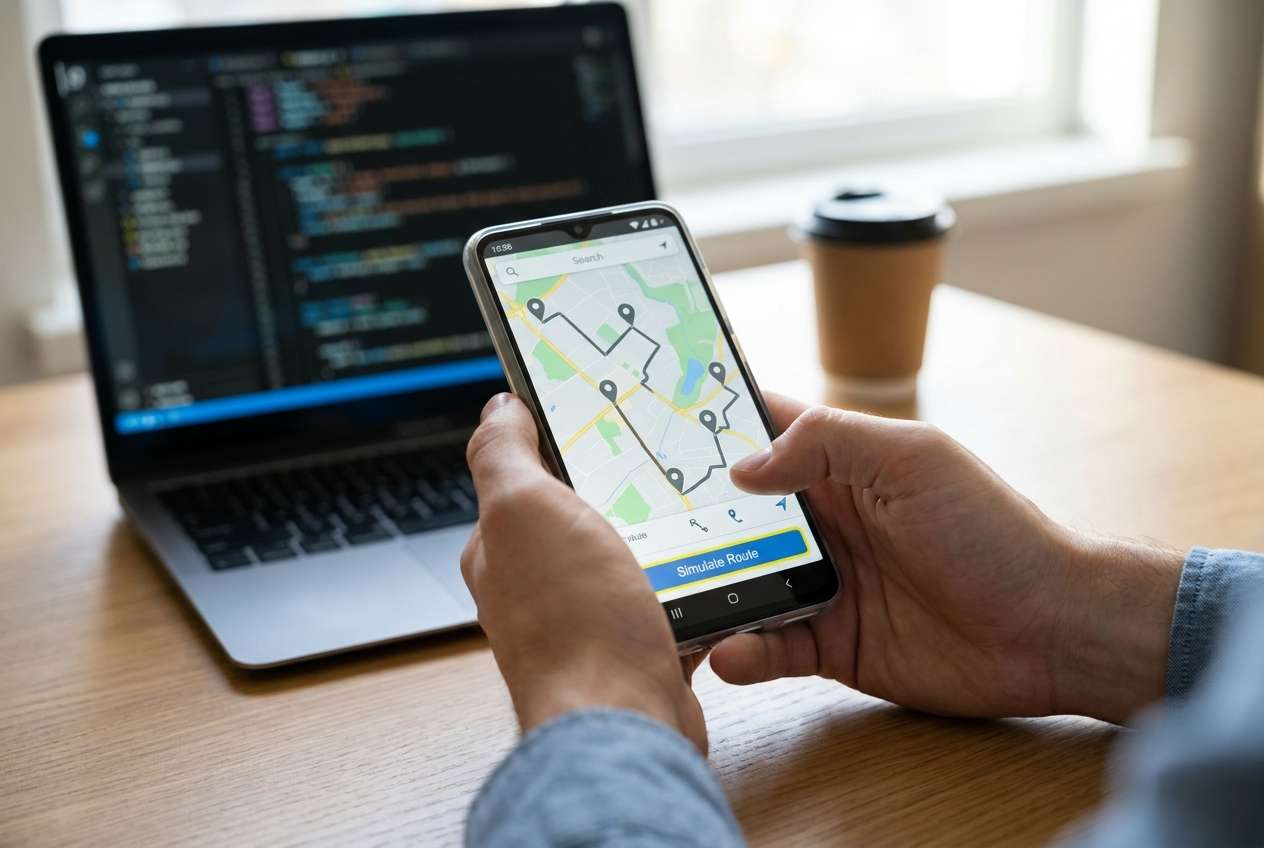
Trying to “simulate” a multi-stop route on Android usually turns into a confusing comparison—because the “best” option depends on whether you care more about planning, traffic realism, or stop optimization.
AI helps by turning fuzzy preferences (“I just need multiple stops”) into explicit trade-offs (stop limits, optimization, live traffic behavior, offline needs, and how closely the preview matches real driving).
AI can’t verify hands-on friction—like how annoying reordering stops feels, whether your phone overheats on long navigation, or whether your usual area has accurate traffic data—so real-life fit still matters after you decide.
In this article
- How to compare multi-stop route options by real priorities
- Navigation-first vs planning-first
- What “simulate” means in practice
- Planning time vs confidence on the road
- When different tools make sense
- What the AI needs to compare
- AI prompts to evaluate options more clearly
- When to stop researching and make the call
- After choosing: switch or prepare smoothly with Dr.Fone
Part 1. How to Compare simulate a multi stop route on android phone Based on Real Priorities
Most people are choosing between a navigation-first approach (Google Maps or Waze) and a planning-first approach (a route-planning app like Circuit/Route4Me, or a spreadsheet-to-maps workflow). The tension is that navigation apps are fast and familiar, but “simulation” and stop optimization can be limited.
Another common uncertainty: do you mean “simulate” as in preview the route and ETAs, or as in run a realistic practice drive with traffic-like reroutes? Those are different needs—and they often point to different tools.
The practical trade-off is time spent planning vs confidence on the road: a planner can produce a cleaner route, but the moment you need live traffic and detours, navigation apps may feel more trustworthy day-to-day.
Part 2. What the AI Needs to Compare
Answer these so the comparison reflects your real route and not generic advice:
- Your goal for “simulate”: preview-only, realistic ETAs, or rehearsal navigation
- Number of stops and whether order can change
- Whether you need route optimization (best stop order) vs fixed order
- How often stops change during the day (static plan vs constant edits)
- Priority: fastest time, least driving distance, fewer left turns/tolls, or simplicity
- Need for live traffic + rerouting vs stable planned route
- Offline needs (poor signal areas) and battery/data constraints
- Whether you’re sharing routes with others (team/clients/family)
- Privacy tolerance (account sign-in, location history, cloud sync)
Part 3. Using AI Prompts to Evaluate simulate a multi stop route on android phone More Clearly
Use these prompts to force a priorities-first comparison (instead of a vague “which app is best?”).
3-1. Level 1: Basic Prompt
I need to simulate a multi-stop route on an Android phone.
Compare using Google Maps vs Waze vs a dedicated route-planning app, focusing on how each handles multiple stops, previews/ETAs, and changes during the day.
Keep it practical and decision-oriented.
3-2. Level 2: Advanced Prompt
Help me choose the best way to simulate a multi-stop route on Android by ranking options based on my priorities.
My priorities are: (1) [live traffic realism / accurate ETAs], (2) [easy multi-stop editing], (3) [optimizing stop order], (4) [offline reliability], (5) [low setup time].
Compare Google Maps, Waze, and a route-planning app workflow.
For each option, explain who it fits best, what it struggles with, and the trade-off I’m making if I choose it.
3-3. Level 3: Evidence Prompt
Here’s my real context: I have [X] stops, starting at [start area], ending at [end area], mostly driving at [time of day], and stops are [fixed order / flexible].
I want “simulation” to mean: [preview route + ETAs / a practice run with realistic traffic behavior].
I also care about: [battery / offline / avoiding tolls / sharing].
Recommend the best option for me (Google Maps vs Waze vs a dedicated route planner), and explain what I gain and what I give up with each choice.
Also name one key assumption in your recommendation that—if wrong—would flip your choice, and tell me how to test that assumption quickly.
3-4. Prompt Refinement
If I can’t optimize stop order inside my navigation app, what’s the simplest workflow to still get an optimized order (without turning this into a complex project)?
What’s the most likely regret I’ll have with each option after one week of real use (editing stops, missed ETAs, reroutes, friction)?
Given my stop count, what are the practical limits or “pain points” I’ll hit (reordering, adding stops mid-route, saving routes for reuse)?
If my main goal is “simulation” accuracy, what specifically makes ETAs less reliable (time-of-day traffic, detours, parking time, stop duration), and how should I adjust my expectations?
If I need to share the route with someone else, which option reduces misunderstandings (same route, same stop order, same arrival expectations), and why?
3-5. AI Recommendation vs Real-World Fit
| Likely AI recommendation or conclusion | What real-life use may change or reveal |
|---|---|
| “Use Google Maps if you need straightforward multi-stop navigation with minimal setup.” | Stop reordering/editing may feel clunky when plans change frequently. |
| “Use Waze if you prioritize reactive, live traffic rerouting while driving.” | Multi-stop planning and preview/simulation can feel secondary vs on-road behavior. |
| “Use a route-planning app if you need stop-order optimization and repeatable routes.” | The route may be ‘optimal on paper’ but less convenient due to parking, building access, or real pickup/dropoff constraints. |
| “Use a hybrid workflow: optimize stops in a planner, then navigate segments in a navigation app.” | Switching apps mid-day can add friction and increase the chance of using the wrong stop or losing context. |
AI can clarify likely fit and trade-offs, but hands-on use, workflow friction, and daily habits (how often you change stops, how you drive, where you park) still decide satisfaction.
Part 4. When to Stop Researching simulate a multi stop route on android phone and Make the Call
- You can clearly say whether you need optimization (best order) or navigation realism (traffic reroutes) more.
- You’ve chosen what “simulation” means for you: preview-only vs realistic ETAs vs rehearsal navigation.
- You’ve identified your biggest deal-breaker (e.g., stop editing speed, offline reliability, sharing, or battery drain).
- You have a simple test plan (one representative route) to validate your choice in under 30 minutes.
At this point, you’re not missing information—you’re just one quick trial away from confirming fit.
Part 5. After Choosing simulate a multi stop route on android phone: Switch or Prepare Smoothly with Dr.Fone
Once you pick an approach, the practical work is usually on your phone: moving data if you switch devices, cleaning up location/history before resale, or ensuring your essentials are backed up so route planning doesn’t get disrupted. If you also want to simulate movement along a planned route (for testing), Dr.Fone - Virtual Location can help you set a route and simulate GPS movement.
 Set your map route to simulate GPS movement.
- Set your wanted movement speed.
- HD and large map view to check location.
- Fake GPS location to anywhere.
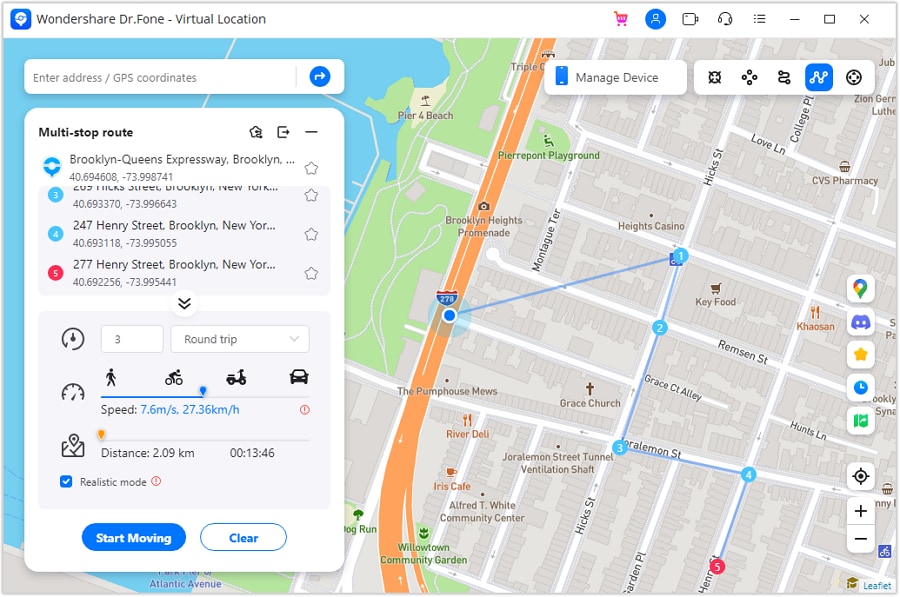
5-1. Run a route simulation (multi-stop) for testing
-
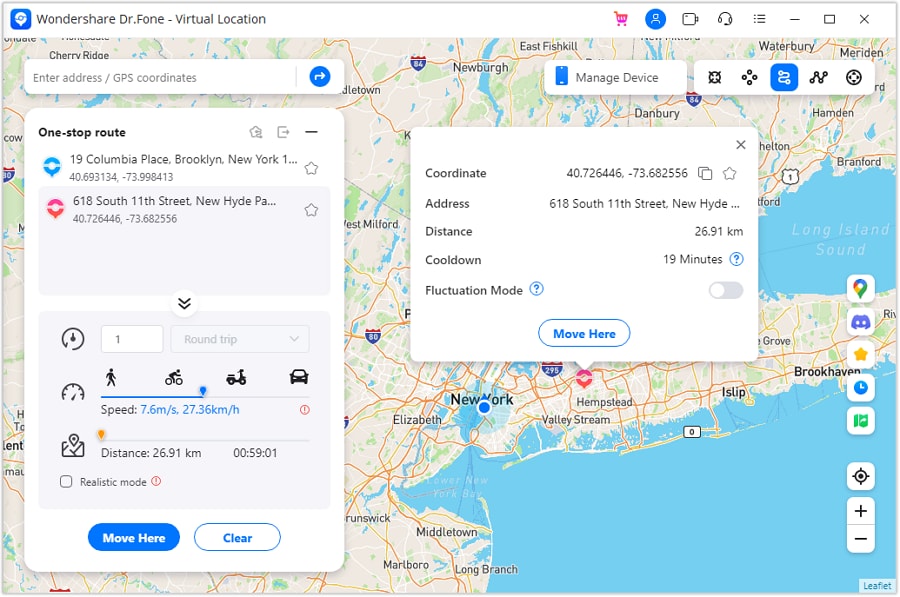
Step 1 Activate one-stop route mode
Open the route simulation mode and start with a single-route setup.
-
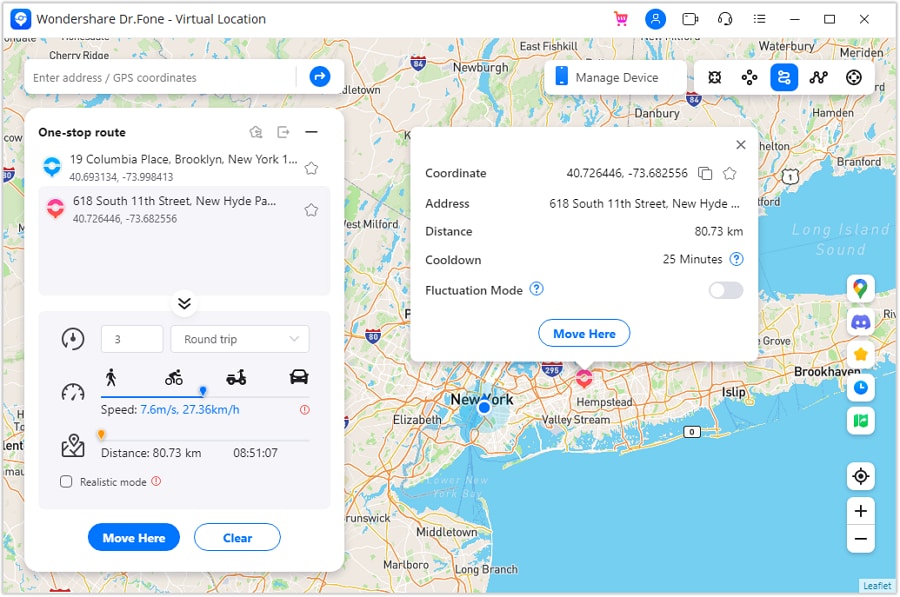
Step 2 Set route parameters
Adjust route details and movement settings (such as speed) before starting.
-
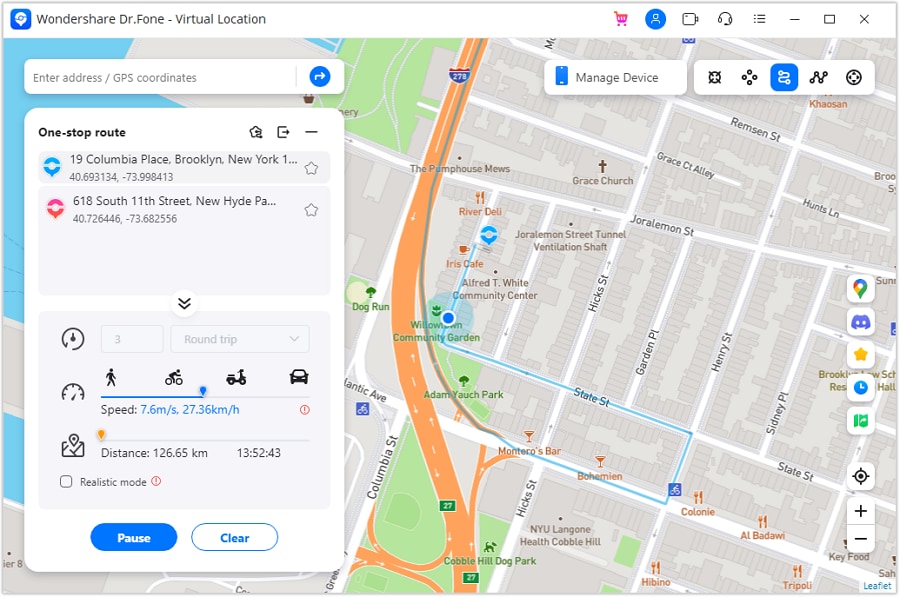
Step 3 Start one-stop simulation
Start the simulation to verify behavior before scaling to more stops.
-
Step 4 Activate multi-stop simulation
Switch to multi-stop simulation when you need to test movement across multiple points.
5-2. Switch phones without losing essentials
Action: Use Dr.Fone to transfer key data (contacts, photos, messages where supported) so your new Android setup doesn’t interrupt your day-of routing.
Limitation: Some app-specific route history/saved items may still require signing into the same app account to restore.
5-3. Back up before you change settings or reset
Action: Use Dr.Fone to create a backup so you can experiment with navigation apps, permissions, and resets without risking important personal data.
Limitation: Backups don’t guarantee every in-app preference is preserved the same way across different apps or Android versions.
5-4. Prepare for resale or handoff
Action: Use Dr.Fone tools to help you clean up and organize what you’re keeping vs removing before you sell or hand down the device.
Limitation: You should still manually confirm you’ve signed out of key accounts and removed sensitive items before final reset.




Conclusion
AI is best used here as decision support to surface trade-offs and reduce ambiguity; real driving and daily workflow prove the fit, and if your choice involves switching phones or preparing a device for handoff, Dr.Fone can handle the practical follow-through.
FAQ
-
Can I trust AI to pick the best multi-stop route solution for Android?
Use AI to structure trade-offs and highlight “fit,” but validate with one real route test—AI can’t feel your workflow friction or confirm your local traffic accuracy. -
What’s the single most important trade-off in multi-stop route simulation?
Optimization vs realism: route planners can optimize stop order, while navigation apps are better at live traffic behavior and rerouting during the drive. -
How do I avoid a generic, spec-based decision?
Decide what “simulation” means for you, list your stop count and change frequency, then compare workflows (edit speed, sharing, offline) instead of features. -
What should I prepare right after I choose an option?
A saved “test route,” your must-have settings (avoid tolls/highways, offline areas), and a backup plan if you change phones or reset. -
If I’m switching phones, what’s the main risk to my routing workflow?
Losing continuity: contacts, messages, and media are transferable, but app-specific saved routes often depend on logging into the same account and re-enabling permissions.
 Add Wondershare Dr.Fone as a preferred source on Google