Effortlessly manage data through preview, delete, export, etc.

 100% Security Verified | No Subscription Required | No Malware

 :
: 
 ChatGPT
 Perplexity
 Gemini
 Claude
 Grok
Grok
What is Split View? Split View is an iPad multitasking feature that lets you display two compatible apps side by side on the screen, so you can work in both at once. It’s part of iPadOS multitasking and is commonly used for reading, writing, referencing, and dragging content between apps.
In plain English: Split View turns your iPad into a simple two-window workspace. One key takeaway: you can keep one app open while using another without constantly switching back and forth, as long as the apps and iPadOS version support it.
In this article
- Part 1. What Split View is used for: core uses & scenarios (Why it matters)
- Part 2. How Split View works: official working logic (How it works, non-technical + technical-lite)
- Part 3. Where to find Split View: settings paths and entry points (Where to find it)
- Part 4. How to use, enable, disable, or check Split View
- Part 5. Requirements and compatibility
- Part 6. Split View vs related concepts
- Part 7. Common issues and misconceptions
- Part 8. Security, privacy, and compliance notes
Part 1. What Split View is used for: core uses & scenarios (Why it matters)
Core uses and real-world scenarios
Split View matters because it reduces app switching and makes common "look at one thing while doing another" tasks faster and less error-prone on a touch device.
- Taking notes in Notes while reading a PDF or web page in Safari
- Writing an email while viewing dates and details in Calendar
- Comparing two documents (for example, Files + Pages) side by side
- Copying information from Safari into a spreadsheet or form
- Watching instructions in a browser while following steps in Settings or another app
- Dragging photos or text from Photos/Safari into Messages or Notes (when supported)
Who needs it most
Split View is most useful for everyday users who read and write frequently, students doing research and note-taking, and professionals who reference documents while composing messages or reports. It can also help parents and caregivers who want to keep a learning app open while supervising a second app, and second-hand buyers/sellers who want to quickly check iPad usability during handover.
Part 2. How Split View works: official working logic (How it works, non-technical + technical-lite)
Plain explanation
Split View works by letting iPadOS run two apps in the foreground at the same time and dividing the screen between them. You choose one app as the primary app, then add a second app from the Dock or multitasking controls. A divider bar lets you resize each app’s space or dismiss one side to return to a single app.
Key components
- Multitasking controls: iPadOS provides on-screen controls (varies by version) to enter Split View and manage windows.
- The Dock and app switcher: common entry points for adding a second app and switching between active app pairs.
- App compatibility: not all apps support Split View equally; some may restrict layout or behave differently.
- Screen divider: a draggable handle that adjusts the width of each app and can end Split View.
- iPadOS settings for multitasking: if multitasking is disabled, Split View options may not appear.
Part 3. Where to find Split View: settings paths and entry points (Where to find it)
Settings or menu paths
- Settings > Home Screen & Multitasking > Multitasking (wording varies by iPadOS version)
- Settings > Multitasking & Gestures (on some older iPadOS versions)
On newer iPad models and iPadOS versions, you may also see related options such as Stage Manager in the same general area.
Search keywords and entry tips
- Settings search keywords: "Multitasking", "Split View", "Stage Manager"
If you don’t see "Split View" by name, look for multitasking toggles like "Allow Multiple Apps" or similar wording, which can control whether side-by-side app layouts are available.
Part 4. How to use, enable, disable, or check Split View
Safe how-to steps
-
Step 1 Open the first app you want to use
Open the first app you want to use.
-
Step 2 Add a second app from the Dock
Open the Dock (for example, by swiping up slightly from the bottom edge), then touch and hold a second app and drag it to the left or right edge until it snaps into place.
-
Step 3 Resize or close Split View
Drag the center divider to resize the two apps, or drag the divider all the way to one side to close Split View.
-
Step 4 Check Settings if Split View isn’t available
To check or adjust availability, go to Settings > Home Screen & Multitasking (or Multitasking & Gestures) and ensure multitasking/"multiple apps" options are enabled (labels vary by iPadOS).
Official help resources
Apple’s exact wording and controls can change by iPadOS version and iPad model, so if your iPad’s menus look different, use the built-in Settings search for "Multitasking" to find the relevant options.
Part 5. Requirements and compatibility
Quick compatibility table
| Item | What to expect |
|---|---|
| Supported devices/platforms | iPad models running iPadOS that support multitasking; support varies by iPad model and iPadOS version |
| Account sign-in required | No Apple ID sign-in is required specifically for Split View (individual apps may require accounts) |
| Required toggles/settings | Multitasking/"Allow Multiple Apps" (wording varies) should be enabled in Settings |
| Connectivity needs | Not required for Split View itself; required only for apps that need internet |
| Offline behavior | Split View can work offline if both apps support offline use |
| Notable limitations | Some apps don’t support Split View well; certain layouts may be restricted; external keyboard/trackpad and display size can affect usability |
Notes and caveats
Split View behavior can differ across iPadOS releases and iPad models (especially smaller screens). If you don’t see the option, it’s often due to multitasking settings being off, an app that doesn’t fully support it, or a device/iPadOS version where the multitasking UI is different.
Part 6. Split View vs related concepts
Key differences
| Feature | Purpose | Where it appears | Dependencies | Common confusion |
|---|---|---|---|---|
| Split View | Two apps side by side | In an app window via Dock/multitasking controls | Multitasking enabled; app compatibility | Mistaken for a "split screen" toggle in Display settings |
| Slide Over | A floating app panel over another app | Overlays on top of a main app | Multitasking enabled; app compatibility | Confused with Split View because both involve two apps |
| Stage Manager (supported models) | More flexible multi-window workflow | Windowed workspace with multiple windows | Compatible iPad + iPadOS version; Stage Manager setting | Confused with Split View as "advanced split screen" |
When readers confuse them
- Seeing a floating narrow app (Slide Over) and assuming it’s Split View.
- Looking for a "split screen" switch under Display/Brightness instead of Multitasking settings.
- Expecting every app to support side-by-side layouts the same way.
Part 7. Common issues and misconceptions
Symptom → likely reason → what to check
- Split View option doesn’t appear → multitasking is disabled or UI differs by iPadOS → check Settings > Home Screen & Multitasking (or Multitasking & Gestures) and search "Multitasking".
- Second app won’t snap to the side → the app may not support Split View or you’re triggering Slide Over → try a different app known to support multitasking and drag to the screen edge until it docks.
- Apps keep closing/reloading when switching → limited memory or heavy apps → close unused apps, restart the iPad, and try again with lighter apps.
- Divider won’t resize as expected → app layout restrictions → test with another app pair; some apps only support certain widths/orientations.
- Multitasking feels "missing" after an update → settings reset or feature changes → re-check multitasking settings and verify iPadOS version/device model capabilities.
When Dr.Fone can help
Split View itself is a built-in iPadOS feature, so most fixes are in Settings and normal multitasking use. However, if your iPad is unstable (freezing, repeated crashes, or stuck during startup) and that prevents normal multitasking or settings access, Wondershare Dr.Fone can be relevant for legitimate device maintenance tasks such as system repair, backup, or data recovery. Use it only on devices you own or are authorized to service. If the problem involves an Apple ID, Activation Lock, or managed-device restrictions, follow official Apple or organization support paths.
 Effortlessly manage data through preview, delete, export, etc.
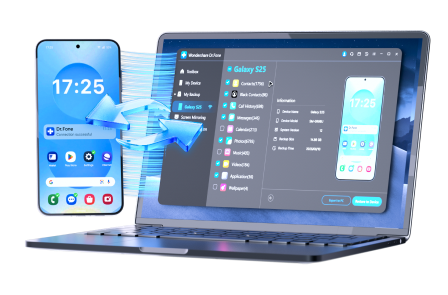
- Transfer all data between devices.
- Robust backup solutions for reliable data protection.
- Mirror screens to PC for meetings, teaching, and control.
-
Step 1 Install and connect
Install Dr.Fone on a computer and connect the iPad with a compatible cable.
-
Step 2 Choose a module and follow instructions
Choose the appropriate module (for example, System Repair or Backup/Restore) and follow the on-screen instructions to diagnose and stabilize the device.
-
Step 3 Re-test Split View
After the iPad is usable again, return to Settings to re-enable multitasking and test Split View with two compatible apps.
- If you can still access the phone (iPad) normally, troubleshoot via iPadOS multitasking settings first.
- If you forgot the passcode, use official Apple account recovery and device restore options rather than trying to bypass security.
- If the device is stuck or unstable, consider system repair/backup steps before changing multitasking workflows.




Part 8. Security, privacy, and compliance notes
Split View is designed to improve productivity without weakening iPadOS security: each app still runs in its own sandbox with its own permissions. Avoid trying to circumvent app restrictions, account requirements, or management controls to force multitasking behavior. If the iPad is owned by an employer or school (MDM-managed), multitasking features may be limited by policy—your official next step is to contact the organization’s IT/admin team. If ownership or Apple ID access is in question, use Apple’s official account recovery and provide proof of purchase when required.
Conclusion
Split View on iPad is an iPad multitasking feature that lets you run two apps side by side to reduce switching and speed up everyday tasks like reading and writing at the same time. Most setup is handled through Multitasking settings and the Dock, and if broader system instability prevents normal use, Dr.Fone may be a reasonable, legitimate next step for repair or backup—not for bypassing security.
FAQ
-
Q1. Can all iPad apps use Split View?
No. Many apps support Split View, but some apps limit multitasking or only work well at certain widths. If one app won’t dock, try a different app pair to confirm whether it’s an app limitation. -
Q2. Is Split View the same as split screen on iPad?
"Split screen" is a general term people use, and on iPad it usually refers to Split View. However, iPad also has Slide Over and (on some models) Stage Manager, which behave differently. -
Q3. Why can’t I find Split View in Settings?
Some iPadOS versions don’t label it as "Split View" directly. Use Settings search for "Multitasking" and look for options like enabling multitasking or allowing multiple apps. -
Q4. How do I exit Split View?
Drag the center divider all the way to the left or right edge until one app closes, returning the remaining app to full screen. You can also switch apps normally using the app switcher afterward.
 Add Wondershare Dr.Fone as a preferred source on Google