Bypass iCloud Activation Lock and Android FRP without password.

 100% Security Verified | No Subscription Required | No Malware

 :
: 
 ChatGPT
 Perplexity
 Gemini
 Claude
 Grok
Grok
Factory Reset Protection (FRP) is a crucial security feature from Google designed to protect your Android device and personal data if it's lost or stolen. However, this protective measure can become a significant obstacle if you forget your Google account credentials after a factory reset. You might find yourself completely locked out of your own device.
Many online guides suggest using the Google Keyboard to navigate through system loopholes, but what if that option isn't available? If you need to bypass FRP without Google keyboard, don't worry. There are several effective methods available. This guide provides detailed solutions, addressing common issues like how to bypass Google verification on ZTE without SwiftKey and navigating tricky FRP bypass Android keyboard settings.
In this article
Part 1. How to Bypass FRP on Samsung Without Google Keyboard (Recommended)
While manipulating Android keyboard settings can sometimes work, the process is often convoluted and unreliable, especially on newer devices. If you're looking for a guaranteed way to bypass Google verification on ZTE without SwiftKey or need a straightforward solution for your Samsung device, a professional tool is your best bet.
Wondershare Dr.Fone - Screen Unlock (Android) provides the most reliable and efficient way to bypass Google FRP locks on Samsung devices. It is fully compatible with all Samsung Snapdragon models running Android 11-15 and incorporates the latest Samsung FRP bypass 2026 protocols. The tool's most significant advantage is its near-perfect success rate, which ensures you can regain access to your device without needing any technical skills.
With Dr.Fone, you can remove the FRP lock and other types of screen locks in just a few minutes, all without risking your data. It simplifies the entire process, making it secure, fast, and hassle-free.
 Unlock Android phone in seconds.
- Remove PIN, pattern, password, fingerprint.
- Bypass Google FRP lock easily.
- Works on all Android brands & models.
- No tech skills required – user-friendly.
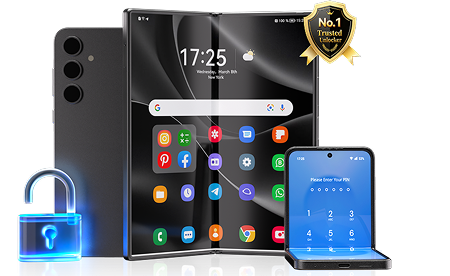
Steps to Bypass FRP on Samsung Phones via Dr.Fone – Screen Unlock:
-
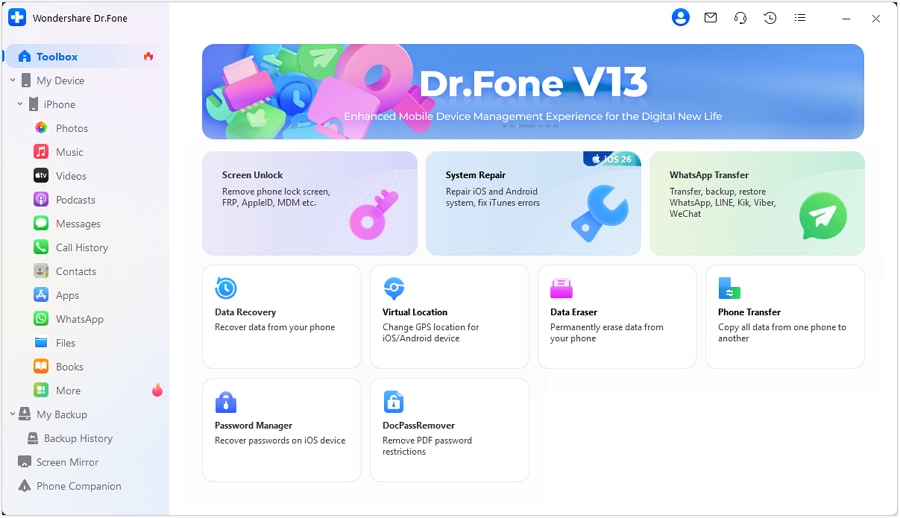
Step 1 Launch Dr.Fone and Select Screen Unlock
Download and install Dr.Fone on your computer. Launch the program and connect your Samsung phone to a stable Wi-Fi network. From the main toolkit, choose "Screen Unlock." On the next screen, click "Unlock Android Screen/FRP."
-
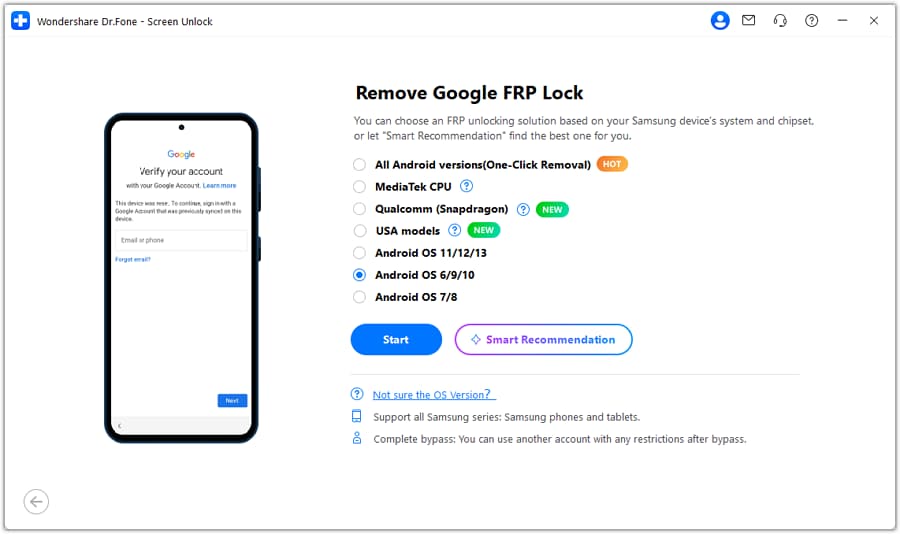
Step 2 Choose the FRP Removal Option
Select "Remove Google FRP Lock" to begin the process. Choose your device's Android OS version. If you are unsure, select the "Don't know the version" option. Now, connect your Samsung device to the computer using a USB cable.
-
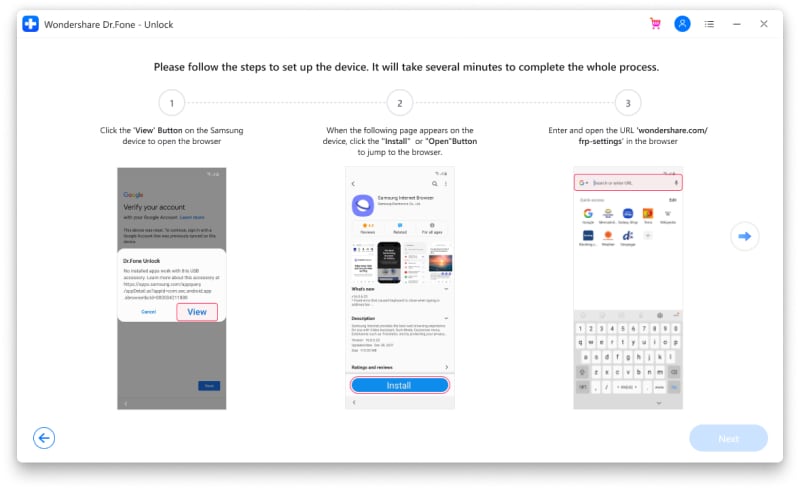
Step 3 Authorize the Process on Your Phone
Once the device is connected, Dr.Fone will display a pop-up with device information and send a notification to your locked Samsung phone. Follow the on-screen instructions to remove the FRP lock. Tap "View" on the notification, which will take you to the Samsung App Store. From there, open the Samsung Internet Browser and navigate to "drfonetoolkit.com".
-
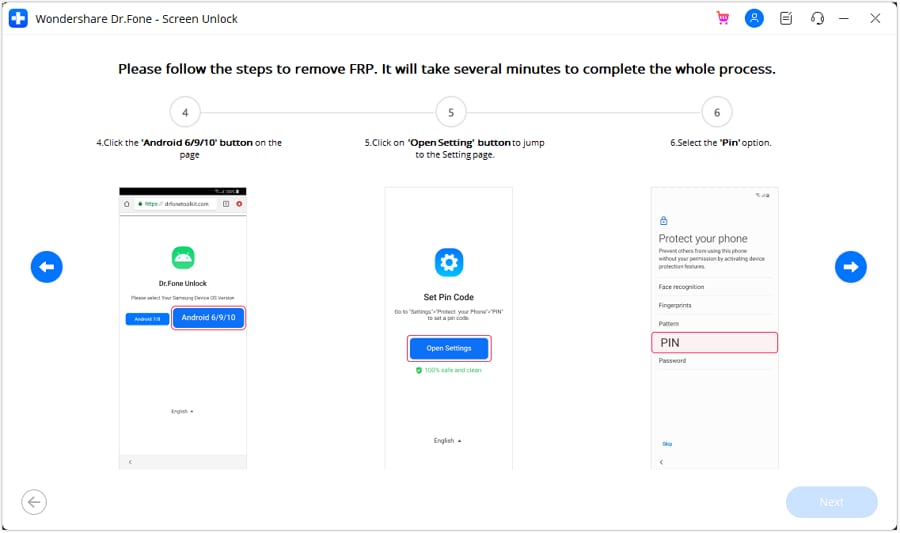
Step 4 Set a New PIN
On the webpage, tap the "Android 6/9/10" button and then select "Open Settings." Choose the "Pin" option to proceed. Select "Do not require" and tap "Continue." You will be prompted to set a new PIN. Remember this PIN, as you will need it shortly. Afterward, tap the "Skip" button.
-
Step 5 Complete the FRP Bypass
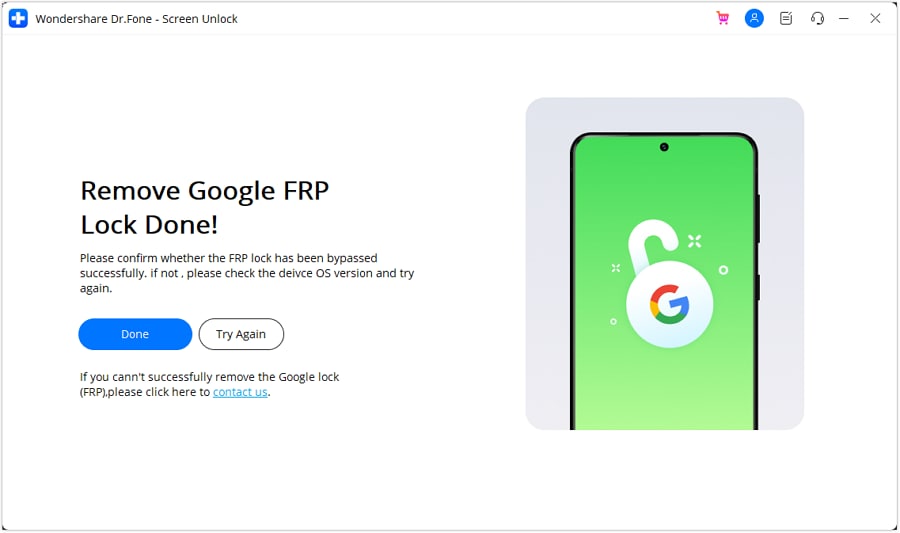
Use the back button to return to the Wi-Fi connection page. Click "Next" and enter the new PIN you just created. Tap "Continue." A Google sign-in page will appear with a "Skip" option. Tap "Skip" to proceed. The Google FRP lock has now been successfully removed from your Samsung device.
Part 2. How to Bypass FRP on Huawei Without Google Keyboard
If you're a Huawei user facing an FRP lock, you can attempt a manual bypass without relying on the Google Keyboard. This method involves navigating through system settings to perform a reset. Follow the steps below carefully:
-
Step 1 Connect to Wi-Fi
Turn on your Huawei device and proceed through the initial setup until you reach the Wi-Fi connection screen. Connect to a network and tap "Next."

-
Step 2 Access Google Services
On the Google Account Verification page, tap the back key to return to the Wi-Fi screen. Proceed forward again. On the "Google Services" page, click "Accept." When prompted, choose "Set up as new."

-
Step 3 Open Privacy Statement
On the next page, tap on "Forgot Password?" Then select "Account Change Request" and tap on "Statement About HUAWEI ID and Privacy."

-
Step 4 Share via Gmail
In the privacy statement text, press and hold any word until a context menu with "Select All/Copy/Share/Web search" appears. Choose "Share" and then tap the "Gmail" icon.

-
Step 5 Access App Settings
You will be taken to the Gmail app. Click on "Notifications" and then "More settings" on the next page.

-
Step 6 Manage Accounts
Tap the three dots in the top-right corner and select "Manage Accounts."

-
Step 7 Go to System Settings
From the "Manage Accounts" screen, select "Accounts." This will take you to the phone's main settings menu.

-
Step 8 Reset All Settings
Scroll down and choose "System," then select "Reset."

-
Step 9 Confirm Reset
On the "Reset" page, tap "Reset all settings." A pop-up will appear; confirm by tapping "RESET ALL SETTINGS."

-
Step 10 Change Home Screen Style
Return to the main Settings menu and select "Display." Tap on "Home Screen Style" and choose the "Drawer" option. This should take you to the device's home screen.

-
Step 11 Enable Developer Options
From the home screen, open "Settings" again. Navigate to "System" > "About Phone." Tap on "Build Number" repeatedly (5-7 times) until you see a message that you are now a developer.

-
Step 12 Enable OEM Unlocking
Go back one level to the "System" menu and open "Developer Options." Find and enable the "OEM unlocking" toggle.
-
Step 13 Perform Factory Data Reset
Finally, go back to "Settings" > "System" > "Reset." This time, choose "Factory data reset." Tap "Reset Phone" to erase all data and bypass the FRP lock. Once the phone restarts, you can complete the initial setup without being asked for Google account credentials.
Part 3. How to Bypass FRP on HTC Phones Without Google Keyboard
Bypassing the FRP lock on HTC devices without a Google keyboard is also possible, though it requires a different set of steps involving the download of a specific application. Here’s a detailed guide to help you through the process:
-
Step 1 Access Keyboard Settings
After a factory reset, turn on your HTC phone, select your language, and tap "Start." Connect to a Wi-Fi network and proceed. On the "Verify Your Account" screen, tap the email/phone field to bring up the keyboard. Press and hold the settings key on the keyboard.

-
Step 2 Share via Personal Dictionary
When the HTC Sense Input Settings screen appears, tap on "Personal Dictionary." Then, long-press on "HTCVR" and click "Share" from the context menu.

-
Step 3 Open App Settings
From the share options, long-press the Gmail icon to open its App Info page. Tap on "Notifications" and then "App Settings."

-
Step 4 Access Phone Settings
Tap the three dots in the top-right corner and select "Manage Accounts." This will redirect you to the main phone settings.

-
Step 5 Enable Google Now Cards
In the settings menu, tap on "Google." Select "Search & Now," then tap on "Now cards." Enable the "Show cards" toggle.

-
Step 6 Access Google Search
Choose "No, Thanks" on the prompt. This will take you to the Google search bar. In the search bar, type "Google" and select the first link that appears. When prompted again, tap "No, Thanks."

-
Step 7 Download Quick ShortcutMaker
You should now be in the Google Chrome browser. Search for "Quick ShortcutMaker." Open one of the top links (e.g., from APK 2.0) and download the APK file.

-
Step 8 Install the APK
Once the download is complete, navigate back through the screens until you reach the page where you enabled "Show cards." You may need to enable downloads or installations from unknown sources. Install the downloaded APK file.

-
Step 9 Find Google Account Manager
After installation, click "Open." Inside the Quick ShortcutMaker app, search for "Google Account Manager." From the results, find and tap on the entry that says "Type E-mail and Password."

-
Step 10 Sign in with a New Account
Tap "Try" to open the activity. On the "Retype Password" screen, tap the three dots in the top-right corner and select "Browser Sign-in." You can now enter a new or different Google account. Once signed in, restart your phone. You can now complete the setup process without encountering the FRP lock.
Conclusion
The Google FRP lock is an essential security feature, but it can be frustrating if you're locked out of your own device. Fortunately, as we've demonstrated, it is possible to bypass the FRP lock even without access to the Google Keyboard. We have covered manual methods for Huawei and HTC devices, which, while effective, can be complex and require careful execution.
For a more straightforward and guaranteed solution, especially for Samsung users, we highly recommend Dr.Fone - Screen Unlock. It eliminates the guesswork and potential for errors, providing a fast, secure, and user-friendly way to regain access to your device in minutes. Whether you choose a manual path or a dedicated tool, you now have the knowledge to overcome the FRP lock and get your phone back in working order. For additional resources, you can explore various frp bypass file options to manage your device more effectively.
FAQ
-
1. What is FRP and why is it challenging to bypass?
Factory Reset Protection (FRP) is a security layer that requires your Google account credentials after a factory reset to prevent unauthorized access. It's challenging to bypass because it's deeply integrated into the Android operating system, and loopholes that allow bypass are often patched by Google in new security updates. -
2. Can I bypass FRP on any Android device without using a keyboard?
The ability to bypass FRP without a keyboard depends on the device's brand, model, and Android version. The methods described for Huawei and HTC exploit specific vulnerabilities in their software versions. These methods may not work on all devices, especially newer models with updated security patches. -
3. Is it safe to use third-party tools like Dr.Fone to bypass FRP?
Yes, reputable tools like Dr.Fone - Screen Unlock are designed to be safe and secure. They bypass the lock without accessing or harming your personal data. Unlike some free APKs found online which may contain malware, professional software is tested and ensures the integrity of your device. -
4. What can I do if the Samsung keyboard is greyed out during the FRP bypass process?
If the about Samsung keyboard greyed out issue occurs, it means the standard keyboard-based exploit is not available on your device's software version. This is a common problem on updated devices. In this scenario, using a dedicated tool like Dr.Fone - Screen Unlock is the most reliable alternative, as it does not depend on keyboard accessibility to remove the FRP lock.
 Add Wondershare Dr.Fone as a preferred source on Google