Bypass iCloud Activation Lock and Android FRP without password.

 100% Security Verified | No Subscription Required | No Malware

 :
: 
 ChatGPT
 Perplexity
 Gemini
 Claude
 Grok
Grok
The Find My iPhone feature is an essential security tool for locating a lost or stolen device. However, there are specific situations where you need to disable it but don't have physical access to your iPhone. This often occurs when you're selling or trading in your device and realize you forgot to deactivate the feature beforehand.
In scenarios like these, the only solution is to turn off Find My iPhone remotely. Fortunately, Apple provides straightforward methods to accomplish this using another device, ensuring you can manage your device's security and prepare it for a new owner, even from a distance. This guide will walk you through the exact steps for 2026.

In this article
Why You Might Need to Remotely Turn Off Find My iPhone
While Find My iPhone is a critical security feature, there are several legitimate reasons why you might need to disable it without having the device in your hands. Understanding these scenarios can help you prepare and act quickly when the need arises.
For example, if you send your iPhone for repair, technicians often require Find My to be turned off so they can perform diagnostics or reset the device. If you're far away, you can't just hand them the phone. Sharing your Apple ID credentials is a major security risk, making the ability to remotely turn off Find My iPhone the only safe option.
Another common situation is selling or giving away your device. Activation Lock, which is enabled by Find My, prevents a new user from setting up the iPhone. If you forget to disable it before shipping the device, you'll need to remove it from your account remotely so the new owner can use it. Apple provides a secure way to do this through your iCloud account, accessible from any web browser.

Does Signing Out of iCloud Also Disable Find My?
Yes, signing out of your iCloud account directly on your iPhone is one of the simplest ways to disable Find My. The feature is intrinsically linked to your iCloud account. When you sign out, you sever the connection to all iCloud services for that device, including Find My.
Therefore, if you have access to your iPhone and sign out of iCloud before selling it or sending it for repair, you have already deactivated Find My. There are no extra steps needed. Here is a quick reminder of how to do it directly on your device:
-
Step 1Open Settings
Launch the Settings app on your iPhone and tap on your Apple ID name at the very top.
-
Step 2Select Sign Out
Scroll down to the bottom of the screen and tap the "Sign Out" option.

-
Step 3Enter Password to Turn Off
You will be prompted to enter your Apple ID password to disable Find My iPhone. Enter it and tap "Turn Off." This is the step that deactivates the feature, and you'll receive an email confirmation.
-
Step 4Choose Data to Keep
A new screen will ask if you want to keep a copy of certain iCloud data (like Calendars, Contacts, etc.) on the device. Toggle on any data you want to save locally. All other iCloud data will be removed from the iPhone but will remain safe in your iCloud account.

-
Step 5Confirm Sign Out
Finally, tap "Sign Out" and then tap "Sign Out" again in the confirmation pop-up. This completes the process and will successfully switch off Find My iPhone on that device.
How to Turn Off Find My iPhone From Another Device (2 Proven Methods)
When you don't have your iPhone with you, you can still disable Find My using either the iCloud website or the Find My app on another trusted Apple device. Both methods achieve the same goal but offer different levels of convenience.
Method 1: Using the iCloud Website on Any Computer
This is the most versatile method because it works from any computer or tablet with an internet browser, whether it's a PC, Mac, or even an Android tablet.
-
Step 1Log in to iCloud.com
Open a web browser and go to iCloud.com. Sign in with the Apple ID and password associated with the iPhone you want to manage. Click the "Find Devices" app icon.

-
Step 2Select Your Device
At the top of the screen, click on "All Devices" to open a dropdown menu listing all the devices linked to your Apple ID. Select the specific iPhone you need to remove.
-
Step 3Erase the iPhone
In the device's information window, click "Erase iPhone." You will be asked to confirm. This step is mandatory to remotely turn off Find My. The erase process will begin as soon as the device connects to the internet.

-
Step 4Remove From Account
After the erasure is complete (or has been initiated), the option "Remove from Account" will become available. Click it to fully disassociate the device from your Apple ID. This action permanently turns off Find My and Activation Lock for that iPhone.
Method 2: Using the Find My App on Another Apple Device
If you have another iPhone, iPad, or Mac, using the built-in Find My app is a quick and seamless alternative.
-
Step 1Open the Find My App
Launch the "Find My" app on another Apple device that is signed in to the same iCloud account.
-
Step 2Choose the Device to Remove
Tap the "Devices" tab at the bottom of the screen. A list of your devices will appear. Select the iPhone you want to manage.

-
Step 3Erase the Device
Scroll down in the device's options menu and tap "Erase This Device." Confirm your choice. Just like with the iCloud website method, the device will be erased once it's online. You'll receive a confirmation email when it's done.
-
Step 4Remove the Device From Your Account
Once the erase command is sent, you can tap "Remove This Device." A final confirmation prompt will appear. Tap "Remove" to complete the process and officially turn off Find My iPhone from another device.
Bonus Tip: What If You've Forgotten Your Apple ID Password?
As you've seen, every official method to turn off Find My iPhone remotely requires your Apple ID and password. But what happens if you've forgotten your password and can't recover it? This can leave you locked out and unable to disable crucial security features.
In this challenging situation, a dedicated tool like Dr.Fone - Screen Unlock (iOS) offers a reliable solution. It is designed to help you remove an Apple ID from a device without needing the password, thereby regaining control and allowing you to set it up anew.
 Unlock iPhone/iPad passcode in minutes.
- Remove Face ID, Touch ID, and screen lock.
- Bypass iCloud Activation Lock easily.
- Support all iOS versions and devices.
- Simple steps, no technical skills needed.
Check out this step-by-step guide on how to remove an Apple ID using Dr.Fone – Screen Unlock (iOS):
-
Step 1Launch Dr.Fone and Select Tool
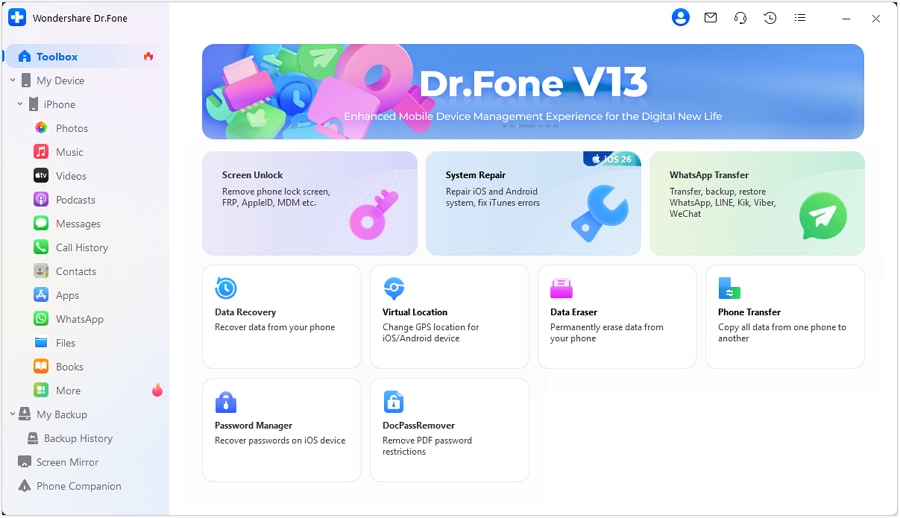
Open the Wondershare Dr.Fone toolkit on your computer. From the main dashboard, go to Toolbox > Screen Unlock > iOS.
-
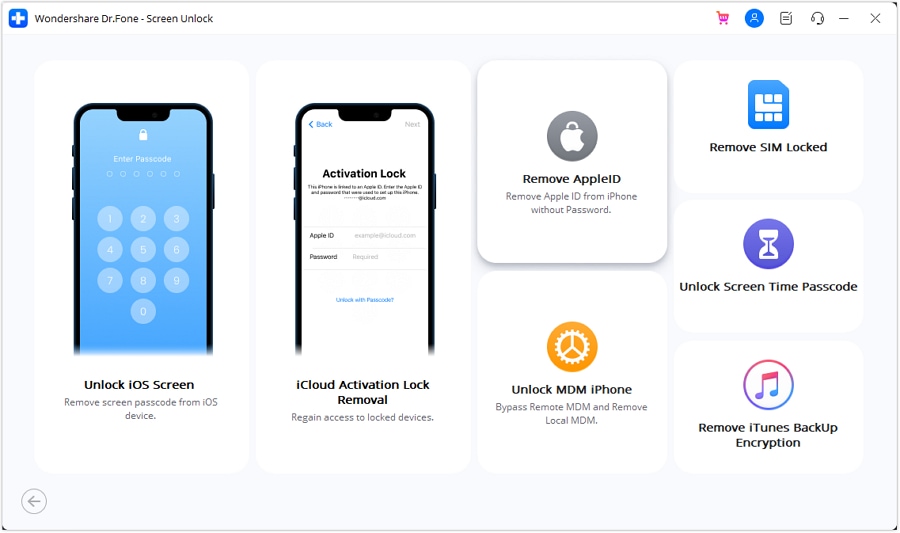
Step 2Choose 'Remove Apple ID'
Within the Screen Unlock tool, select the "Remove Apple ID" feature. Connect your iPhone to the computer with a USB cable and click "Unlock Now" once the software detects it.
-
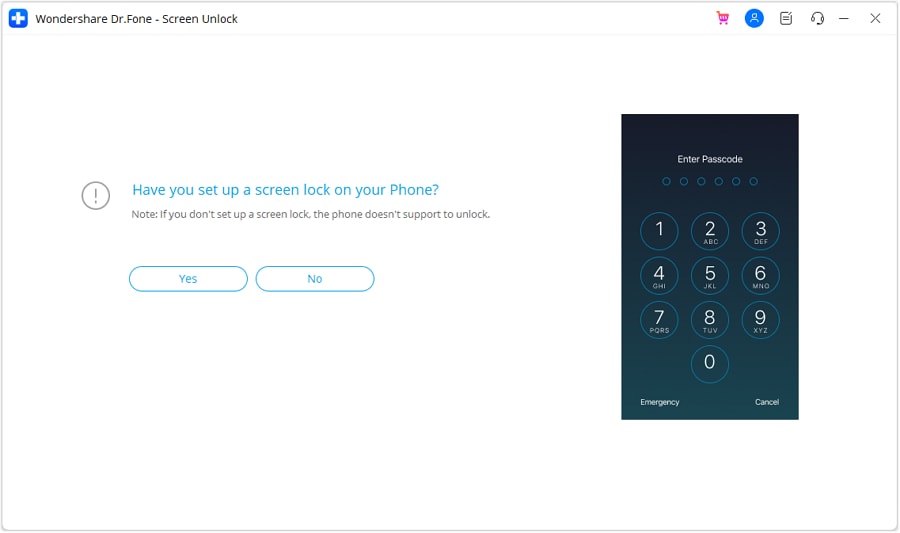
Step 3Confirm Device Settings
The software will ask you to confirm that your iPhone has a screen lock enabled and that Two-Factor Authentication (2FA) is active. Ensure these are set up on your device and click "Yes" to continue.
-
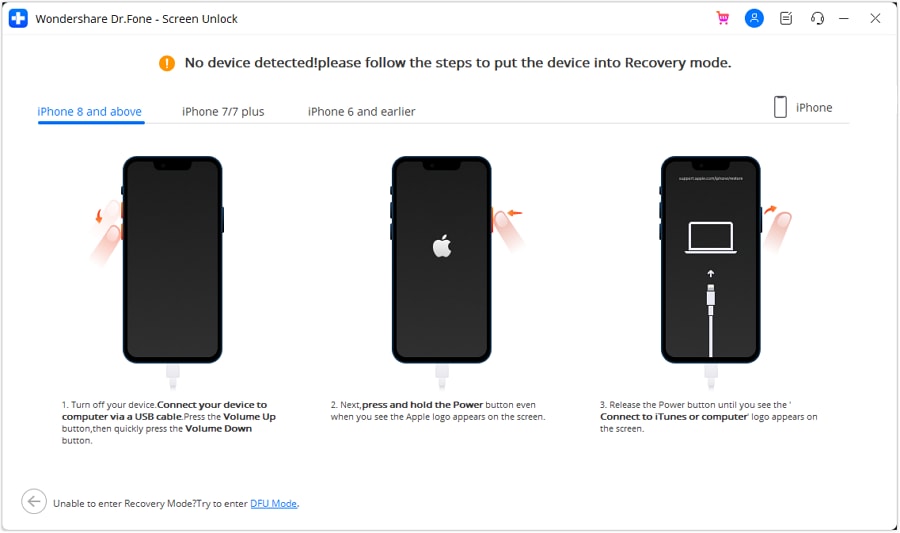
Step 4Enter Recovery Mode
Carefully follow the on-screen instructions that Dr.Fone provides to put your specific iPhone model into Recovery Mode.
-
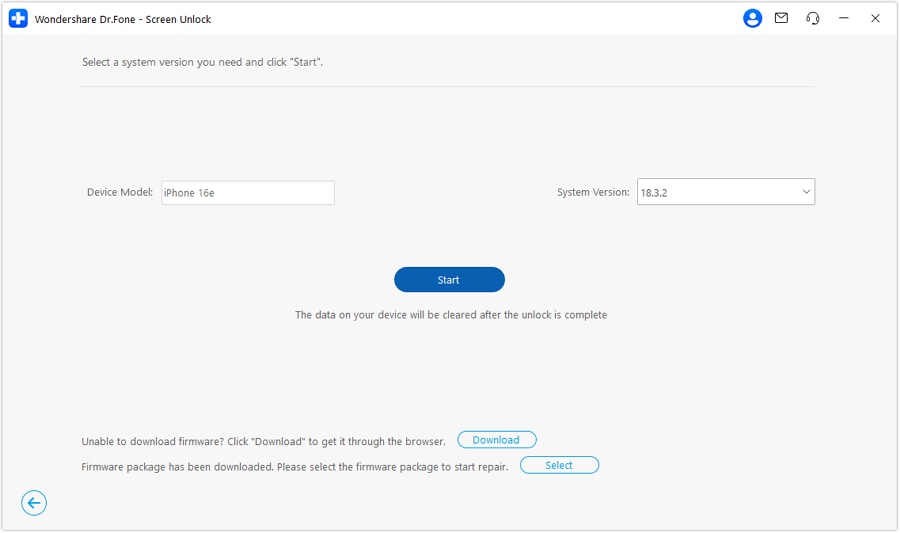
Step 5Download the iOS Firmware
After your device is in Recovery Mode, confirm the device model and system version displayed on the screen. Click "Start" to begin downloading the appropriate iOS firmware for your device.
-
Step 6Start the Unlocking Process
Once the firmware is downloaded and verified, click "Unlock Now." A prompt will appear asking you to enter a confirmation code. Type the code as shown and click "Unlock" to begin removing the Apple ID.
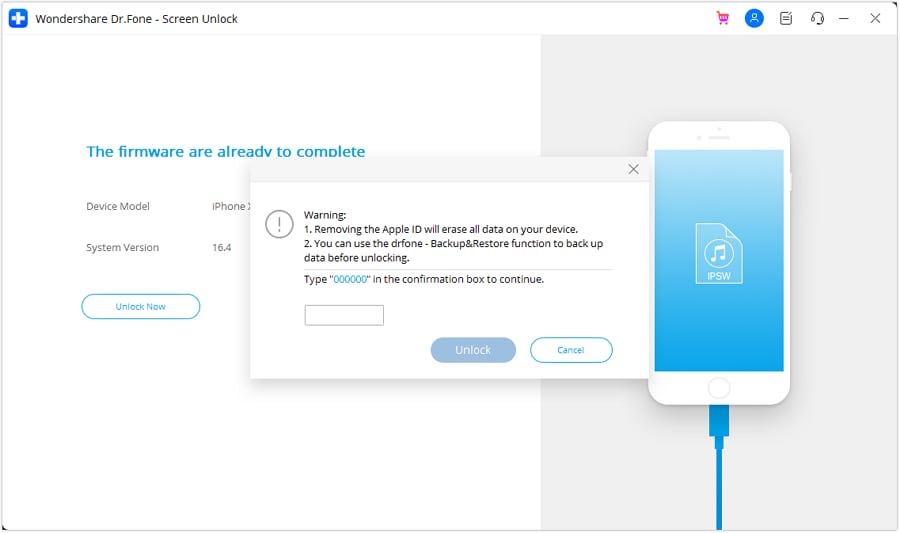
Keep your device connected until you see a completion message. Once finished, your device will restart without the old Apple ID attached.
Conclusion
Knowing how to turn off Find My iPhone from another device is a valuable skill for any iPhone user. Whether you are using the iCloud website on a computer or the Find My app on another Apple device, the process allows you to manage your device's security and accessibility remotely. Following the detailed steps above ensures you can confidently prepare your device for sale, repair, or a new owner.
For instances where a forgotten Apple ID password blocks your access, tools like Dr.Fone - Screen Unlock (iOS) provide an essential backup plan. By offering a way to remove the Apple ID, it ensures you're never permanently locked out of managing your own device.
Frequently Asked Questions
-
1. Can I turn off Find My iPhone if the device is offline?
Yes, you can still initiate the process. When you select "Erase iPhone" and "Remove from Account" for an offline device, the commands will be queued. As soon as the iPhone connects to the internet (Wi-Fi or cellular), the erase process will automatically begin, and it will then be removed from your account. -
2. Will erasing my iPhone from iCloud permanently delete my data?
Yes, the "Erase iPhone" command will wipe all data and settings from the device, returning it to factory settings. However, if you have an iCloud or computer backup, you can restore your data from that backup onto a new device. The data in your iCloud account (photos, contacts, etc.) is not affected by erasing the device itself. -
3. How do I turn Find My back on?
To re-enable Find My, you need physical access to the iPhone. Go to Settings > [Your Name] > Find My. From there, tap "Find My iPhone" and toggle the switch on. You may also want to enable "Find My network" and "Send Last Location" for enhanced tracking capabilities. -
4. Does removing the device from my account also turn off Activation Lock?
Yes. Activation Lock is the feature that prevents anyone else from using your device if it's lost or stolen, and it is directly tied to Find My. When you successfully erase the device and then choose "Remove from Account," you are also deactivating Activation Lock, allowing a new user to set up and use the iPhone.
 Add Wondershare Dr.Fone as a preferred source on Google