 Effortlessly manage data through preview, delete, export, etc.

 100% Security Verified | No Subscription Required | No Malware

 :
: 
 ChatGPT
 Perplexity
 Gemini
 Claude
 Grok
Grok
We have seen many posts and discussions over the internet where people share the unique issues they face with both old and new Huawei phones. Based on widespread user feedback, the most prominent concern involves Huawei battery problems, specifically rapid battery draining and uncomfortable device overheating. To assist you in resolving these frustrating power management issues, we have compiled comprehensive guidelines that will help you diagnose and fix your device.
None of us wants to be left with a dead phone in the middle of a busy day, especially since modern gadgets play an essential role in our personal and professional lives. Whether you are navigating a college campus, attending back-to-back office meetings, or simply staying connected with loved ones, maintaining a reliable smartphone is crucial. Unfortunately, constant thermal throttling and sudden power drops can severely impact your daily routine.
While many smartphone manufacturers offer devices at varying price points, the quality of internal components significantly affects hardware longevity. The difference in manufacturing cost often translates to the grade of lithium-ion batteries and thermal management materials used. Top-tier brands typically invest in high-quality hardware, which is why their devices generally last longer. However, even premium smartphones can encounter performance hiccups. If your device is running hot, identifying the root cause is your first step to restoring optimal performance.
In this article
Part 1. Narrow Down Huawei Phones Heating Up Problems
A large number of consumers have purchased Huawei phones due to their exceptional camera capabilities and sleek designs, but a notable portion of these users have complained extensively about Huawei battery and charging problems. While normal heating is generally acceptable—after all, smartphones are high-powered electronic devices—constant overheating is a major red flag. If your mobile regularly feels excessively hot to the touch, it may cause long-term hardware damage or pose a safety risk.
Below, we have outlined the most critical diagnostic steps you can apply to your Huawei phone (or virtually any Android device) experiencing rapid battery drain and severe temperature spikes. The primary step in troubleshooting is isolating the exact physical area where the phone is heating up. This targeted approach narrows down the root cause, revealing whether the problem stems from a faulty battery, a damaged charger, or heavy software processing.
1-1. Back of Your Phone is Heating Up
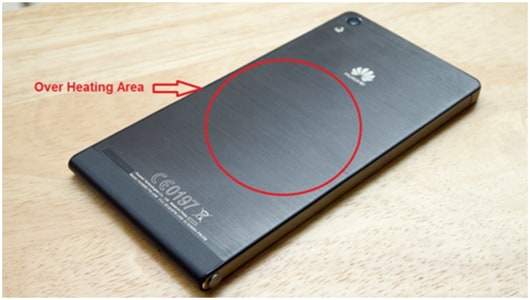
If you notice that the general back panel of your cell phone is consistently hot, you should understand that this specific symptom usually points directly to Huawei battery problems rather than a software glitch. This localized heating typically occurs when the internal battery degrades over time, swells, or sustains physical damage. You might also encounter this issue if you frequently charge your device using an incompatible, low-wattage, or third-party adapter. To verify this, try charging your phone exclusively with the original Huawei-recommended charger and observe if the thermal levels normalize.
1-2. Base of Your Phone is Heating Up
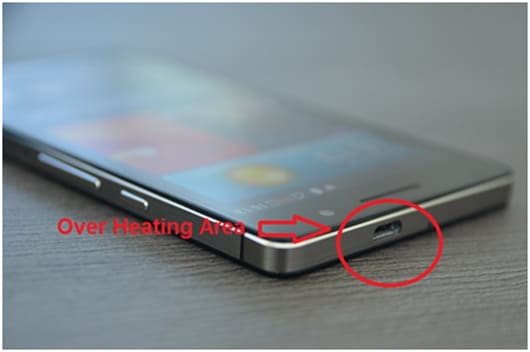
Is your device generating excessive heat specifically at the bottom edge, right where you plug in the USB cable? Does your phone become uncomfortably warm only while it is connected to a power outlet? If this is your primary symptom, the issue most likely resides within the charging apparatus itself. Either your Huawei charger has become faulty, the USB charging port is clogged with debris, or you are utilizing an uncertified charging brick. In order to fix this specific Huawei charging problem, you should immediately replace the current cable and adapter. Opt for an OEM (Original Equipment Manufacturer) recommended charger to ensure stable voltage delivery and safeguard your phone's circuitry.
1-3. Top Back Compartment is Heating Up
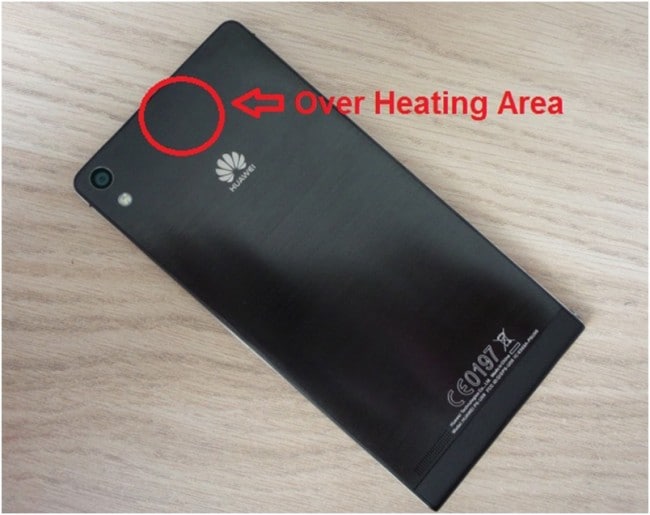
If your Huawei phone exhibits high temperatures localized around the top-back area—near the camera module and upper logic board—you can confidently rule out the battery as the main culprit. Heat generation in this zone typically points to CPU or motherboard strain. It can also indicate issues tied to the earpiece speaker or internal display connectors. Addressing these logic board and sensor problems requires a different approach.
1-4. Heating Up from the Speaker or Screen
If the phone is heating up from the speaker:
If you recognize that the heat originates primarily from the speaker grill (the small upper section you hold against your ear during phone calls), this is a serious hardware anomaly. Not only is this a major functional issue, but prolonged exposure could also potentially harm your ears or skin. This specific problem persists when the earpiece speaker component has short-circuited or gone faulty. In this scenario, your safest option is to rush the device to an authorized Huawei service center for a professional hardware inspection and repair.
If the phone's screen is heating up:
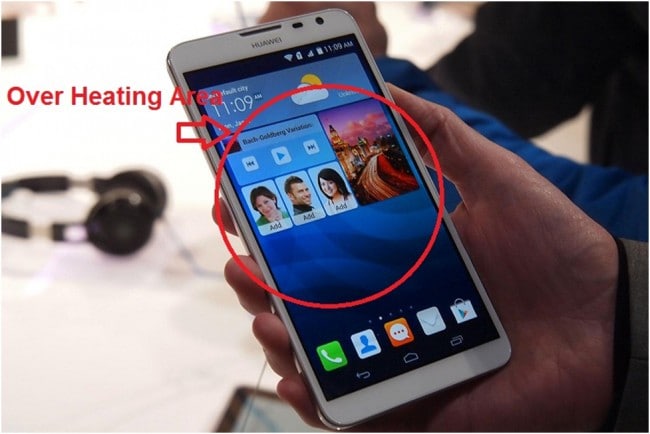
If the display panel of your Huawei phone is heating up—and occasionally reaches alarmingly high temperatures during regular swiping or typing—you can easily deduce that the issue relates to display rendering or intense background processing overworking the GPU. To mitigate this display-induced overheating, follow the software-level troubleshooting advice provided in the next section.
Check out other Huawei phone problems: Top 9 Huawei Phone Problems and How to Fix Them
Part 2. Fixing Overheating and Battery Draining Problems on Huawei Phones
Now that you have successfully narrowed down the area of the problem, you may have found that the core issue lies with the phone's software or processing habits rather than a defective battery or charger. In such cases, adopting better digital hygiene and modifying system parameters can dramatically improve your device's thermal performance. Follow the comprehensive steps below to fix the most stubborn battery drain issues.
2-1. Use Third-Party Apps to Reduce Battery Drain
It is always a highly effective choice to utilize a trusted third-party application designed to monitor and reduce battery drain on your smartphone. For optimal power management, we highly recommend Greenify. Featured as Lifehacker's Top 1 Utility in previous years, Greenify remains immensely popular among Android phone users globally. Greenify helps you intelligently identify the background apps you are not actively using and forces them into a deep hibernation state. This action effectively stops rogue applications from lagging your device and leeching your battery power. With zero unnecessary apps running in the background, you will definitely observe a significant increase in your Huawei battery life.
2-2. Lighten Up Your Phone's Storage and Processor Load
The first and foremost maintenance routine you must practice is freeing up storage space on your Huawei phone. You must rigorously remove unused applications and redundant data files that hold no value to you. This strategy lightens the load on your phone's processor. By reducing background indexing and storage clutter, your phone exerts less effort during routine tasks, naturally fixing Huawei battery problems and mitigating generalized overheating.
There is no doubt that Android smartphones are powerful tools, heavily relied upon for our daily digital tasks. Whenever we visit a new place, we capture dozens of pictures and high-definition videos. However, many users lack the time to sort through and delete blurry or duplicate media. Consequently, these media files not only eat up your physical storage but also drain processor speed as the system continuously indexes the gallery. To boost efficiency, take the time to clear out unnecessary media.
2-3. Optimize System Settings to Extend Battery Life
You can effortlessly turn off persistent location services to reduce substantial battery draining. Additionally, tweaking your GPS settings can help you dramatically improve daily battery life. Navigate to Settings > Location > Mode, where you will typically see three options. The 'High Accuracy' mode uses GPS, Wi-Fi, and mobile networks to continuously determine your precise position, which in turn consumes a massive amount of power. Instead, select the 'Battery Saving' option, which, as the name implies, drastically reduces unnecessary battery drain.
There is another hidden system setting you should optimize. Go to Settings > Applications > All > Google Play Services. Once there, tap on the 'Clear Cache' button. This action refreshes the Google Play Services framework, eliminating corrupted background data and stopping cached files from silently eating up your battery reserves.
2-4. Manage Heavy Games and Background Applications
The Android ecosystem boasts a massive collection of games, with many modern titles demanding gigabytes of storage and immense processing power. We see graphically intense games launching daily. While enjoying games on your Huawei phone is perfectly fine, you must proactively uninstall the games that you no longer play. Remember the golden rule: the more system resources and background data consumed, the more severe the battery draining problem you will face. Many heavy games silently require continuous background data connections and sensor polling, rendering them a primary cause of overheating and power loss.
2-5. Use a High-Quality, Ventilated Cell Phone Case
We understand that you value your Huawei smartphone and rely on sturdy cases and covers to protect it from accidental drops, scratches, and dust. However, ensuring proper thermal ventilation is absolutely crucial for battery health.
Normally, the generic covers we purchase at cheaper rates are constructed from thick, non-breathable materials that trap heat. These poor-quality cases act as thermal insulators. To preserve the lifespan of your device's internal components, you must invest in high-quality cases that are explicitly manufactured with thermal dissipation in mind, preferably those recommended directly by Huawei.
If you diligently follow these actionable steps, we are confident that you will rarely encounter severe thermal issues again, ensuring your Huawei phone remains responsive and lasts significantly longer.
Read More: 5 Ways to Backup Huawei Phone Data to PC Easily
 Fix Android instantly – no skills needed.
- Solve boot loop, black screen, won’t turn on, etc.
- High success rate for all system issues.
- User-friendly interface with easy-to-follow steps.
Conclusion
Dealing with Huawei battery problems can be incredibly frustrating, especially when unexpected battery drain and device overheating disrupt your daily workflow. As outlined in this comprehensive guide, identifying exactly where the heat generates—whether at the device's base, rear panel, or upper camera module—provides crucial diagnostic insights. By systematically applying the software troubleshooting strategies discussed, such as utilizing app managers like Greenify, adjusting location services, and removing hardware-straining applications, you can effectively manage temperatures. Pairing these software habits with correct charging practices and proper device ventilation will vastly extend your Huawei device's battery lifespan and ensure reliable performance throughout 2026 and beyond.
FAQ
-
1. Why does my Huawei phone battery drain so fast?
Rapid battery drain on Huawei devices is typically caused by resource-heavy background applications, high screen brightness, degraded lithium-ion battery health, or persistent location services. Consistently running heavy games and failing to install EMUI/HarmonyOS software updates can also accelerate power depletion. Regularly clearing app cache and monitoring your battery usage settings can help isolate the exact culprit. -
2. Is it safe to use my Huawei phone when it is overheating?
While mild warmth is normal during intense tasks like gaming or fast-charging, severe overheating is not safe. Extreme thermal conditions can cause permanent damage to internal components, warp the battery, and even pose a safety hazard. If the device becomes too hot to hold comfortably, immediately power it down, remove the protective case, and allow it to cool in a shaded environment before resuming use. -
3. Can a bad charger cause my phone to heat up at the base?
Yes. If the base of your phone near the charging port heats up significantly while plugged in, it is highly likely that your USB cable or charging adapter is faulty, damaged, or uncertified. Using third-party, unregulated chargers can result in unstable voltage inputs, leading to excessive heat generation. Always use OEM-certified Huawei chargers to prevent battery degradation and overheating. -
4. How do I stop apps from draining the battery in the background?
To prevent applications from consuming background power, you can use built-in system tools by navigating to Settings > Battery > App Launch and restricting background activity for non-essential apps. Alternatively, utilizing specialized third-party applications like Greenify can automatically force idle apps into a deep hibernation state, freeing up memory and significantly preserving your battery life.
 Add Wondershare Dr.Fone as a preferred source on Google




