Resolve common problems and system crashes on both iPhone and Android devices.

 100% Security Verified | No Subscription Required | No Malware

 :
: 
 ChatGPT
 Perplexity
 Gemini
 Claude
 Grok
Grok
The iOS 18/26 Beta introduces a standout feature called Developer Mode on iPhone, structurally designed to give you secure access to advanced testing tools, local app deployment, and granular customization options. Whether you’re a programmer experimenting with new app builds, an enthusiast tweaking hidden settings, or a user resolving complex issues on your device, Developer Mode is an absolute must-have for tech-savvy individuals navigating the 2026 ecosystem. However, a significant number of people have reported widespread issues with this critical feature mysteriously not showing up after executing the beta update.
If you are actively facing this frustrating problem, you are entirely not alone! This comprehensive guide will show you exactly how to enable developer options and provide proven, technical solutions to successfully fix the iphone developer mode not showing after updating to the iOS 18/26 Beta. Stay tuned as we meticulously walk you through straightforward, secure steps to unlock your device's advanced features and maximize your technological potential. Keep reading to get started immediately!
In this article
Part 1. Identifying the Root Causes of iPhone Developer Mode Not Showing
The rollout of the iOS 18/26 beta prominently introduced a newly secured ios developer mode designed to protect consumers from inadvertently installing malicious software while granting creators necessary freedoms. However, many early adopters have encountered a persistent glitch where the Developer Mode option is completely absent in their device's settings. Understanding the baseline symptoms and technical scenarios is crucial before applying a fix.

Symptoms of iPhone Developer Mode Not Showing
- The standard Settings > Privacy & Security menu simply does not contain the iPhone Developer Mode toggle on devices properly updated to iOS 16 or later (including 2026 beta builds).
- Users attempting to sideload or install a custom developer build app via third-party tools receive a persistent error message stating "Developer Mode is required," but they cannot locate the setting to fulfill this requirement.
- On heavily restricted devices or older iPhones incorrectly running modified beta profiles, the Developer Mode will stay off, resisting activation even if you're securely connected to Xcode and following standard protocol.
- After methodically following the typical steps to enable Developer Mode, such as linking the device to a verified Mac via cable, the option stubbornly continues to evade the Settings app interface.
Common Scenarios and User Experiences
To better diagnose why the iphone developer mode is hidden, it helps to review the most common technical scenarios reported by the beta testing community:
- Beta Profile Corruptions: Often, the over-the-air (OTA) beta update leaves configuration files corrupted. Users successfully boot into the new software, but the Developer Mode UI fails to render.
- Incorrect Navigation Path: Apple recently shifted where developer options reside. Users accustomed to older iOS versions often search the general settings rather than the newly designated Privacy & Security panel, falsely believing the feature is missing.
- MDM Restrictions: Devices issued by schools or workplaces often have Mobile Device Management (MDM) profiles installed. These strict security restrictions inherently block access to developer environments, entirely hiding the toggle from view.
- Missing Sideload Trigger: In modern iOS architecture, the Developer Mode toggle often remains dormant and invisible until an external trigger—like a Mac running Xcode or a sideloading application—prompts the iPhone's security subsystem to reveal it.
Part 2. How to Turn On Developer Mode on iPhone (Official Methods)
The newly refined iOS 18/26 Beta Developer Mode serves as a robust, secure testing platform primarily meant for app creators and advanced tech enthusiasts. By locking this behind deliberate steps, Apple ensures casual users don't accidentally compromise their device's integrity. Nevertheless, correctly switching on Developer Mode on iPhone isn’t always as simple as checking a box. Below are the official methods explaining how to turn on Developer Mode on an iPhone properly.

Method 1: Direct Activation via Settings
For most standard beta testers whose systems have updated flawlessly, the option will be natively available directly within the iOS interface. Follow these precise navigation steps:
-
Step 1 Navigate to Privacy & Security
Open the native Settings application on your iPhone. Scroll down and tap on Privacy & Security. Scroll to the very bottom of this screen to locate Developer Mode. Tap it and toggle the switch to Turn on.
-
Step 2 Restart Your Device
A security prompt will appear at the bottom of the screen informing you that a system reboot is required to apply these sensitive changes. Tap Restart.
-
Step 3 Confirm Activation
After your iPhone finishes rebooting and you unlock the lock screen, a secondary prompt will appear. Press the Turn On button and input your device's numeric passcode to permanently authenticate and finalize the activation of iPhone Developer Mode.
Method 2: Force Activation Via Xcode (For Missing Toggles)
If the toggle is stubbornly hidden, turning on iPhone Developer Mode can be forcefully initiated with the help of Apple's Xcode software on a Mac. This trusted connection bypasses standard UI glitches and is highly recommended when the option simply does not appear after updating to the iOS 18/26 Beta.

-
Step 1 Connect and Launch Xcode
Connect your iPhone directly to an authentic Mac using a certified Lightning or USB-C cable. Once physically connected, open the Xcode application on your Mac.
-
Step 2 Access Devices and Simulators
Look at the top menu bar on your Mac, click on Window, and carefully select Devices and Simulators from the dropdown. In the subsequent left-hand list, ensure your connected iPhone is highlighted and successfully recognized by the software.
-
Step 3 Check Settings Again
With the device still connected to Xcode, pick up your iPhone and launch the Settings app once more. Navigate to Privacy & Security and scroll down. The Xcode connection acts as a security key, forcing the previously hidden Enable Developer Mode option to instantly generate.
-
Step 4 Finalize the Reboot Sequence
Toggle the switch, tap Restart, and enter your passcode upon reboot just like the standard method. This completely overrides the "developer mode not showing" bug.
Part 3. Advanced Solution: Fix Developer Mode Not Showing with Dr.Fone
If you lack access to a Mac computer running Xcode, or your iPhone continues to suffer from deep-rooted beta firmware corruption preventing the toggle from showing, standard workarounds won't suffice. Attempting to troubleshoot severe issues like Fix Developer Mode Not Showing After Updating to iOS 18/26 Beta can feel like an impossibly complicated process, especially if you’re not deeply tech-savvy.
That’s exactly where Wondershare Dr.Fone - System Repair (iOS) steps in to save the day! This professional-grade, all-in-one desktop utility helps you effortlessly resolve varied iOS system bugs, boot loops, and configuration errors without losing a single byte of your personal data. Dr.Fone fundamentally repairs the corrupted firmware layers blocking your settings, making the entire recovery and management process remarkably simple and completely stress-free.
 Fix iOS issues, no data loss.
- One-click repair for all iOS problems.
- Solve recovery mode, Apple logo, black screen, etc.
- Upgrade or downgrade iOS without iTunes
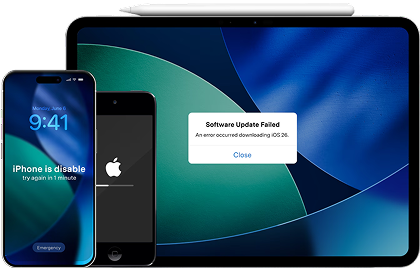
Dr.Fone integrates a dedicated System Repair mechanism that swiftly and safely replaces damaged system files with verified firmware, naturally restoring the missing Developer Mode. Here is the step-by-step process:
-
Step 1 Launch Dr.Fone and Access Toolbox
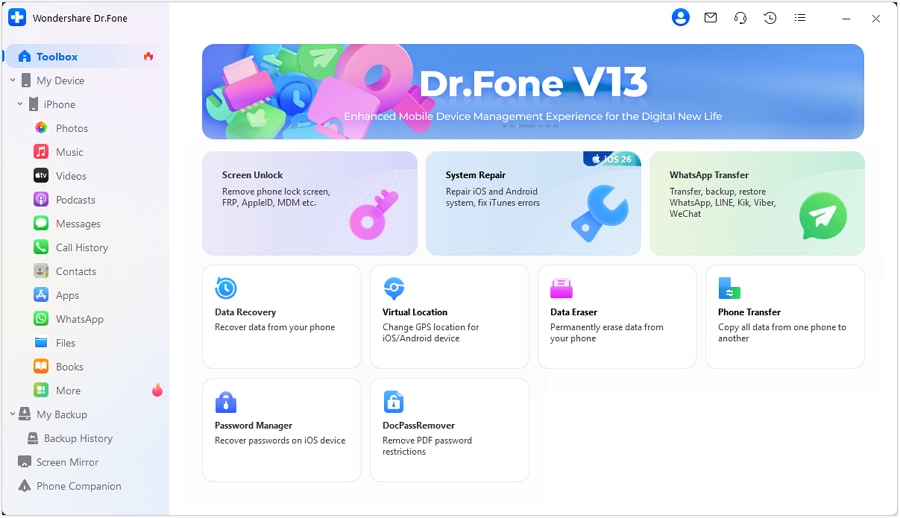
Download and install Wondershare Dr.Fone on your Windows or Mac computer. Launch the application and click on the Toolbox tab located at the top-left section of the main interface. Next, click on the System Repair module from the diverse array of tools displayed.
-
Step 2 Designate Device Type
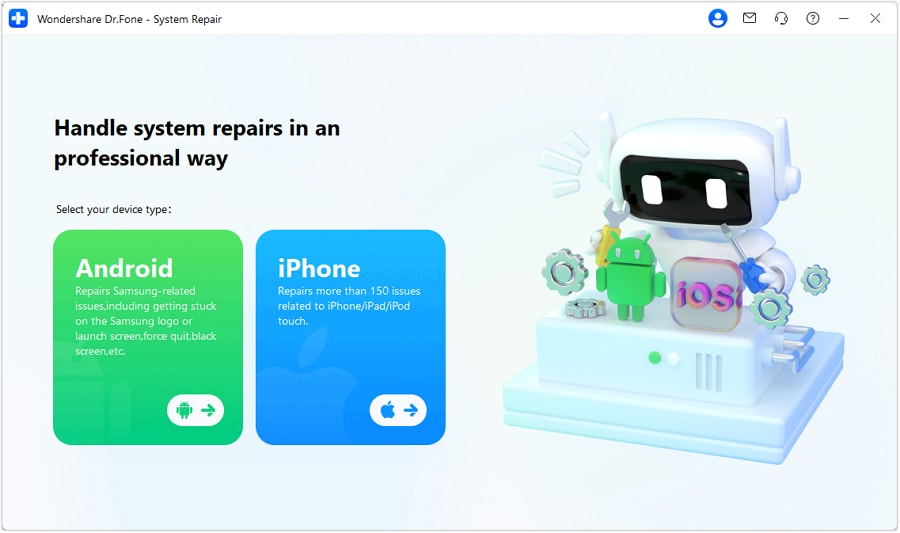
The program will prompt you to a new window asking for the nature of the device you wish to repair. Connect your problematic iOS device to the computer using a high-quality data cable, and select iOS from the main device selection screen.
-
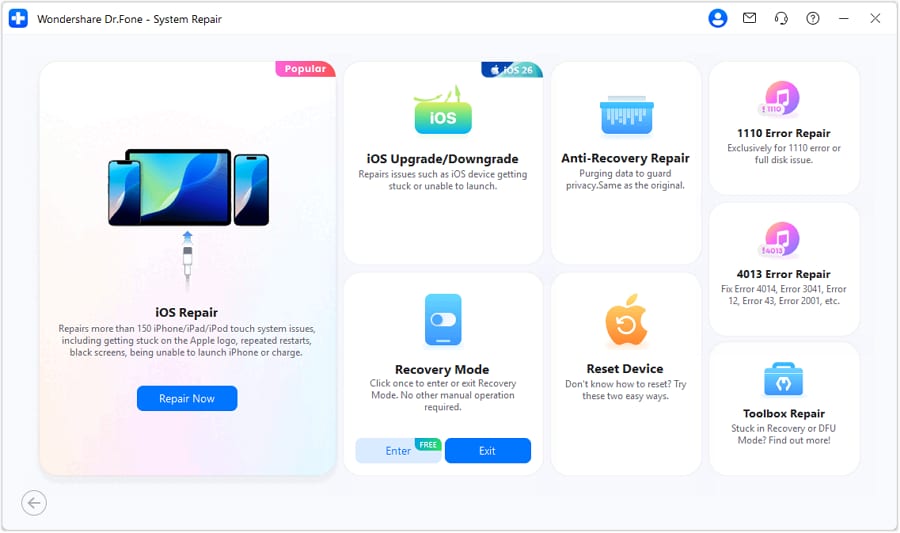
Step 3 Select the iOS Repair Function
You will now see a variety of diagnostic and recovery options dedicated to Apple smartphones. Select the iOS Repair module specifically to proceed with resolving the deep system errors hiding your settings menu.
-
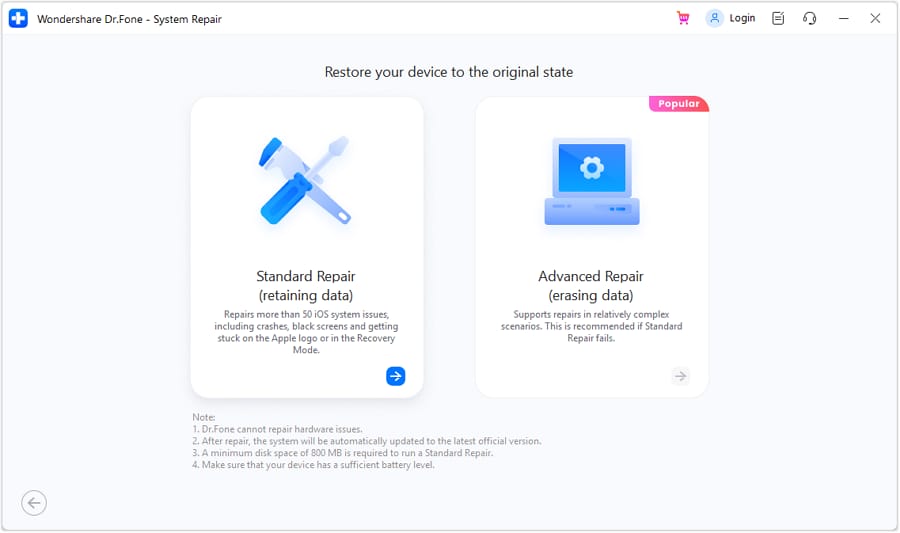
Step 4 Choose Standard Repair for Data Retention
The next window presents two distinct repair modes. It is critical that you choose Standard Repair. This specialized mode is engineered to safely rewrite iOS configuration files without wiping your personal photos, contacts, or apps.
-
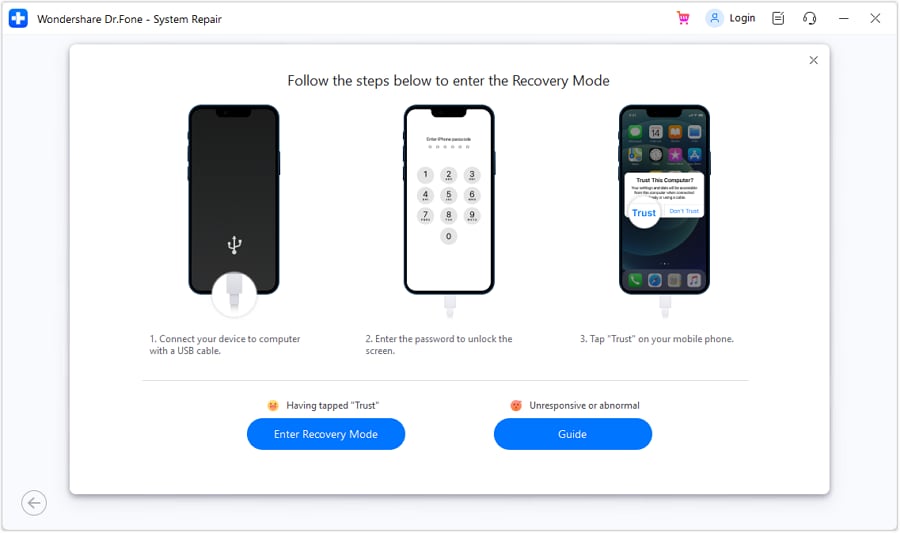
Step 5 Enter Recovery Mode
The software will request you to place your iPhone into Recovery Mode so it can safely interface with the bootloader. Follow the clear on-screen instructions corresponding to your specific iPhone model. Once achieved, hit Enter Recovery Mode. If you struggle, click the Guide button for a detailed visual walk-through.
-
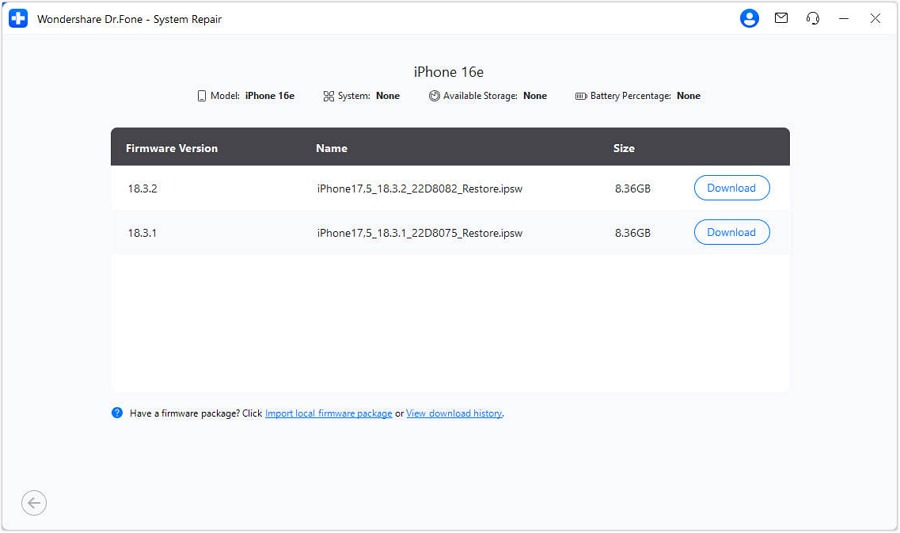
Step 6 Download Authentic Firmware
Once your device properly enters Recovery Mode, Dr.Fone's intelligent engine will automatically detect your exact hardware model and present the optimal, uncorrupted iOS firmware. Click Download next to the correct firmware package to begin fetching it from official servers.
-
Step 7 Firmware Verification
Your computer will systematically download the robust iOS firmware. Before applying any patches, the Dr.Fone platform rigorously verifies the downloaded package to ensure it is authentic and perfectly safe for installation on your device.
-
Step 8 Finalize the Repair Sequence
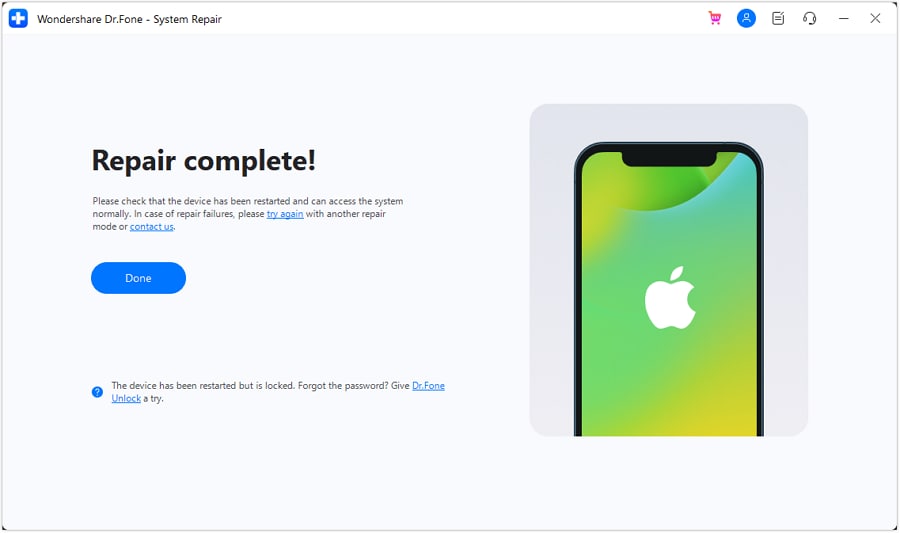
Click Repair Now to initiate the actual system fixing process. Carefully wait for the progress bar to reach 100%, ensuring your device remains stably connected throughout. Once successful, click Done. Your iPhone will restart flawlessly, and the missing Developer Mode will be completely restored to your Privacy & Security settings.




Conclusion
In summary, while encountering the iPhone Developer Mode not showing up after a significant iOS 18/26 beta update can be incredibly alarming, it is a highly solvable dilemma. Whether the absence stems from corrupted beta configurations, missing external software triggers like Xcode, or strict device profile restrictions, you have multiple pathways to force the setting back into view. Most importantly, utilizing professional utilities like Dr.Fone - System Repair offers a guaranteed, exceptionally reliable method to completely fix these underlying software corruptions without risking any data loss whatsoever. Regaining full control of your Apple ecosystem has never been simpler, ensuring your device operates at absolute peak performance.
FAQ
-
1. Does turning on developer mode void my iPhone warranty?
No, enabling the developer mode on your iPhone does not legally void your Apple hardware warranty. This is an official setting provided natively by Apple for testing and deploying applications securely. However, installing unstable apps or unauthorized software modifications afterward could potentially complicate standard software support requests. -
2. Why is the Developer Mode option completely hidden in my Settings?
Since the introduction of recent iOS updates, Apple hides the developer mode toggle by default to protect average consumers from malicious app sideloading. It often remains entirely invisible until the iPhone is physically plugged into a Mac computer running developer tools, or unless an app explicitly requests developer access. -
3. Can I enable Developer Mode without using a computer or Xcode?
Yes, but only if your iOS system update transitioned flawlessly and you attempt to install a third-party app that directly triggers the developer prompt. If a system glitch occurred during your iOS 18/26 Beta update causing it to vanish permanently, you must either connect the device to a PC/Mac or utilize a dedicated repair tool like Dr.Fone. -
4. Is it safe to leave developer mode on permanently?
Leaving developer mode activated permanently is generally unadvised for everyday usage. While it provides expansive freedoms, it slightly lowers the stringent security walls Apple builds around the core iOS, making your device nominally more vulnerable to unverified software execution. It's best practice to turn it off once your testing or troubleshooting is fully concluded.
 Add Wondershare Dr.Fone as a preferred source on Google